Most gardens get the same treatment. Buy a table, add some chairs, maybe throw in a parasol if you’re feeling ambitious. Done. And then you wonder why nobody actually sits out there.
The problem is not your furniture. The problem is thinking that a few pieces of outdoor kit equal an outdoor garden space worth using. They don’t.
A proper outdoor living area takes thought. Not a huge expense, necessarily. But genuine consideration for comfort, shelter, atmosphere, and the reality of Scottish weather. Custom table covers also add to the overall ambience.
Companies like MacColl & Stokes Landscaping work with homeowners on outdoor living space ideas that turn patios into places people genuinely want to spend time, not just somewhere to put garden furniture. Scott MacColl, who has been designing Scottish gardens for over three decades, puts it plainly: “The difference between a patio and an outdoor living space is whether you actually use it. Most people set up a table and wonder why they’re back indoors within twenty minutes.”
So what makes the difference?
Give it walls, or at least the feeling of walls


Rooms have boundaries. Your outdoor space needs them too, or you are just sitting exposed in the middle of your garden.
Proper walls are one option, but hedging, planters, or even a strategically placed screen does the job without making you feel boxed in. The aim is enclosure without confinement. You want to feel held by the space, not trapped in it.
A rug helps enormously. Put one under your seating area and the whole thing feels anchored, defined, intentional. Choose a size that fits all the furniture legs on it. A small rug floating in the middle looks lost.
Furniture arrangement matters more than you think. Face sofas and chairs toward each other and you create conversation. Point them all outward like deckchairs and you have built a viewing platform, not a living space.
Put something over your head

A ceiling changes everything, even a partial one. It creates intimacy. Provides shade. In Scotland, it means you can sit outside when the weather is not quite rain but definitely not dry.
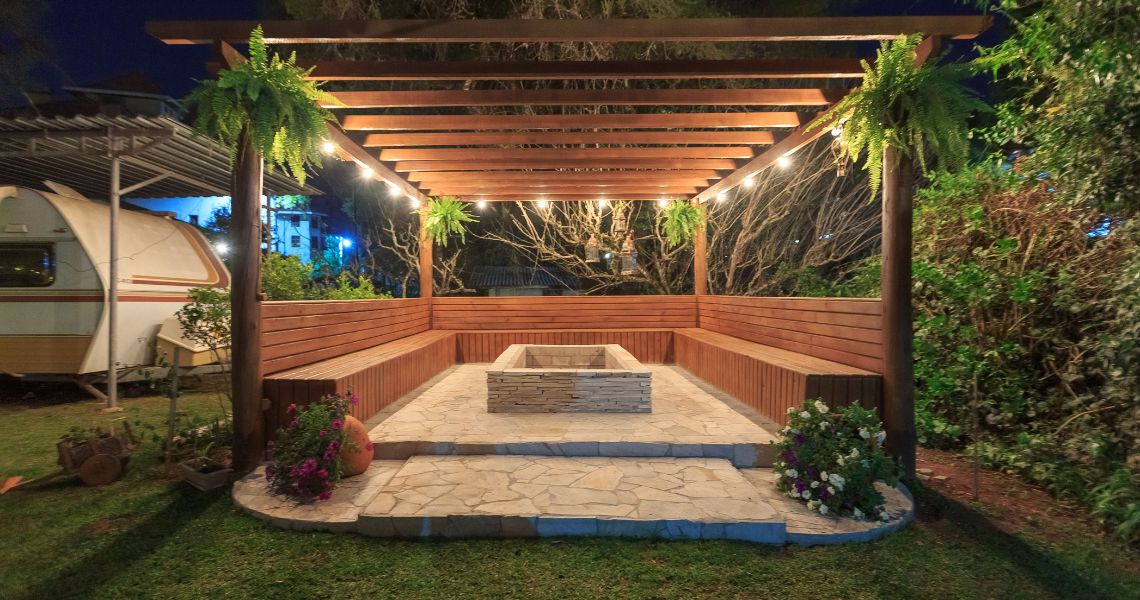
A pergola is the most straightforward solution. Open rafters give you enclosure without blocking light. Add a retractable canopy if you want proper shade, or leave it bare and train climbers over it. Wisteria takes years but the payoff is worth it. Jasmine grows faster and smells better.
For actual rain protection you need a solid roof. Polycarbonate sheets are affordable and let light through. Glass looks nicer but costs more. Louvred systems let you adjust how much sun and air gets in, closing fully when it rains.
If you rent or your budget is tight, a large parasol works. Get one with a crank so you’re not wrestling it open every time, and a base heavy enough that it stays put in wind.
Sail shades offer a modern alternative. Triangular fabric panels stretched between fixing points create shade and visual interest. They need taking down in winter and strong winds, so only choose them if you don’t mind seasonal faff.
Invest in seating that is actually comfortable

Most garden furniture is terrible. Hard seats, upright backs, no give whatsoever. Fine for a quick coffee. Miserable for an actual evening with friends.
Outdoor sofas have improved dramatically in recent years. Deep seats, thick cushions, frames that last. They cost more than a basic garden set but if you wouldn’t sit on something for two hours indoors, you won’t outside either.
Cushion quality separates good furniture from mediocre. Cheap foam compresses and stays wet. Proper outdoor cushions use quick dry foam that drains within hours. Covers should come off for washing. Storage over winter keeps them in good condition.
A footstool or ottoman makes a surprising difference. People relax more when they can stretch out.
Side tables within reach of every seat mean nobody has to hold their drink. Small detail. Big impact on how comfortable the space feels.
Add heat and extend your season by months

The Scottish outdoor season is short if you rely on warmth from the sky. Add your own heat source and April to October becomes March to November.
Fire pits are the most sociable option. Flames draw people in. Arrange seating around the fire and conversation happens naturally. Wood burning fires give more heat and atmosphere but create smoke and leave ash. Gas fires light instantly and burn cleanly but feel less authentic. Pick based on your tolerance for maintenance.
Fire tables work where space is limited. A coffee table or dining table with a flame in the centre provides warmth without a separate fire pit taking up room. Most run on propane bottles hidden inside the base.
Patio heaters suit covered areas. Electric infrared heaters mounted overhead warm people directly rather than trying to heat the air, which makes them more efficient outdoors. Freestanding gas heaters are cheaper but less effective in wind.
According to the Royal Horticultural Society, extending your outdoor season with heating can add genuine value to your property, particularly in regions where outdoor living spaces are less common. Buyers notice thoughtful additions.
Scott MacColl sees the impact heating makes: “We install fire pits in probably half our outdoor living projects now. The difference it makes to how often clients use the space is dramatic. You go from four months of use to eight or nine.”
Blankets and throws are the simplest addition. Keep a basket of them nearby. People use them even on evenings that don’t feel particularly cold, and the gesture makes guests feel looked after.
Light it properly or don’t bother

Bad outdoor lighting means either too dark to see properly or too bright to relax. Neither makes you want to stay outside past sunset.
The goal is layers. Functional light where you need it, like over a dining table. Ambient light for atmosphere. Accent lighting to make the space feel finished rather than improvised.
Festoon lights or string lights strung across a pergola or between posts give warm, even light without harsh shadows. Choose bulbs around 2700K for a warm tone. Cool white looks clinical and unwelcoming.
Lanterns add pools of light at ground level. Cluster them in odd numbers. Battery or solar versions save running cables, though mains powered are more reliable. Real candles work too but blow out in any breeze.
Uplighting trees or walls creates depth. A few spotlights at ground level pointing up into foliage makes the garden feel larger and more interesting after dark. This is what separates a considered outdoor space from a patio with some lights switched on.
Dimmers and smart controls let you adjust the mood. Bright for cooking, low for drinking. The ability to change lighting levels makes a single space work for different occasions.
Cook outside and stay with your guests

When you cook indoors, you leave your guests standing around your patio on their own. When you cook outside, you stay with them. That changes the dynamic of an evening completely.
A good barbecue is the starting point. Not a cheap one that rusts after eighteen months, but something solid that heats evenly and lasts. Gas for convenience, charcoal for flavour, or a kamado style cooker if you want to smoke and slow cook as well as grill.
A prep surface next to the grill saves endless trips back to the kitchen. Even a small side table helps. Better is a proper worktop, either built in or a freestanding unit designed for outdoor use.
Pizza ovens have exploded in popularity and for good reason. They cook quickly, produce genuinely impressive results, and give guests something to watch. Wood fired versions need more skill and attention. Gas versions are more forgiving and heat up faster.
A full outdoor kitchen with sink, fridge, and storage suits serious entertainers. Decide based on how often you will genuinely use it, not how good it looks in your imagination. Grand Designs features plenty of elaborate outdoor kitchens that get used twice a summer.
Create a proper place to eat

Eating outdoors is one of the genuine pleasures of summer. A dedicated dining area makes it far more likely to happen.
Position the table close enough to the house that carrying food is not a chore. If you have a choice, pick a spot that gets evening sun. That is when most outdoor meals happen.
Table size depends on how you entertain. A table for four suits everyday family use. If you regularly have people over, go larger. An extendable table gives flexibility without taking up space you don’t need most of the time.
Bench seating fits more people than chairs and creates a casual, communal feel. Chairs are more comfortable for long meals. Mix both if you have space: benches along the sides, chairs at the ends.
Shade over a dining area matters more than you think. Eating in full sun is uncomfortable. A parasol, pergola, or nearby tree that casts afternoon shade makes lunch far more pleasant.
Use plants to soften everything
A patio without plants feels hard and bare. Greenery softens edges, adds privacy, and makes a space feel alive rather than like a car park with furniture.
Large pots work well on paved areas. Structural plants like box balls, olive trees, or Japanese maples give year round presence. Ornamental grasses add movement. Seasonal flowers bring colour when you want it.
Climbers on walls and pergolas add interest at eye level and above. Jasmine and honeysuckle bring scent on summer evenings. Wisteria is dramatic but needs strong support and takes years to establish properly. Evergreen climbers like ivy or star jasmine provide cover year round.
Hedging creates privacy and shelter. Even a partial hedge along one boundary makes a space feel more enclosed and protected. Choose evergreen species like yew, holly, or Portuguese laurel for year round screening.
Herbs in pots near a cooking area are practical and fragrant. Rosemary, thyme, and sage all thrive in containers and survive Scottish winters. Having them within reach while cooking is a small pleasure that adds up over a season.
Accept the weather and design for it
Outdoor living in Scotland means accepting that conditions will not always be perfect. The spaces that get used most are designed for reality, not fantasy.
Shelter extends usability more than any other single factor. Even a light shower does not stop you sitting outside if you have a roof overhead. Wind is often more disruptive than rain. Screening on the windward side, usually southwest in Scotland, makes a significant difference to comfort.
Quick dry materials recover faster after rain. Furniture that drains and dries within hours means you can use your outdoor space the same day the weather clears. Cushions that stay sodden for days become a barrier to actually using the space.
Storage for cushions and soft furnishings keeps them in good condition. A built in storage bench or weatherproof box near your seating area makes it easy to put cushions away when rain is forecast and bring them out again when it clears.
The best outdoor spaces work on imperfect days. Bright but cloudy. Warm enough with a jumper. Dry with a chance of showers later. If your outdoor space only works on the handful of genuinely warm, still, sunny days Scotland offers each year, you will hardly use it.
What actually makes the difference

None of this requires enormous budgets. Some of it you can do yourself with a weekend and a trip to a garden centre. Other elements, pergolas and built in seating and permanent planting, benefit from professional help.
But the underlying principle stays the same: a table and chairs are not enough. Comfort, shelter, warmth, lighting, and atmosphere turn a patio into somewhere you actually want to be. Get those right and you will find yourself eating dinner outside on a Wednesday in April, which is when you know an outdoor space is working.
If you are thinking about creating an outdoor living area that gets genuinely used rather than just photographed, proper design and construction make a real difference. Professional landscapers understand how to make spaces work for Scottish conditions, not just look good in summer.
A site visit and conversation about what might work in your particular garden costs nothing and commits you to nothing. Sometimes the best outdoor living ideas come from seeing a space in person and talking through options.
Images courtesy of unsplash.com, Freepix and pexels.com