When the clocks go back and the evenings close in, the garden tends to slip off the family’s radar. The trampoline collects a few leaves, the bikes migrate to the side of the house, and the climbing frame is left to cope with whatever the weather throws at it until spring.
That’s a shame, because children still want to be out there in garden play space, and because an hour spent now saves a good deal of cost and hassle later. Equipment that’s put away properly lasts longer, and kit that’s checked before winter is far less likely to fail in March when everyone’s keen to start again.
Here’s a straightforward checklist, taking the small things first and working up to the big ones.
Start with the loose kit
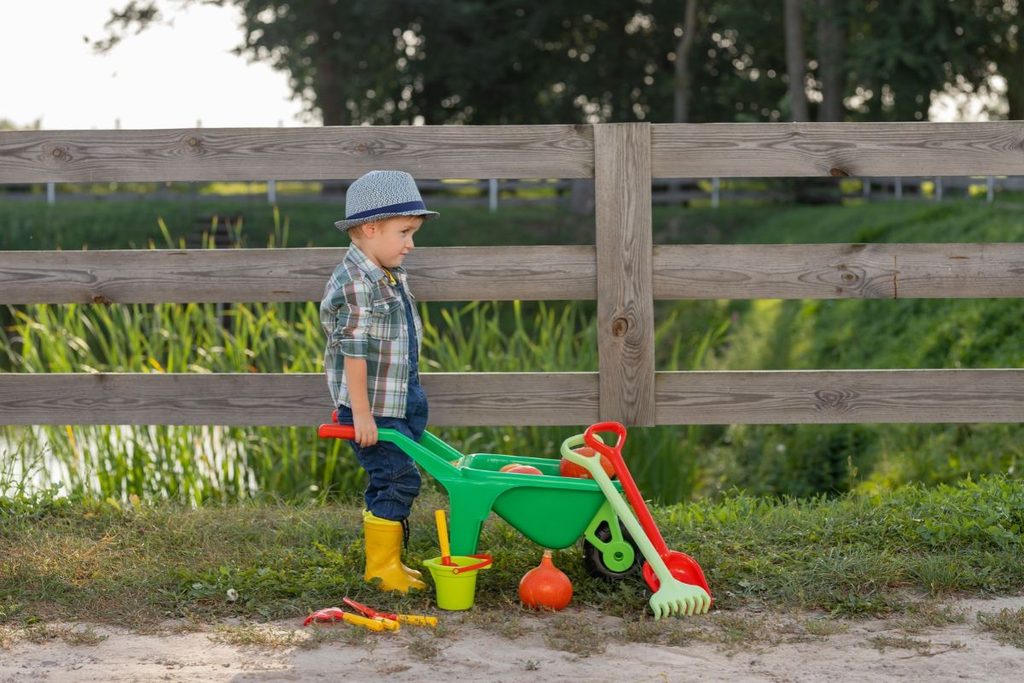
The quickest win is gathering up the outdoor toys that have been left out since the summer. Balls, ride-ons, buckets, chalk, bubble wands and water toys all fare badly when they’re left to soak and freeze. Plastic goes brittle in cold weather, metal parts rust, and anything with a soft surface goes mouldy.
Wash everything down with warm soapy water, let it dry fully, and store it somewhere dry. A lidded storage box, a shed shelf or a bench with a hinged seat will all do. Deflate paddling pools and water toys completely before folding them away, and check inflatable items for slow leaks while you’re at it.

This is also a good moment to sort. Anything cracked, faded to brittleness or outgrown can be passed on or recycled, and a quick tidy now means the kit that comes out in spring is the kit that’s actually worth using.
Keep a small selection within easy reach for the winter, though. A couple of balls, some chalk and a bucket of digging tools mean a quick trip outside to your garden play space doesn’t need a search party.
Then inspect the big equipment
Fixed outdoor play equipment takes the full force of the weather, so it needs a proper look before the worst of it arrives. Choose a dry day and go over it slowly, the way you’d check a bike before a long ride.
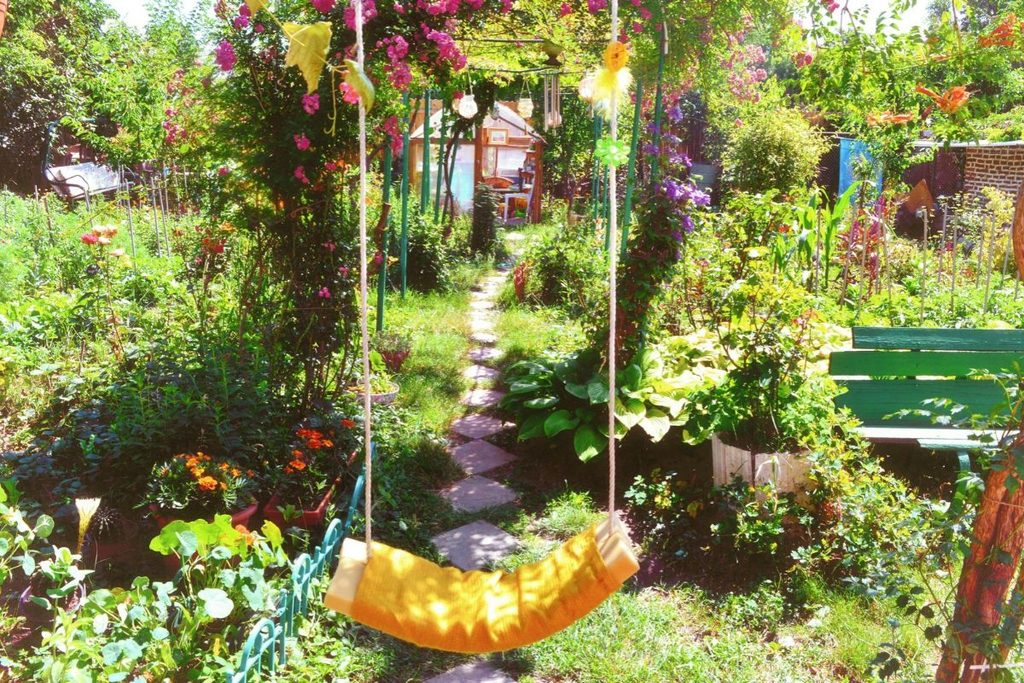
Look for loose bolts and fixings and tighten anything that’s moved. Check ropes, chains and swing seats for fraying, rust or cracking. Run a hand along timber surfaces and rails for splinters, cracks and soft patches, which can mean rot is setting in. Check that anything meant to be level still is, since ground settles over a wet season.
On a swing set, look closely at the joints where the moving parts meet the frame, as these wear first. On a slide, check the surface for cracks or sharp edges, and make sure the exit isn’t worn or slippery. If something looks beyond a simple fix, it’s better to take it out of use until it’s repaired than to hope it holds.
Treat the timber
Wooden frames benefit from a coat of suitable preserver or wood treatment before the damp sets in. Choose a product that’s safe for use around children and follow the manufacturer’s drying times, as nobody wants a sticky frame on the first dry weekend.
Clean off any algae or green growth first with a stiff brush and water. It’s both a slip hazard and a sign that the surface is holding moisture.
Sort out the ground underneath

The surface below the equipment in your garden play space does as much for safety as the equipment itself. Bark chip compacts and thins over time, so top it up where it’s worn, particularly under swings and at the foot of slides where children land and push off. A layer that was generous in spring is often patchy by autumn.
Clear fallen leaves, which hide uneven ground and become slippery when wet. Check drainage too. If there’s a spot that always turns into a puddle, a bit of forking over now can save a muddy hollow later.
Trampolines need their own check
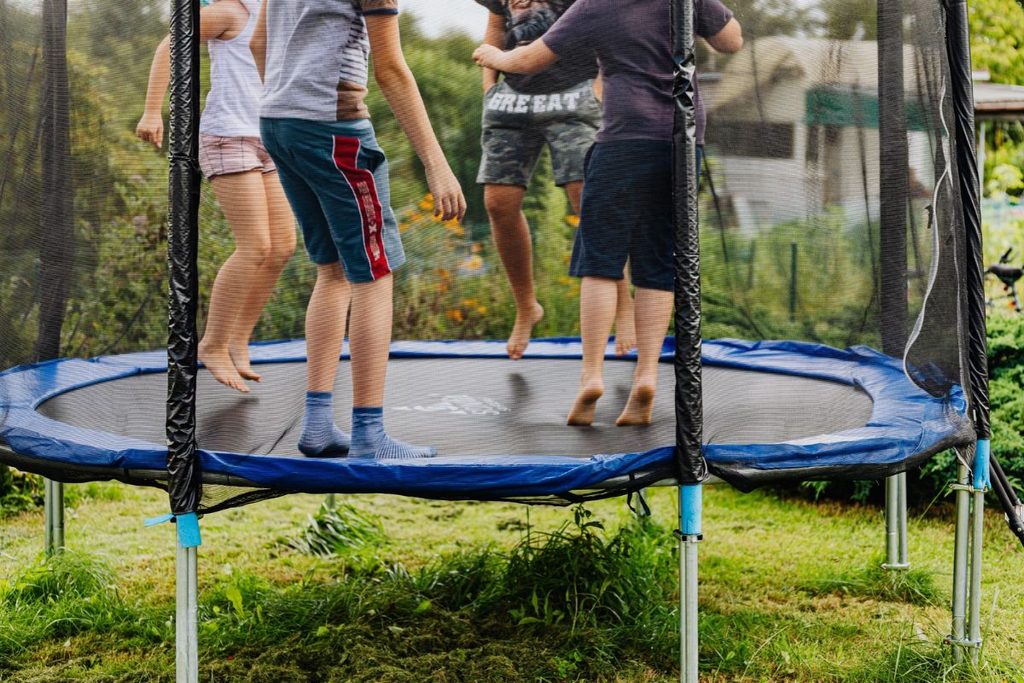
If you’ve got a trampoline, check the mat and springs for wear, the frame for rust and the safety net for tears. Many people choose to remove the net, or the whole mat, for winter to stop it taking the weight of wind and rain. If you leave it up, make sure it’s anchored, and keep it clear of fences and trees.
Wet mats are slippery, so it’s sensible to rule out use in the rain, and to wait until the surface has dried properly after a frost.
Be realistic about winter use
Not everything needs to be mothballed. Plenty of children will happily use the climbing frame in a coat and wellies, and there’s a lot to be said for the fresh air. The things to watch are slippery surfaces, frozen metal and early darkness.
A little extra light helps. A solar lantern or two near the play area, or a head torch kept in the shed, makes afternoon sessions possible once it’s gloomy at four. And a quick wipe-down before use takes the worst of the wet off seats and rungs.
Make it a routine
The simplest way to keep on top of all this is to build it into the calendar. A proper check in October, a quick look after any storm, and another in March before spring use covers most of what goes wrong. Write the dates on the family calendar and it quietly becomes a habit.
It doesn’t take long, and the reward is a garden that’s ready to go the first time a bright Saturday arrives, with a kit that’s clean, safe and in the right place.
Images courtesy of unsplash.com and pexels.com