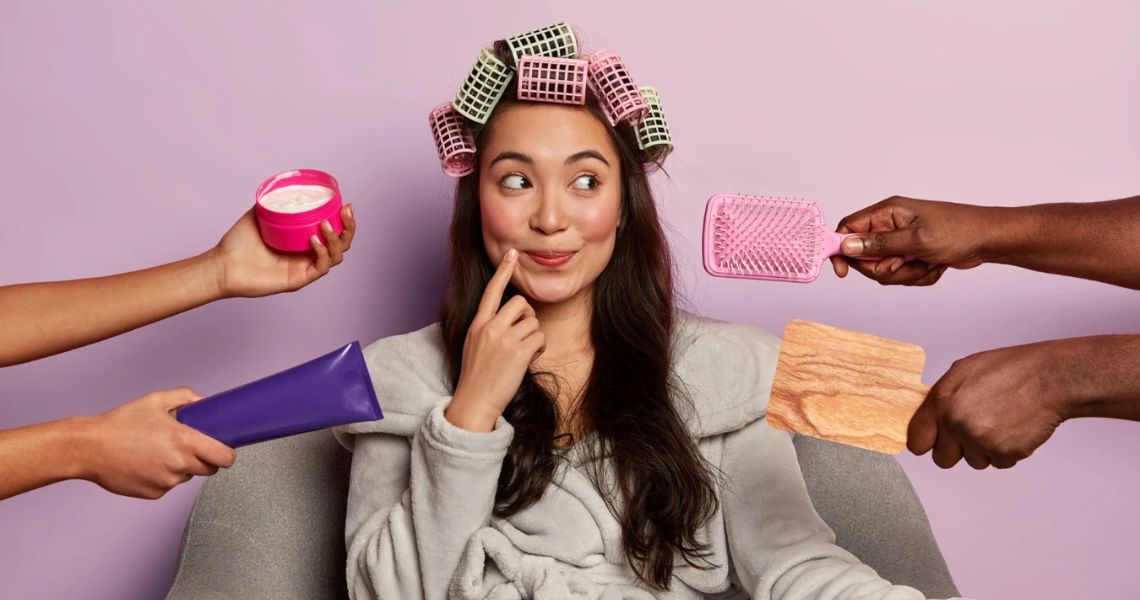
Basic hair care is considered pretty simple. Wash it regularly, use conditioner, don’t use harsh chemicals, and avoid excessive heat if you can help it.
But perhaps you want to take your hair care to the next level, which could be for many different reasons. Maybe you’re a young adult entering the workforce and feel better haircare could offer you a more polished appearance; perhaps you’re a mother whose hair degraded postpartum and are looking to give yourself a revamp; you may also have found that due to age-related changes, your hair is no longer what it used to be, and you’d like to try and do something about it. You may also be looking for treatment for dyed hair.

Ultimately, there are hundreds of reasons people may want to invest in proper hair care, and it makes sense why. Hair can make an incredible difference to your appearance, having a drastic effect on the way you feel about yourself and how others perceive you. Opting for a different hairstyle can be totally transformative, and there’s no better way to showcase yourself as a healthy, glowing individual than through luscious, shiny locks.
In this article, you’ll get a rundown of all you need to know to get started in taking a little extra care of your hair beyond the basics.
Getting to Grips With Your Hair Type
The most important first step before getting into anything else is understanding your hair type. There are many different hair types, but they can mostly be categorised into four distinct areas.
These four areas group hair based on structure and texture, and while the foundational tips explored in this article will be applicable to all types, your own specific type will dictate some of the techniques and products you should use. Let’s take a look at each of them now:
Straight Hair
When we think of straight hair, we’re thinking of a sleek, smooth texture with no apparent movement in each of the strands. The hair type usually lies flat against the scalp and comes straight out of the follicle and down.

Given the nature of this type of hair, it usually doesn’t have a great deal of volume; the strands follow closely next to each other, so one of the challenges people with straight hair have is getting that bouncy, tussled, natural look that many desire.
The straight hair type has the potential to look the most professional given its natural neatness, and it’s also considered one of the easiest and most versatile styles to manage because you don’t have to do a lot of work to get it to look good – it’s the style that has the potential to shimmer more vibrantly than most others, so make sure to look into how to use conditioner
correctly for shiny, healthy-looking hair.
Curly Hair
Curly hair is characterised as being particularly unique due to looping, spiralling strands that can either start at the root or part way down. This gives the hair a natural, voluminous, bouncy appearance.

This type of hair can require a fair bit of maintenance due to having a propensity to get dry: it’s more difficult for the scalp’s natural oils to travel down the curls, meaning that you need to take more care to make sure your hair is conditioned regularly.
While this style is more prone to tangling and requires more maintenance, it’s considered highly desirable for its healthy and timeless look.
Wavy Hair
Wavy hair is considered particularly popular at the moment. It’s in between straight and curly types making it especially versatile, featuring gentle, undulating strands that accommodate many different styles.
It has more volume than straight hair but isn’t as much maintenance as curly types. It can be prone to frizz, however.
Someone with wavy hair may benefit from more lightweight products to accentuate the natural patterns defined at the roots, and it’s also in a great position to be curled or straightened if the person desires.
Coily Hair
One of the most unique types, curly hair is also commonly known as afro-textured hair. It is characterised by very tightly curled strands that are both dense and voluminous.

This type of hair usually has a pattern that grows laterally, and given its unique texture and form, it can be one of the most difficult types to style and requires specific products to manage. Having said this, there are a ton of unique, special styles that only people with this hairstyle can create.
Those with coily hair benefit from conditioning products that utilise rich oils and nut butters, and they need to pay more attention to proper hydration than people with other hair types.
Creating a Hair Care Routine
Once you’ve determined your own hair type and done a little research, it’s time to develop a routine. Here are four simple steps:
1. Choosing Products That Fit Your Hair Type
Whether your hair is higher or lower maintenance, you’re going to want to make sure the shampoo, conditioner, and other products you pick are tailored to your type. Most branded formulas have variations of their best-selling products to cater to one of the four types above, so choose wisely! Alongside the right haircare products, many people also take a biotin supplement to support stronger, healthier hair growth from within.
2. Developing a Washing Schedule

Decide how often to wash your hair and condition it based on what’s appropriate for your type.
3. Consider Treatment Products
Beyond shampoo and conditioner, it’s also a good idea to use specialised treatment products like masks and oils; these can add both an extra layer of protection and make your hair ‘pop’.
4. Always Protect Your Hair From Heat

Using a good heat protector should always be part of your routine when you’re using a hair dryer or hair straighteners. Never underestimate the damage heat can do to your hair – neglecting to do so can negate most of the above benefits of establishing a solid routine!
Common Hair Concerns and How to Address Them
Developing a good routine is at the core of any good hair routine, but things aren’t usually plain sailing having done so – at least at first. You’ll likely encounter some issues along the way, so here are the main ones you might come across:
1. Dandruff
Dandruff can be a bit of a nightmare. It ranges from mild to severe and essentially presents as flaky, dry skin resulting from a range of different scalp problems. It could simply be as benign as dry skin, or more severe eczema, fungal issues, or other scalp-related conditions. It’s usually treated by using a special type of medicated shampoo containing selenium, zinc pyrithione, sulfide, or ketoconazole (Nizoral is a particularly popular brand). If your problems still persist, it can be worth consulting a dermatologist to try some other treatment options.
2. Frizz

Frizz happens at the level of the cuticle – when moisture gets in and swells the hair strand. Thankfully, it’s fairly easy to prevent given its circumstantial nature. If you find that your hair is susceptible to frizz, try using a microfiber towel to dry it, or try blotting it dry rather than towl drying if the issue is particularly problematic. There are also several oils and serums on the market that are designed specifically to prevent frizz, so consider one of these if modifying your drying methods can’t mitigate it.
3. Dry Hair
Dry hair is one of the most common issues you’ll encounter, and combating it is usually accomplished by modifying your washing schedule. It could simply mean that you shouldn’t be washing your hair as often, or it could be your shampoo itself that’s causing issues: considering using a sulfate-free shampoo, and always remember to condition regularly. You want to avoid stripping your hair of its natural oils as much as possible.
4. Oily Scalp
Naturally, an oily scalp is the opposite problem to those who suffer from a dry one. This problem is usually caused by overactive sebaceous glands, and paridoxically, overwashing can also cause the issue. If you find that having an oily scalp is an issue for you, try using shampoos and conditioners that are specifically formulated to combat the issue. You should also avoid applying conditioner to your roots as this can accentuate the problem!
5. Breakage
Breakage and split ends are a multifactorial issue, and because of this, you really have to analyse your whole lifestyle to identify the problem. It could be diet, stress, the products you’re using, or any number of other things. Avoiding tight hairstyles and rigorous brushing certainly goes a long way, however, as does making sure you’re getting enough of key hair-related micronutrients such as iron, zinc, and biotin (you can actually buy specific hair supplements, though consult a doctor about this first).
Wrapping Up
There’s a lot that goes into hair care, but it isn’t so complicated once you get the hang of things. The most important aspect is that you learn what works personally for you; this is a highly individual process and something of a learning curve. Enjoy the process, stay consistent, and you’ll be sure to be rewarded with stunning locks that’ll be the envy of everyone!
Images courtesy of unsplash.com and pexels.com