A successful economy encompasses more than the physical elements of business. Digital infrastructure is just as essential. In Iraq, improved computerized infrastructure allows Iraqi businesses to expand and its citizens to access a greater range of services. This is particularly valuable as the Iraqi economy endeavors to broaden its scope and to no longer rely solely on the oil sector.
The expansion of virtual services has led to a parallel expansion of related fields, such as digital entertainment. The internet has allowed for the development of online gaming. Gates of Olympus and similar games rely on the internet to provide their services. Like gaming, online shopping and other digital services also require an internet connection. Thus, a strong computerized and communication infrastructure supports and allows various online businesses to thrive.
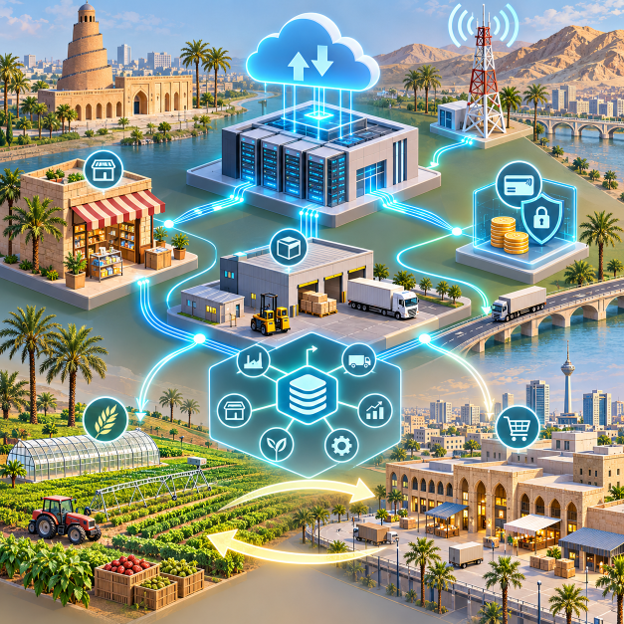
Why Digital Infrastructure Matters for Iraq
Digital infrastructure is the hard and soft components that enable services to be provided digitally. The transport network connects the users, and the fiber-optic cables carry the data. The records of businesses are kept in data centers, and application services are offered from there. All these facilitate companies to work without a physical office.
Digital Services and New Business Activity
Online industries that seem to be the most disparate often rely on the same technical bases. Even platforms offering online games like Sweet Bonanza rely on hosting infrastructure, software solutions, and technical systems similar to those used by many commercial websites. These technical means require a workforce and service providers. The experience gained in Iraq in software editing and development, as well as in the management of servers and other digital platforms, can represent an important added value to Iraqi companies.
While the number of potential clients has increased due to greater internet coverage in Iraq, the quality of internet connections is still of primary importance. For example, in order to fulfill the orders received during the day, an online store must be connected to the internet to interact with clients and suppliers.
The Main Parts of a Digital Economy
Different tools can fulfill various economic functions. Some facilities influence integration. Other technologies can facilitate transactions or shield business information.
| Infrastructure component | Main function | Economic benefit |
| Fiber-optic networks | Transfer large amounts of data | Faster firms communication |
| Mobile broadband | Connect phones and portable devices | Greater access to digital services |
| Data centers | Store and process information | Reliable business operations |
| Digital payment systems | Transfer money electronically | Easier commercial transactions |
| Cloud computing | Provide online computing resources | Flexible companies expansion |
| Cybersecurity systems | Protect networks and information | Greater confidence in online services |
How Connectivity Helps Small Businesses Grow
Small firms are essential to local economies in Iraq. Business owners thrive when they are able to build strong customer relationships in their immediate community. Currently, if an enterprise owner wants to serve customers beyond their community, they have to open a branch location. This is not a feasible option for most. Broadband internet gives business owners an alternative way to access customers beyond their community.
One good example is the clothing seller who is able to sell to customers all over Iraq through an online catalog. Because transport companies help sellers complete the last mile of delivery, sellers are able to outsource fulfillment and concentrate on order management.
Because business operations are now digital, firm owners can use applications to assist them in areas like bookkeeping and inventory management.
Practical Advantages for Local Companies
Digital infrastructure allows companies to do many things, including:
- Communicating with customers. Rapid response messaging to confirm orders.
- Keeping track of stock. Digital records can show which products are selling out.
- Accepting payments. Customers like the convenience of online payments.
- Advertising. A business website and social media pages increase exposure.
All of the above allow small businesses to grow and compete. Also, the need for delivery service and web design has increased.
Digital Payments and Financial Development
Financial transactions happen faster when money can be moved electronically. Businesses can be conducted without a customer or a firm’s representative having to leave their home or business to visit a bank.
Electronic payment systems give Iraqi companies the opportunity to enhance their ability to facilitate and fulfill online sales. Business owners can electronically accept and process orders to be carried out at a later time. Owners can keep a digital record of their financial transactions.
Improved telecommunications networks allow banks to integrate their branch offices and electronically give customers 24/7 access to their bank account.
The banks of Iraq have the connectivity to financially integrate businesses and the government of Iraq. The infrastructure and technology give the banks of Iraq the opportunity to improve the banking and financial services of the country.

Financial Access Beyond Major Cities
Digital banking can be convenient for customers who can’t easily use branch banking facilities. Many virtual banking services are available through mobile apps.
Business people can use digital banking to deposit or withdraw money more conveniently and keep better records of transactions. They can also use the transaction history to provide banks with records of their business activities to help them get loans.
Creating Jobs Through Technology
Digital infrastructure helps build networks and support various careers in different industries. Employees are needed during the installation and construction of networks and other systems. Operating and managing these systems requires personnel, including engineers and programmers.
The digital economy provides jobs for younger Iraqis to interact with foreign clients, especially when remote work is made possible by broadband internet. Iraqis can now work as programmers and graphic designers from Iraq.
Skills That Support Long-Term Employment
Investment in technology has to be supported by investment in education to be of any economic value. Investment in technology without such support creates an unemployment problem. Education and training have to prepare workers to fit in the emerging business systems. This is not a challenge in developed countries. It is, however, a major challenge in less advanced areas.
The following skills should be given particular emphasis:
- Programming: Website and application development and software development.
- Telecommunications: Network installation and maintenance.
- Management Information Systems: Report generation, analysis, and interpretation.
- Accounting Information Systems: Financial record keeping and transaction processing.
- Management Systems: System and information protection.
Training should be employment-oriented. University-industry linkage should be fostered to provide the workforce with employment-related skills and knowledge.
Improving Public Services and Investment
Communications systems and electronic records help government employees access up-to-date, organized records and process requests quickly.
Quick access to administration services and information online reduces the need for citizens to visit government offices and speeds up administrative processes. Similarly, businesses can be administratively empowered through electronic governance services.
Increased efficiency in administration services helps achieve other Sustainable Development Goals (SDGs). Improved governance services provide greater certainty for private sector planning and enable companies to better integrate their activities across national borders.
All levels of administration need to modernize their information and communications technology (ICT) services in order to take full advantage of the opportunities offered by the fast-evolving ICT industry.
For Iraq, new opportunities exist to improve its ICT infrastructure and services through investing in ICT-related industries. This would create jobs, particularly for the youth.
Building Infrastructure for Future Growth
The expansion of Internet services relies on complementary infrastructures. While fiber networks and data centers must rely on their own dedicated infrastructures, agreement on interoperability standards would help service providers complete their offerings.
Although coverage is a key aspect of Internet services, operators must also ensure the quality of connections. This is relevant for online transactions and interactions with customers, which may occur outside business premises.
These aspects are relevant for Iraq. The stability of the electricity supply determines the level of services that telecommunications and financial sectors may provide. Therefore, the improvement of the electricity infrastructure may accelerate the development of other e-services.
While the private sector must focus on the profitability of its activities, public authorities have the responsibility to establish frameworks that enable free and fair competition. Investments in telecommunications are expected to improve services and extend coverage.
Images supplied. Feature image courtesy of unsplash.com