Gartner projects global software spending to grow 15.5% to $1.47 trillion in 2026, with generative AI taking a growing share. Custom software buyers must consider legacy systems, compliance, ERP and CRM integrations, and who will maintain the code after launch.
This guide compares 10 top enterprise software development companies by delivery model, technology stack, and published work. It also covers spending trends, production risks, and vendor-selection questions.
Spending Signals for Enterprise Software in 2026

Gartner, BCG, and McKinsey data show rising investment but uneven execution:
- IT services: $1.57 trillion, up 5.3%; software: up 15.5%.
- Data center systems: $822 billion, up 62.5%, driven by AI infrastructure.
- More than two-thirds of major tech programs may miss time, budget, or scope targets.
- BCG classified 35% of companies as laggards meeting none of those targets and 30% as champions meeting all three.
- Technical debt equals an estimated 20% to 40% of technology estate value.
Top Enterprise Software Development Companies to Consider
Enterprise software development companies build and modernize the systems large organizations depend on, including ERP and CRM integrations, AI capabilities, and cloud platforms. This review identified 10 providers. The table below compares their enterprise focus, delivery models, and core technology stacks.
| Company | Enterprise practice | Delivery setup | Platform stack |
| Baytech Consulting | Legacy modernization, AI integration, CRM and ERP systems | 100% in-house onshore team | .NET, Angular, SQL Server, AWS |
| Atomic Object | Product modernization, AI software, new product development | Employee-owned team | Web, mobile, desktop, IoT, cloud |
| Saritasa | Legacy modernization, DevOps, software architecture | Dedicated teams and project takeovers | .NET, Python, Angular, React |
| Chetu | AI-led modernization, systems integration, data management | Developers in the client’s time zone | Microsoft, Salesforce, SAP, Oracle |
| 10Pearls | Enterprise applications, AI, data, cloud | Nearshore and offshore agile teams | Salesforce, Databricks, Snowflake, ServiceNow |
| Itransition | ERP, CRM, legacy modernization, AI | Dedicated development centers | Dynamics 365, Salesforce, SAP Commerce, Power BI |
| Intetics | Technical debt reduction, AI and ML, AWS consulting | Remote In-Sourcing and Offshore Dedicated Team | AWS, Microsoft, IBM |
| Simform | Product and data platform modernization, agentic AI | Co-engineering with agile pods | Microsoft D365, Salesforce, Databricks, Snowflake |
| Belitsoft | Enterprise software, application modernization, cloud migration | Dedicated developers and staff augmentation | Azure, AWS, SharePoint, Office 365 |
| Innowise | ERP and CRM, mainframe support, legacy modernization | Full-cycle projects and dedicated teams | SAP, Dynamics 365, Odoo, Salesforce |
1. Baytech Consulting
- Sector coverage: Healthcare, finance, construction, energy, manufacturing, legal, and education
- Engagement options: Fixed-scope agreements, dedicated teams, project rescue, and service contracts
- Published totals: More than 120 projects for clients ranging from small businesses to Fortune 500 companies
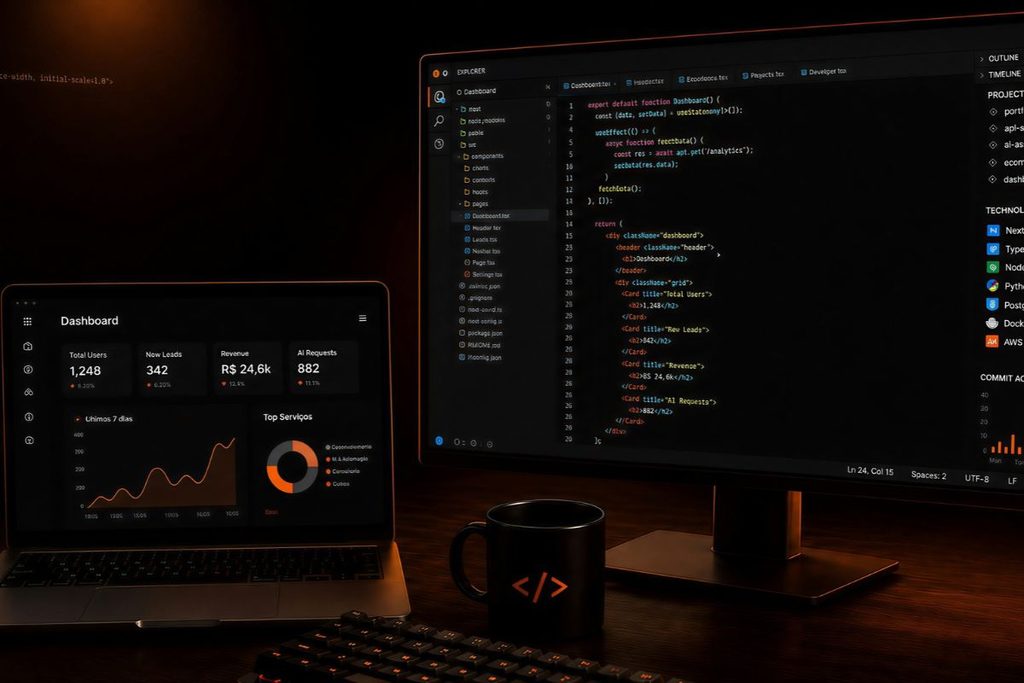
Among the top enterprise software development companies in this guide, Baytech Consulting focuses on custom applications, AI integrations, and legacy platform modernization. Founders Bryan Reynolds and Jeff Skvorc lead a fully in-house, onshore engineering team.
Each engagement begins with a written agreement covering the cost, schedule, scope, and technical strategy. Delivery follows a defined process that includes discovery, architecture, phased development, deployment, and ongoing support.
The company’s technology stack includes .NET, Angular, SQL Server, Docker, Kubernetes, AWS, and Rancher. This allows the team to move legacy SQL environments into containerized cloud services without requiring clients to replace their underlying platform.
In its RealSource case study, Baytech Consulting reports consolidating fragmented business data into a single SQL Server database and automating 85% of previously manual work. RealSource’s revenue grew by 800% within two years. Other published projects include a multi-tenant CRM platform with intelligent call routing for Ralis Services Corp and a coverage eligibility application for MedData.
Key strengths:
- More than 154 years of combined team experience
- Direct founder oversight for every engagement
- Senior onshore architects with no offshore subcontracting
- Microsoft Partner and AWS Partner Network membership
- Debt-free company with fully in-house delivery
- Published project outcomes including 85% process automation and 60% cost reduction
2. Atomic Object
- Sector coverage: Healthcare, financial services, education, and insurance
- Engagement options: Projects lasting three to more than 18 months, with budgets from $50,000 to over $1 million
- Published totals: More than 200 organizations served
Atomic Object designs custom products, modernizing legacy applications, and adding AI capabilities to existing software. Its employee-owned teams work across web, mobile, desktop, IoT, and cloud platforms.
The company has built software since 2001. Its published clients include Ford, Cleveland Clinic, Qualcomm, Corewell Health, and Bosch. Work for Healthy Minds Innovations and Pixelberry Studios adds consumer, gaming, and wellness products to the portfolio.
Key strengths:
- Employee-owned company
- AI development for new and existing products
- Product modernization for legacy applications
- Healthcare clients including Priority Health and MedHub
- Enterprise clients including Amway and Johnson & Johnson
- IoT and desktop development alongside web and mobile
3. Saritasa
- Sector coverage: Media, power technology, rail services, and digital signage
- Engagement options: Dedicated teams, project takeovers, maintenance, and support
- Published totals: 206 team members and 20 years in business
Saritasa organizes its services into five groups covering strategy, design, development, maintenance, and product scaling. Its technical capabilities include custom software, AI and ML development, legacy modernization, software architecture, CI/CD implementation, and DevOps.
Project takeovers are available for businesses that need a new team to continue work on an inherited codebase. Maintenance contracts can also include cloud infrastructure management and ongoing product support.
Client testimonials reference iHeartMedia, ASCO Power Technologies, Nationwide Rail Services, and Visix. The development stack includes Python, PHP, .NET, Laravel, Django, Angular, React, Kotlin, Swift, and Unity.
Key strengths:
- Legacy software modernization
- Project takeovers for inherited codebases
- Cloud infrastructure management through maintenance contracts
- Accessibility compliance within strategy services
- Microsoft and AWS technology partnerships
- VR and AR development alongside web and mobile
4. Chetu

- Sector coverage: More than 30 industries, including banking, healthcare, insurance, energy, and logistics
- Engagement options: Dedicated development teams and on-demand developers
- Published totals: More than 2,800 software developers
With more than 2,800 developers, Chetu provides custom software, AI-led application modernization, systems integration, and data management across over 30 industries. Its teams are organized into industry-specific virtual divisions and work within each client’s time zone.
Supported platforms include Microsoft, AWS, Salesforce, Oracle, SAP, NetSuite, and UiPath. The data practice also covers Snowflake and Databricks consulting.
Chetu states that clients receive full ownership of the source code and intellectual property without ongoing licensing fees after project completion. Published client logos include Johnson & Johnson, Siemens, Foot Locker, Petco, and IGT.
Key strengths:
- Industry-specific development divisions
- Source-code and IP ownership transferred to clients
- Snowflake and Databricks consulting
- SAP, Oracle, and NetSuite services
- Backup, disaster recovery, and network operations center services
- QA testing and software security under SLA-based support
5. 10Pearls
- Sector coverage: Healthcare, financial services, telecommunications, energy, retail, and private equity
- Engagement options: Nearshore and offshore development and managed services
- Published totals: More than 1,400 team members worldwide
AI strategy is at the center of the 10Pearls portfolio. Services range from AI readiness assessments and custom model development to cloud engineering, data governance, and enterprise application delivery. A separate practice addresses AI security, risk, and governance alongside cybersecurity and penetration testing.
Published clients include Elevance Health, TransUnion, Exelon, PayPal, Verizon, Coca-Cola, and AARP. Delivery is supported by partnerships with Salesforce, Databricks, Snowflake, ServiceNow, Appian, and Oracle.
The team also develops integrations with OpenAI, Google AI, and Mistral AI. Robotic process automation, IoT, blockchain, and AR/VR products extend its engineering capabilities.
Key strengths:
- AI readiness assessments and executive training
- Governance, security, and risk services for AI systems
- ServiceNow and Appian platform partnerships
- Healthcare clients including Elevance Health and Amwell
- Energy clients including Exelon and Constellation
- Women representing about 40% of the global workforce
6. Itransition
- Sector coverage: Healthcare, finance, manufacturing, retail, insurance, and professional services
- Engagement options: Dedicated development centers and flexible partnership models
- Published totals: More than 800 clients and 1,530 projects
For organizations replacing or connecting core business systems, Itransition covers ERP, CRM, portals, business process management, data analytics, generative AI, and legacy modernization. Platform services include Dynamics 365, Salesforce, SAP Commerce, Odoo, Atlassian, and Power BI.
Staffing varies with the technical scope. System architects are available for on-demand consultations, while mid-level and senior engineers are assigned according to task complexity.
Certified project managers oversee delivery through regular reports, demonstrations, and access to test environments. Published clients include IATA, GSMA, Lloyd’s Register, Terumo, and Waters Corporation.
Key strengths:
- More than 3,000 professionals across delivery offices
- Projects delivered in over 40 countries
- Certified project managers assigned to every engagement
- Microsoft, Amazon, Salesforce, and Atlassian partnerships
- Security integrated into the software development lifecycle
- System integration within the software engineering practice
7. Intetics

- Sector coverage: Healthcare, insurance, finance and payments, geospatial technology, and public infrastructure
- Engagement options: Remote In-Sourcing, Offshore Dedicated Team, and No Risk Start
- Published totals: More than 30 years in business
More than three decades of delivery support Intetics’ work in custom software, AI and ML, cloud engineering, DevOps, business intelligence, robotic process automation, and low-code development.
Technical debt management is a distinct part of the offering. The proprietary TETRA platform evaluates software quality and helps teams identify modernization priorities.
Certifications include ISO 9001:2015, ISO 27001:2022, and ISO/IEC 42001 for AI management systems. Intetics says clients can start without upfront investment in hardware, software, or initial training. Partner credentials include AWS Advanced Tier Services status with Generative AI Competency, Microsoft Gold, and IBM.
Key strengths:
- ISO/IEC 42001 certification for AI management
- TETRA platform for technical debt and software quality assessment
- AWS Generative AI Competency
- HIPAA, GDPR, and CCPA compliance
- No upfront infrastructure or training investment
- Experience in geospatial technology and civil engineering
8. Simform
- Sector coverage: Financial services, healthcare and life sciences, retail, supply chain, and technology
- Engagement options: Co-engineering, advisory, and managed services
- Published totals: More than 1,200 employees and 350 platform-certified engineers
Simform uses a co-engineering model built around multi-skilled agile teams and client-specific roadmaps. Delivery covers product modernization, data platform modernization, cloud migration, agentic AI, and enterprise platforms such as Dynamics 365, Salesforce, and Power Platform.
Its advisory practice focuses on agentic software development lifecycles, enterprise AI adoption, change management, and cloud operations. Managed services cover applications, cloud environments, and AIOps after the initial build.
Technology partnerships include Microsoft, Databricks, Snowflake, Datadog, IBM, AWS, Google Cloud, and Anthropic.
Key strengths:
- CMMI Level 3 certification
- Anthropic services partnership
- Databricks consulting and Snowflake AI Data Cloud partnerships
- Agentic DevSecOps and software development lifecycle services
- Composable commerce within customer experience transformation
- Lab-as-a-Service for product engineering
9. Belitsoft
- Sector coverage: Banking, eLearning, digital healthcare, insurance, telecommunications, and manufacturing
- Engagement options: Custom projects, dedicated developers, and staff augmentation
- Published totals: More than 250 employees
Database-heavy modernization is a central part of Belitsoft’s service portfolio. The team develops enterprise applications, APIs, system integrations, databases, and AI solutions while supporting cloud migrations to Microsoft Azure and AWS.
Application and database migration services let clients move existing systems to new platforms without rebuilding their entire software estate. Additional capabilities include SharePoint and Office 365 development, business intelligence, testing, and quality assurance.
Published clients include Honeywell, Siemens, IDT, and Berkeley, while the company’s website features testimonials from Technicolor and Fraunhofer. Clients can choose custom projects, dedicated teams, offshore or nearshore outsourcing, and IT consulting.
Key strengths:
- Database development and migration
- Microsoft Azure and AWS cloud migration
- SharePoint and Office 365 development
- Business intelligence services
- Testing and quality assurance as a separate practice
- Published clients include Honeywell and Siemens
10. Innowise

- Sector coverage: Finance, e-commerce, life sciences, manufacturing, and IoT
- Engagement options: Full-cycle development, IT staff augmentation, and dedicated teams
- Published totals: More than 3,500 IT professionals and 1,600 delivered projects
Innowise combines full-cycle product development with ERP and CRM implementation, legacy modernization, and mainframe support. Its platform experience covers SAP, Dynamics 365, Odoo, Salesforce, and Creatio.
Cloud engineering, DevOps, DevSecOps, data and AI, and cybersecurity support the wider portfolio. The company holds ISO 9001, ISO/IEC 27001, and ISO 13485 certifications, including quality management requirements for medical device software.
Three software engineers founded Innowise in 2007. Published clients include Hays, Spar, Tietoevry, NTT Data, Topcon, and Commercial Bank of Qatar. The company reports 93 recurring customers among 400 organizations served across 1,600 completed projects.
Key strengths:
- Mainframe support and modernization
- ISO 13485 certification for medical device software
- More than 200 partner-certified specialists
- Creatio and Odoo ERP and CRM services
- More than 30 technology partnerships
- Experience across 40 industry domains
Enterprise Software Development Risks After the Pilot
Pilots hide production risks. Address these before launch:
- Team turnover: Name senior staff in the contract, require approval for replacements, and document key technical decisions.
- Integration growth: Inventory every connected system, owner, authentication method, release cycle, failure mode, and test requirement.
- Late compliance: Include security, legal, and audit teams from week one and convert their requirements into acceptance criteria.
- Weak AI data: Profile source data and define ownership, quality thresholds, evaluation methods, and drift monitoring before model development.
Conclusion
Enterprise software supports the processes, records, and integrations that keep a large organization operating. When a program stalls, it can delay releases, freeze budgets, and keep legacy systems in service longer than planned.
Top enterprise software development companies establish clear ownership from discovery through production. That includes a named architect, documented integration maps, compliance reviews during each sprint, and code the client can maintain without depending on the original vendor.
Before creating your shortlist, ask each candidate who will own these responsibilities during delivery and how that ownership will transfer to your team at the end.
Images courtesy of unsplash.com and pexels.com