A torque-controlled fastening job can stall over a mismatched setting or a wrench that will not move freely around neighboring components.
In rail engineering, resolving those details before tightening starts is as much a part of efficiency as the operation itself. Modern digital tools contribute by making settings and measurements available together, helping technicians apply a repeatable method and recognize exceptions as they arise.
Put the torque reading in context

Bolt torque is the turning moment applied during tightening. In a torque-controlled bolted joint, tightening stretches the bolt and develops tension, producing a clamping force between the assembled parts. The wrench measures the applied torque rather than that clamping force directly.
Connected torque systems such as those offered by Fortix can display readings and capture results during fastening. Technicians in rail engineering can follow the measurement as they work, while digital recording preserves the result without a separate handwritten entry.
The relationship between that reading and bolt tension depends partly on friction. As Enerpac’s tightening guide explains, applied torque must overcome friction at the threads and bearing surfaces as well as develop bolt preload. Lubrication, coatings and surface condition all influence that relationship, making assembly preparation essential to interpreting the measurement.
Match tool settings to the approved assembly
Use the applicable assembly instructions to establish the tightening requirement. Charts organized by bolt diameter and strength classification offer reference values, but the actual joint involves conditions beyond those two characteristics.
Norbar’s torque–tension calculator, for example, describes its outputs as guidance and directs users to check with the equipment or bolt manufacturer.

Once the requirement is established, digital configuration allows the technician to review the target, units and permitted limits together. Check that the displayed units match the instructions, particularly when switching between newton-meters and pound-feet. Select and verify the setting for the assembly at hand instead of carrying over the previous job’s configuration.
Preparation also covers the specified fasteners, washers and surface conditions. Lubrication belongs in that check: adding it simply to make tightening easier changes an input that may already be accounted for in the engineering requirement.
Resolving these details in rail engineering before application can prevent interruptions and avoid repeating an incorrectly configured target across several fasteners.
Make the tightening method repeatable
Plan the tool’s working space as carefully as its access to the fastener. In a restricted trackside location or among components in a maintenance facility, check the available wrench movement, socket engagement and permitted attachments before starting.
An adapter’s suitability depends on the tool and assembly instructions, not just whether it provides access.
With the arrangement established, follow the manufacturer’s loading technique and the joint’s specified tightening sequence or stages, rather than substituting a generic progression.
Live feedback helps the operator relate the tightening action to the configured target. Limits can flag an out-of-range result while the task is underway, bringing it to attention before later transcription or review.
Consistent technique also gives supervisors a clearer basis for investigating unexpected readings. Changes in tool arrangement or loading method can help explain variations between results, so training should cover physical handling alongside screen controls.
Investigate exceptions before accepting the result
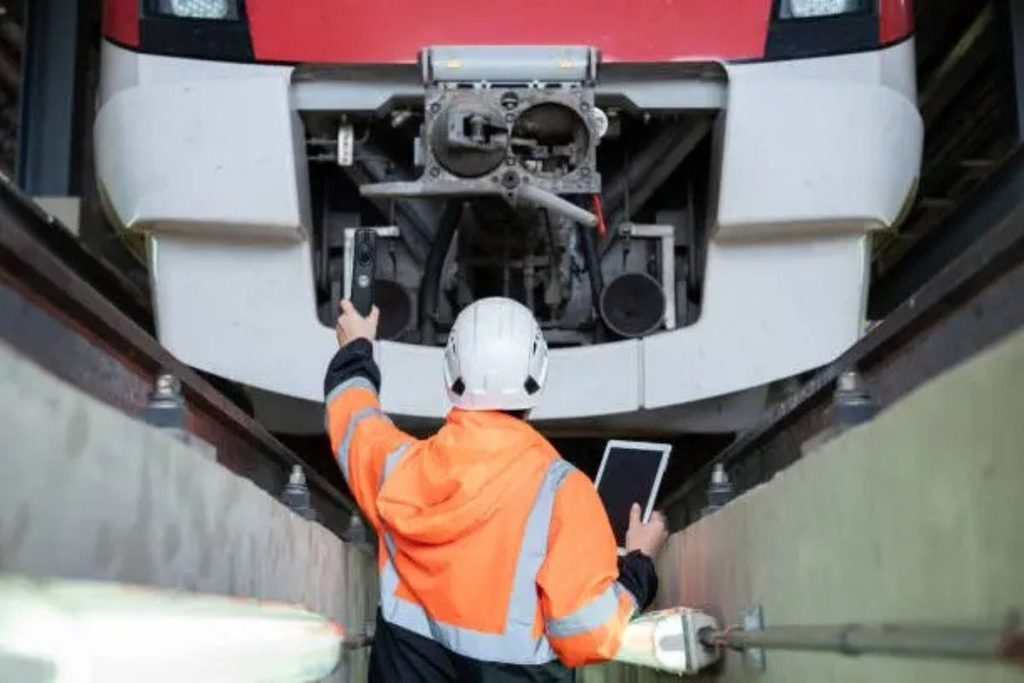
Suppose a maintenance joint produces an in-range torque reading while surfaces that should be seated remain visibly separated. The gap calls for the applicable inspection and corrective process, regardless of the displayed result.
An earlier over-limit event also remains relevant if a subsequent reading falls within range. Any further tightening should follow the corrective procedure, rather than becoming a series of attempts to obtain a satisfactory display.
Digital capture preserves the result that prompted concern. Consider that record alongside observations of the assembly and tool setup so the investigation addresses both the measured event and its physical context.
For a rail crew, recognizing a discrepancy while the joint, tool arrangement and assembly conditions remain accessible creates an opportunity to investigate promptly. A shorter path from measurement to an informed decision is a more useful efficiency goal than tightening speed alone: continue using the specified method, or pause to resolve the exception.
Images courtesy of unsplash.com and pexels.com