CCTV covers for challenging environments range from Oystashell’s camera-specific polycarbonate covers to Anchor Point’s stainless-steel housings and the environmental protection offered by Videotec and Dotworkz.
The review highlights how CCTV covers, camera compatibility, mounting position, anti-tamper protection, impact resistance and environmental requirements determine the most suitable enclosure for each installation.
CCTV Protection for Challenging Environments
CCTV cameras installed in healthcare facilities, prisons, schools, transport sites, and public buildings can face very different physical challenges from those found in standard commercial installations. Equipment may be within reach, positioned in a corner or exposed to deliberate interference, while outdoor and industrial cameras may also need protection from water, dust, temperature changes and impact.
CCTV anti-tamper covers provide a protective layer around the camera without changing its intended surveillance role. Designs range from compact polycarbonate covers for dome cameras to fully sealed housings with environmental controls for cameras operating in extreme conditions.
The following four manufacturers offer CCTV protection designed for different installation requirements, each taking a distinct approach to camera housing and physical protection.
1. Oystashell®

Oystashell’s dedicated CCTV anti-tamper covers include Oystashell 4, 4C, 4L, and 4360. The four models cover various camera formats and mounting positions, including standard dome cameras, corner-mounted cameras, larger-format domes, and a specialist 360-degree fisheye camera. Let’s look at each one separately in detail:
Oystashell 4 Made For Standard Dome Camera
The Oystashell 4 is designed for standard dome CCTV cameras with a maximum diameter of 140 mm and is built for indoor ceiling or wall mounting. The enclosure is manufactured from 3 mm recycled, shatterproof, riot-shield-grade polycarbonate. Its clear construction maintains camera visibility, while the smooth profile reduces potential ligature points around the installed equipment. An anti-tamper screw kit is also available for securing the enclosure.
Oystashell 4C for Corner-Mounted CCTV
The 4C addresses a more specific installation problem and secures a dome camera positioned at a corner junction. Its angled profile fits between adjoining walls and provides coverage across three axes, avoiding the need to adapt a standard enclosure to a corner installation.
It uses the same 3mm riot-shield-grade polycarbonate construction and supports corner wall or ceiling mounting. It is listed for indoor and outdoor use and is compatible with most corner-mounted CCTV cameras. The design also includes 2 mm microphone holes, allowing compatible cameras to retain audio recording.
Oystashell 4L Built For Larger Format CCTV Cameras
The Oystashell 4L provides additional capacity for larger dome cameras that cannot be accommodated within the standard 4. The manufacturer specifically identifies cameras such as the Verkada CD53 and CD63 as compatible examples.
Like the other Oystashell CCTV covers, it uses 3mm polycarbonate and incorporates a smooth anti-ligature profile. Its 2mm microphone opening lets compatible cameras continue recording audio while enclosed, which matters when the protective cover needs to preserve more than the camera’s visual function.
Oystashell 4360 for 360-Degree Fisheye Protection
The Oystashell 4360 is purpose-built for the Verkada CF83-E fisheye camera. Its design preserves the camera’s full 360-degree field of view while protecting it against impact, vandalism and tampering.
It uses 3mm riot-shield-grade polycarbonate with a 2mm microphone opening for continued audio recording. The model is intended for indoor ceiling or wall mounting and is listed for environments including mental health wards, prisons, hospitals, schools, colleges and public institutions.
Across the range, Oystashell therefore provides CCTV covers around four distinct camera and installation requirements and doesn’t treat physical protection as a one-size-fits-all application.
2. Anchor Point
Anchor Point’s AP 304 range takes a different approach to CCTV protection, using 304-grade stainless steel for camera housing in detention wards, industrial areas, healthcare spaces and other demanding environments. Its range includes dome, corner and specialist camera housings.
The AP 304 Dome XL is designed to encapsulate multi-sensor dome cameras and features a 10-gauge 304 stainless steel body, an IK10 vandal-resistant dome lens, and IP69K ingress protection for moisture and spray. It also uses security hex bolts and an anti-theft design with an undersaddle mounting bracket for most dome and 360-degree cameras. Compatible examples include the AXIS P3719-PLE, Hanwha PNM-9000VQ and Bosch SNC-WL862.
For corner installation, the AP 304 Corner Camera Housing uses a ⅜-inch Lexan window, 10-gauge stainless steel, and tamper-proof recessed fasteners. It provides 70 degrees of vertical camera tilt and is designed to leave less than 2mm between the housing and the adjoining wall or ceiling surface.
Anchor Point also produces custom housing, including a 304 stainless steel bullet-style housing with IP68 protection for the AXIS F1005-E sensor camera.
3. Videotec
Videotec’s CCTV housing range is built around cameras that need protection from both physical interference and environmental exposure. Its VERSO range, for example, uses a tamper-proof polycarbonate housing with IK10 vandal resistance and IP66/IP67 protection when specified with the appropriate cable glands or sealing rings.
The VERSO housing has a side-opening design that provides access to the camera lens and internal connections during installation or maintenance. It accommodates different camera and lens combinations and supports wall or ceiling brackets, as well as pan-and-tilt mounting. Optional equipment includes heaters, camera power supplies, fan-assisted heaters and tamper switches.
The VERSO Compact provides a smaller version of the same approach. It is constructed from technipolymer/polycarbonate and has an IK10 rating and IP66/IP67 protection, with an internal usable area. It can also be configured with a heater and fan-assisted heating for installations where temperature needs to be managed.
For extremely cold environments, Videotec’s VERSO POLAR is designed to continue operating at temperatures down to -55°C (-67°F) and retains IK10 vandal protection.
4. Dotworkz
Dotworkz focuses on sealed camera housing for outdoor, industrial, marine and other harsh environments. Its S-Type range uses heavy-duty, shatter-resistant polycarbonate and is designed around fixed box-style CCTV, IP, HD and megapixel cameras.
The S-Type housing provides IP66 and/or NEMA 4X protection and includes two IP68 cable entry ports for power and data. The standard housing has a polycarbonate wall, a clear Lexan viewing window and a sealed construction intended to protect against water, dust, humidity and other external conditions.
Environmental control can be incorporated into the housing with a documented heater-and-power configuration that includes a 25W thermostatically controlled heater and 10 CFM blower.
Dotworkz also produces larger and actively cooled configurations. Its S-Type XL CoolDome, for example, uses active cooling alongside a heater and blower system and provides an internal usable area for larger camera installation.
Summing It Up
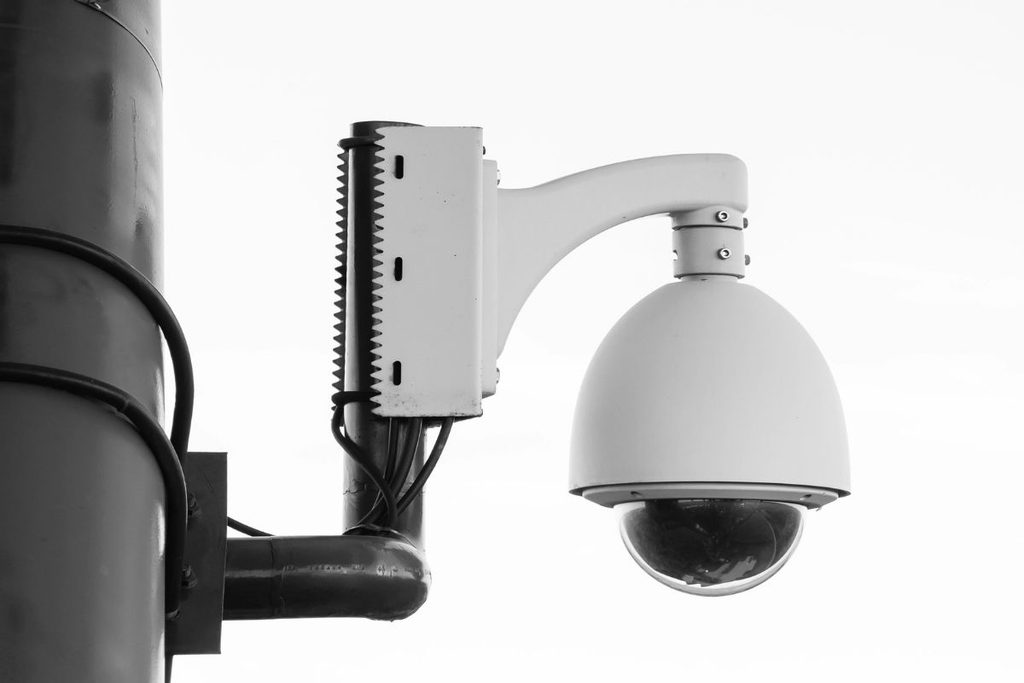
CCTV covers for challenging environments vary by camera, installation position and required level of protection. The products reviewed here range from purpose-designed polycarbonate covers to heavier stainless-steel and sealed housing, with features such as impact resistance, anti-tampering fixing, environmental sealing and thermal management to address different installation conditions.
Oystashell’s CCTV range covers standard and larger dome cameras, corner-mounted cameras and the Verkada CF83-E fisheye, using 3 mm riot-shield-grade polycarbonate, anti-ligature profiles, optional anti-tamper screws and microphone openings on selected models. Whereas Anchor Point focuses on stainless-steel housing, Videotec and Dotworkz provide CCTV protection with additional vandal and environmental features. The key difference across these solutions is therefore how the enclosure is engineered for its intended installations.
For CCTV deployed in challenging environments, camera compatibility, mounting configuration, physical protection and environmental requirements all need to be considered together.
Images attributed to Unsplash.com and Pexels.com. Oystashell image supplied