The modern home runs on electricity. A kitchen holds an air fryer, a coffee machine and a drawer of charging cables. The garage has an e-bike on charge. The garden room has a projector and a heater. Each item can start a fire, yet most households own nothing to deal with one.
Fire Safety Awareness Training has a plain guide to black label CO2 extinguishers for anyone wondering why the CO2 fire extinguisher is the standard choice for electrical fires. This article turns that knowledge into a room-by-room plan. It covers what each label colour means, where a CO2 unit belongs, and the two things it must never touch.
What Do the Extinguisher Label Colours Mean?
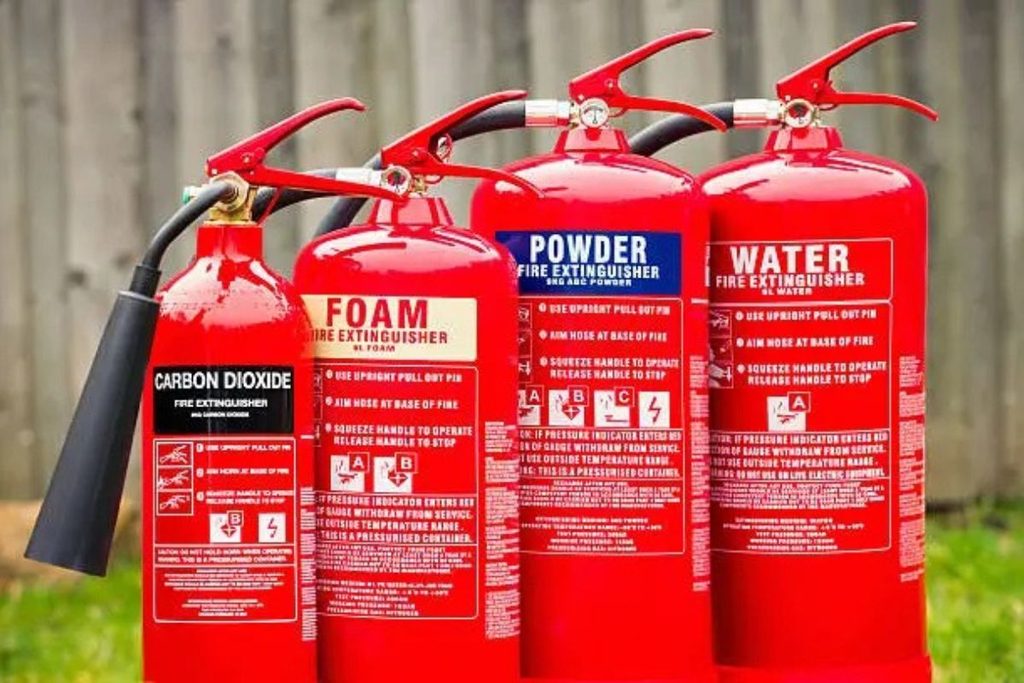
Every extinguisher sold in the UK has a red body and a coloured panel naming its contents. Hereford and Worcester Fire and Rescue Service lists the extinguisher label colours on a single page.
A red panel means water. It suits wood, paper and fabric but must never touch an electrical appliance or hot fat. Cream means foam, for solids and flammable liquids but not a chip pan. Blue means dry powder. It covers most fire types but fills a room with a choking cloud, so the service advises against indoor use.
Yellow means wet chemical, made for cooking oil and fat. Black means carbon dioxide, the one built for live electrical equipment. It works by displacing oxygen rather than by cooling, and it leaves no residue. Standard sizes are 2 kg and 5 kg. Any unit should carry the BS EN 3 mark and a Kitemark or BAFE mark.
Where Does a CO2 Extinguisher Earn Its Place?
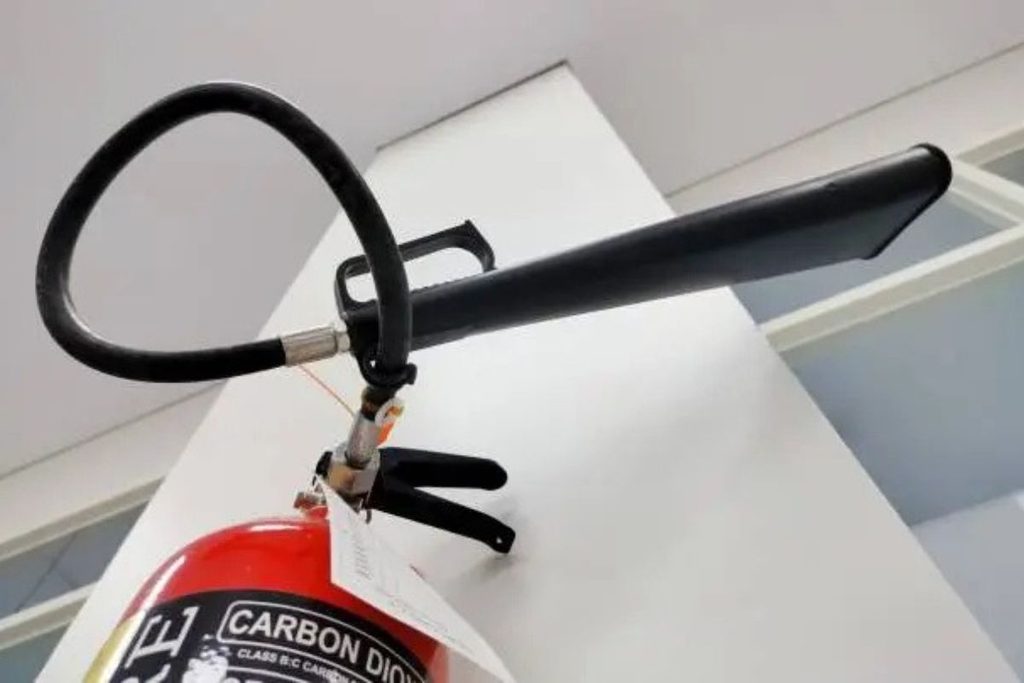
The right question is not whether you need one but where the electrical load sits. Four spaces in a typical home answer it:
- The home office or cinema room. A desk with two monitors, a docking station and a four-way adaptor is a dense electrical cluster. The same applies to a home cinema set-up with a projector and amplifier. A 2 kg CO2 unit by the door covers all of it.
- The garage or hallway with an e-bike. London Fire Brigade attended 206 e-bike and e-scooter fires in 2025, up from 171 in 2024. The Office for Product Safety and Standards logged 211 such fires across the UK in 2024. Some 39% began while the battery was on charge.
- The garden room or utility with an inverter. Households that have fitted solar panels at home have also added an inverter, a battery and new wiring.
- The holiday let. A guest who has never used an extinguisher will grab whatever is on the wall. A black label unit beside the consumer unit is the sensible choice.
A failing lithium-ion battery can pass 700°C and feeds its own fire. No handheld extinguisher will reliably stop it. The CO2 unit protects the escape route and the wiring around it, not the battery. Electrical Safety First publishes e-bike charging advice built on one rule: never charge on an escape route, and never overnight.
What Must a CO2 Extinguisher Never Be Used On?
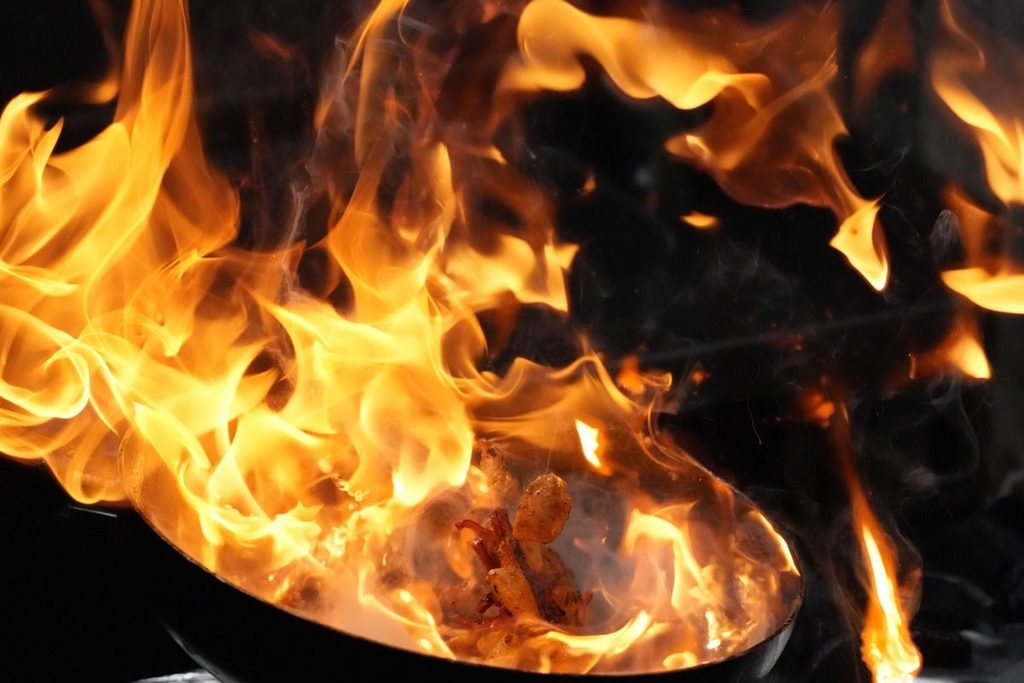
The kitchen is where most home fires begin, and it is the one room where a CO2 unit is the wrong tool. Home Office figures for the year to March 2025 record 25,334 dwelling fires in England. Cooking appliances caused 44% of the accidental ones. A high-pressure jet of gas aimed at burning oil throws the oil across the hob. A fire blanket or a yellow label wet chemical unit is the answer there.
Solid fuels are the second exclusion. CO2 knocks down the visible flame on wood, paper or a sofa but does not cool the material. The fire returns within minutes. A red label water unit or a water mist unit handles that job.
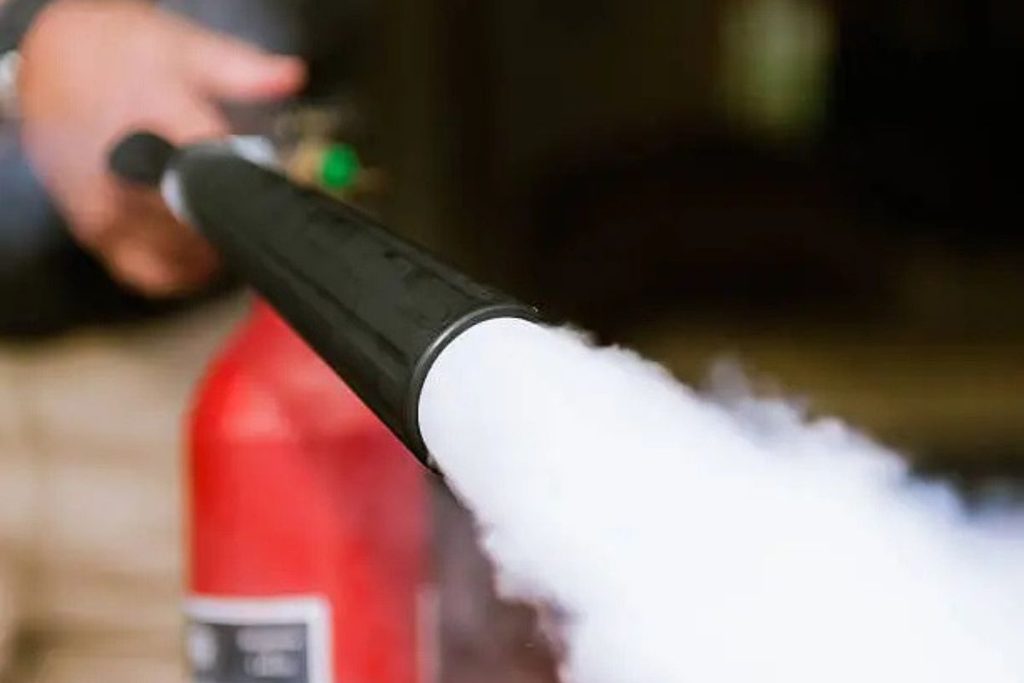
The discharge horn drops far below freezing in use, and bare skin against it suffers a frost burn within seconds. Hold the unit by the handle and lever only. In a small space such as a utility cupboard, the gas can push the oxygen level below what a person needs. Stand back about 1 to 1.5 metres, discharge, and leave the door open afterwards.
How Do You Match the Extinguisher to the Room?
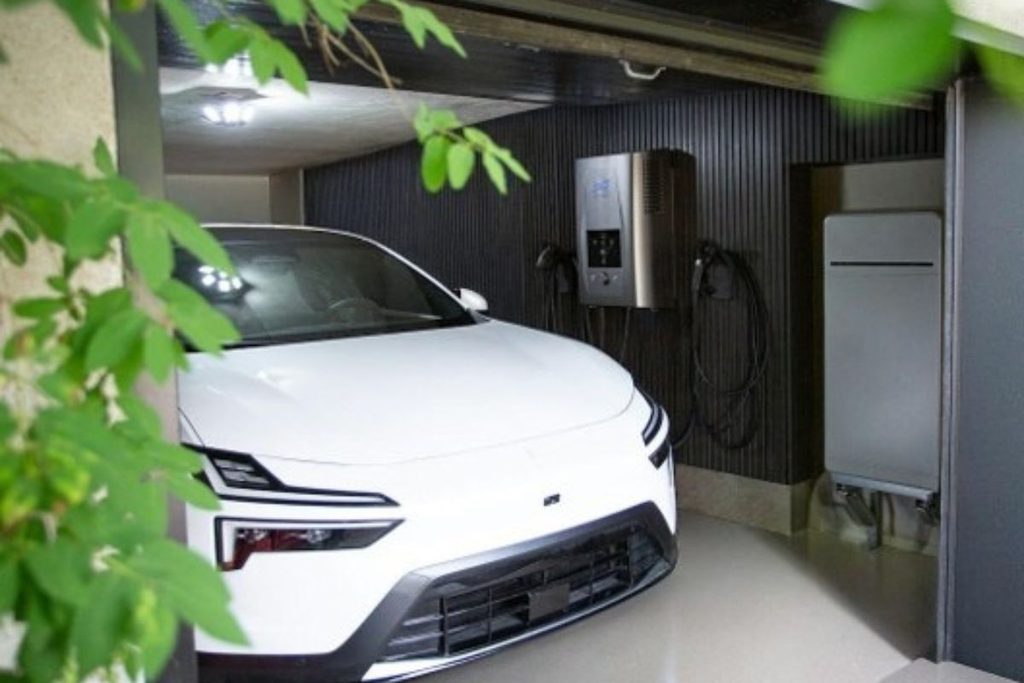
A home does not need an extinguisher in every room. It needs the right one where a fire is most likely to start.
| Room | Likely fire | What to keep |
| Kitchen | Cooking oil, toaster, air fryer | Fire blanket plus yellow label wet chemical |
| Home office or cinema room | Adaptors, chargers, amplifier | 2 kg black label CO2 |
| Garage with e-bike or EV charger | Battery, charger, wiring | 2 kg black label CO2 by the exit |
| Garden room or utility | Inverter, heater, tumble dryer | 2 kg black label CO2 |
| Living room and bedrooms | Candles, heaters, fabrics | Water mist or red label water |
Every unit needs an annual check and a full service on a fixed cycle. Water, foam, powder and wet chemical units are refilled every 5 years. A CO2 unit is pressure tested every 10 years because its cylinder holds more pressure.
Five Points to Settle Before You Buy
- Match the colour label to the likely fire, not to the price.
- Keep a fire blanket in every kitchen, whatever else you own.
- Choose a 2 kg CO2 unit for electrical spaces; the 5 kg size is built for workplaces.
- Mount units beside the exit of the room, never deep inside it.
- Smoke alarms come first: 24% of dwelling fires in England in the year to March 2025 were in homes with no alarm.
A Small Red Cylinder, Chosen Properly
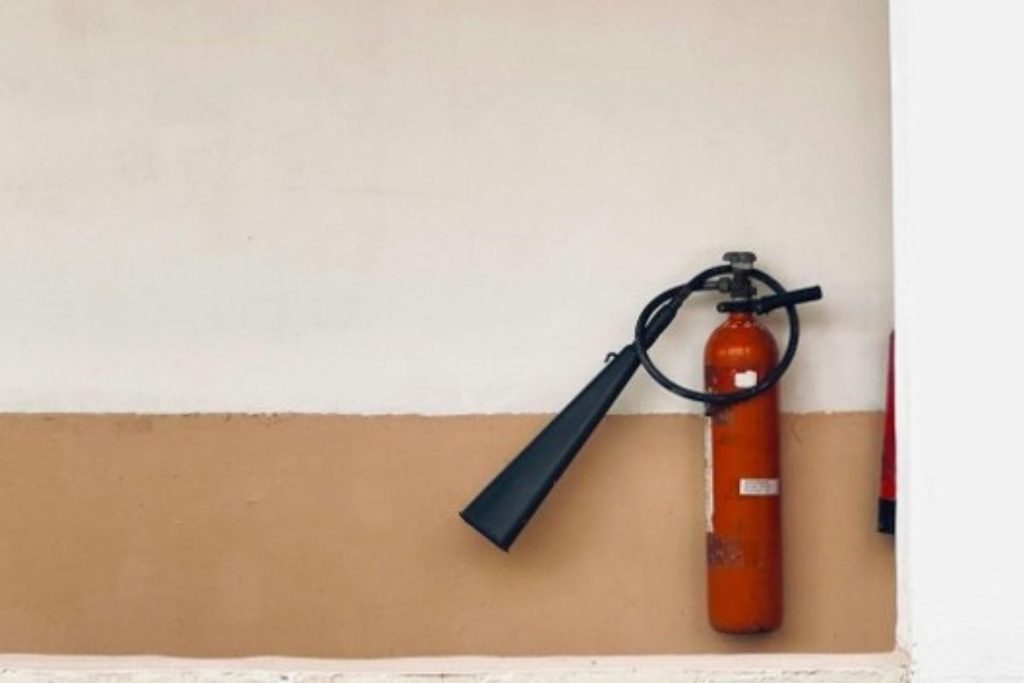
An extinguisher is only useful when its contents match the fire in front of it. The black label CO2 unit is the right answer for the office, the garage and the garden room. It is the wrong answer for the kitchen, where oil and fat demand a blanket or a wet chemical unit. If the fire is bigger than a wastepaper basket, get out and call 999.
Frequently Asked Questions
Can I Use a CO2 Extinguisher On a Chip Pan Fire?
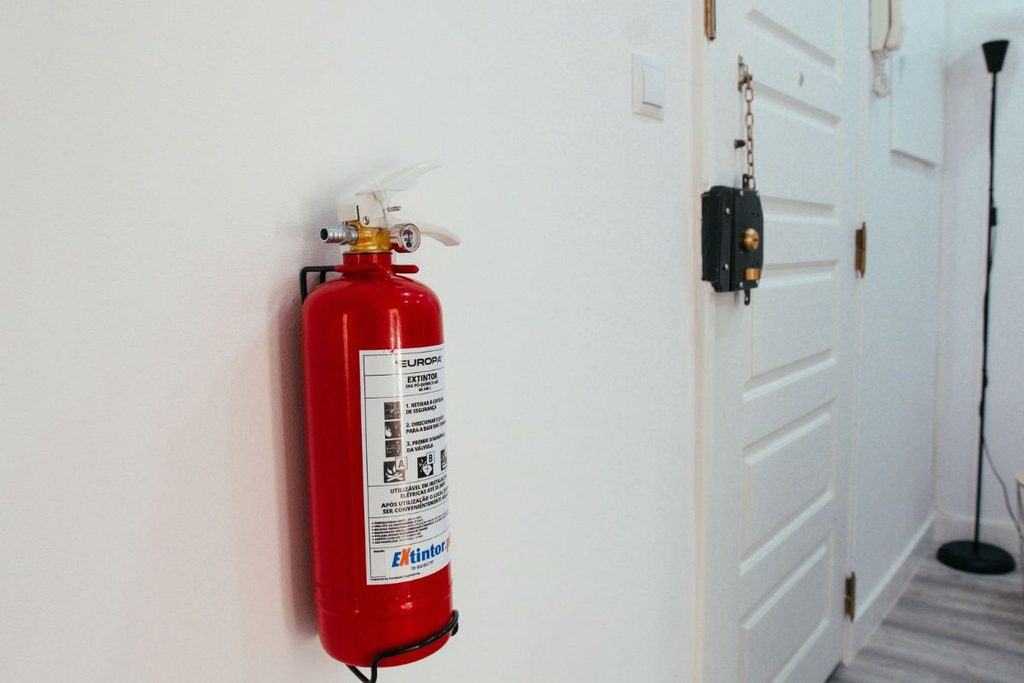
No. The gas leaves the cylinder under high pressure and throws burning oil out of the pan. Use a fire blanket or a yellow label wet chemical extinguisher, and never try to move the pan.
How Often Does a CO2 Extinguisher Need a Service?
A basic check is due every year. CO2 units then need an extended service and pressure test every 10 years, against 5 years for the other types. The dates are printed on the service label.
Is a Fire Blanket Enough for a Kitchen?
For a pan fire, yes. It does not help with a toaster or dishwasher fault, which is why a CO2 unit in the hallway outside is a sensible pairing. Mount the blanket where it can be reached without leaning over the hob.
Where Should I Charge an E-Bike at Home?
Charge it in a garage or outbuilding where possible, on a hard floor and away from the door. Never charge in a hallway, landing or stairwell, and never overnight. Unplug the charger as soon as the battery is full.
Images courtesy of unsplash.com and pexels.com