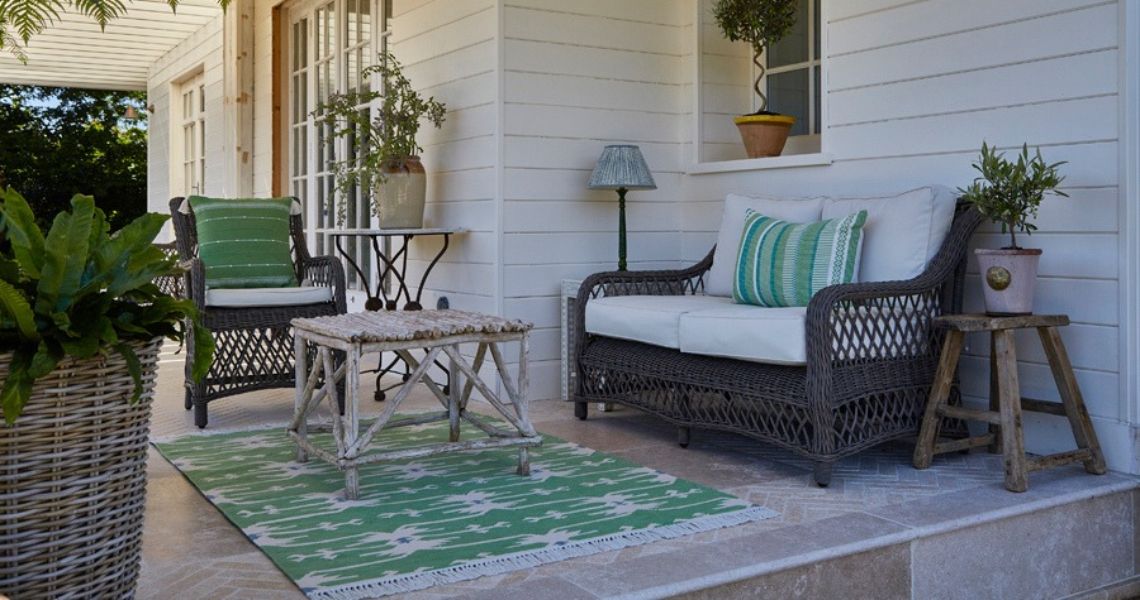
For many British homes, the garden comes alive in summer and falls quiet soon afterwards. Furniture is covered, evenings move back indoors, and parts of the garden may go largely unused until the following spring.
The outdoor sauna is beginning to challenge that pattern.
Once more closely associated with Nordic countries, rural retreats and destination spas, saunas are becoming increasingly visible across the UK. According to figures from the British Sauna Society, the number of public sauna sites has grown from just 45 in 2023 to more than 800 today.

That rapid growth has introduced more people to a practice that has long been part of everyday life in Finland. It is also beginning to influence how homeowners think about their own outdoor spaces.
For some, a garden sauna offers a private place to switch off. For others, it provides a reason to use the garden more regularly once the main summer season has passed.
Erin Hickman, sauna designer at Finnmark Sauna, shares how to choose a design that suits the house, position it within the garden and create a practical space around it.
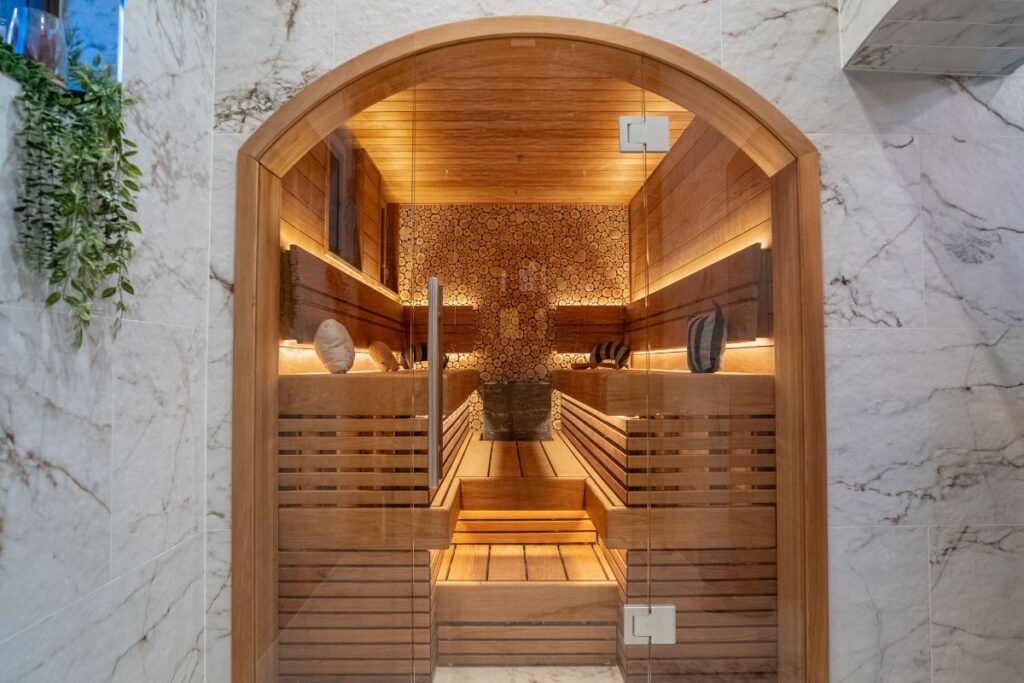

“With most of our clients, the sauna ends up shaping how the garden is used as a whole,” she says. “Once it’s part of the plan, people start thinking about how they move through the space, not just how it looks from the house.”
Why More Homeowners Are Bringing Sauna Culture Home
Public saunas have helped introduce a more relaxed and accessible approach to sauna bathing. Independent sites have opened on beaches, beside lakes and in towns and cities, moving the experience beyond the occasional visit to a hotel or spa.
That exposure has changed what many people expect from a sauna. Rather than seeing it as a luxury reserved for holidays and spa weekends, homeowners are beginning to consider how it could fit into their normal routines.

At home, there are no bookings or journeys to plan. A sauna can be used after exercise, at the end of the working day or with friends at the weekend. It can offer privacy when that is wanted, but can just as easily become a sociable part of the garden.
It also gives outdoor space a use that is not dependent on warm, dry weather. While dining furniture and barbecues may be used mainly during summer, a sauna remains appealing as temperatures begin to fall.

“In a lot of UK gardens, the space is there, but it’s underused for much of the year,” says Erin. “Once a sauna is in place, people naturally start using the garden more often because there’s a clear reason to go outside.”
A garden sauna does not require the rest of the space to be transformed into a private spa. It can sit beside an existing terrace or occupy a quiet corner, allowing the experience to become part of everyday life without taking over the entire garden.
From Barrel Saunas to Contemporary Cabins
The shape and style of an outdoor sauna will determine how naturally it sits within the garden.
Erin explains, “When we’re helping clients choose a sauna, we always start with the space around it. The setting tends to guide the design more than personal preference on its own.
“In gardens with softer planting and a more natural feel, barrel saunas tend to sit more comfortably. The shape breaks up the lines and feels less formal when it’s surrounded by greenery.
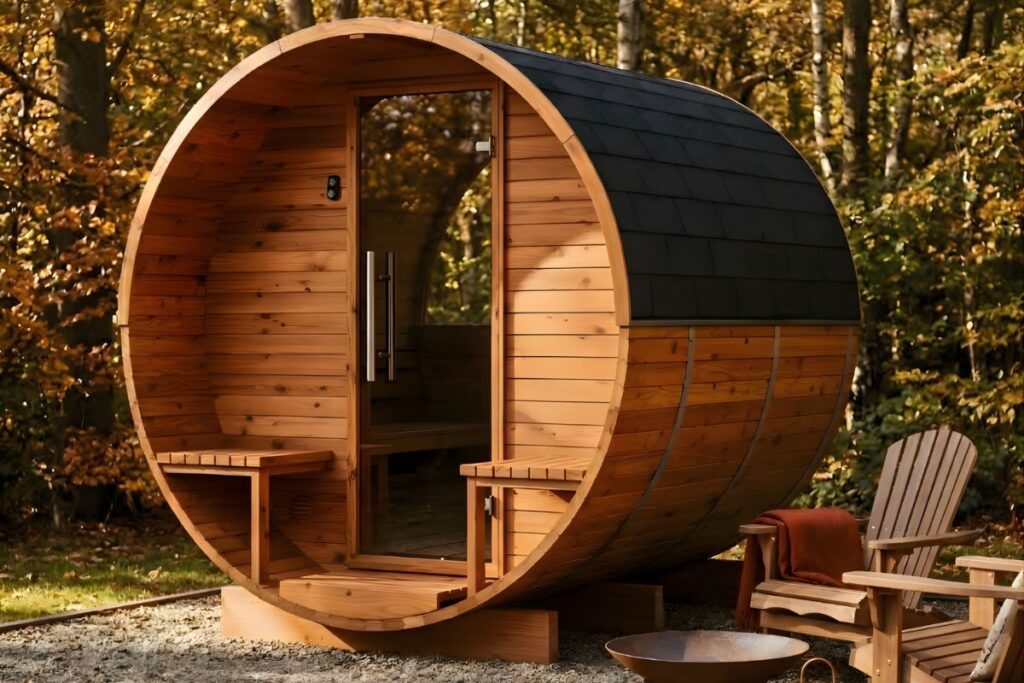
“In more structured spaces, especially where there’s paving or a strong architectural layout, a smaller cube sauna usually works better. It lines up cleanly with the rest of the garden rather than standing apart from it.
She adds, “For clients who want something that feels more like a permanent part of the garden, we often guide them towards cabin saunas. They have a bit more presence, and you can work with glazing, layout and proportions so it feels closer to a garden room than a standalone object.
“The key thing is that it shouldn’t feel like something that’s been added in afterwards. When it’s right, it sits naturally within the garden and becomes part of how the space is used day to day.”
How to Design the Space Around Your Sauna


“The sauna itself is only one part of the experience,” says Erin. “You also need to think about how you are going to get there, where you will cool down and where you will leave your towel or robe.”
A clear route from the house is one of the most important details. Crossing a lawn may feel easy in July, but wet grass and uneven ground can quickly become inconvenient later in the year.
“A level path and some discreet lighting can make a huge difference,” Erin explains. “If it feels awkward to reach, particularly in the evening or when the ground is wet, you simply will not use it as often.”
Somewhere to sit between sessions is also worth including. This might be a bench beside the sauna, a small covered area or seating positioned to make the most of a view across the garden.
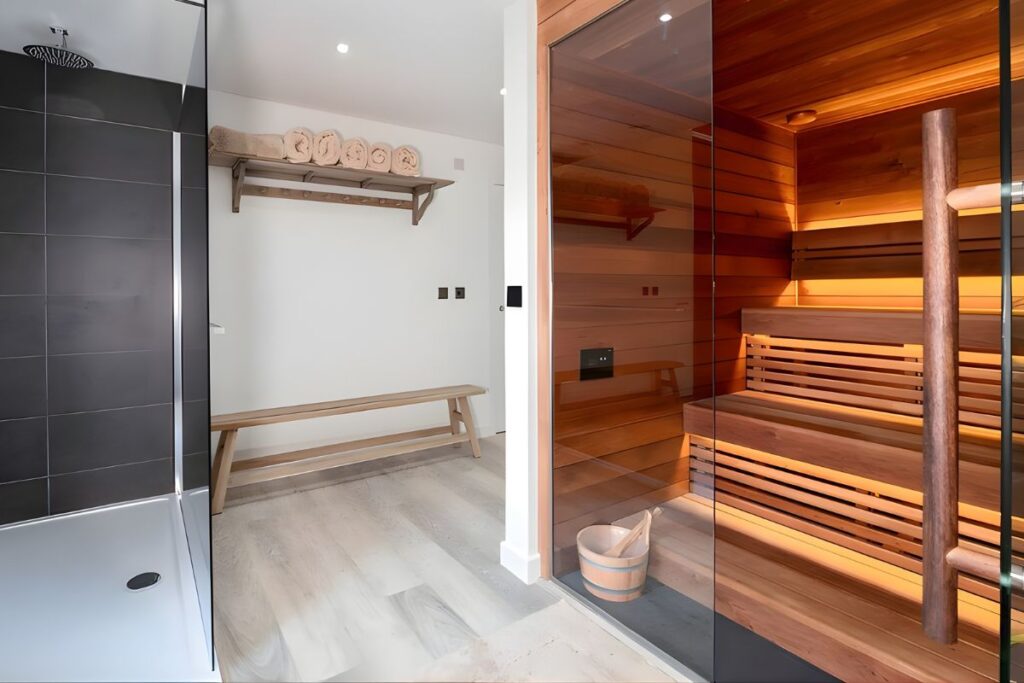

“You do not need to build a full outdoor spa,” says Erin. “Often, a bench, somewhere dry for towels and a little privacy are enough to make the space feel considered.”
Low-level lighting can mark out the path and any changes in level without flooding the garden. Around the sauna itself, softer lighting will create a calmer atmosphere and prevent the building from feeling exposed after dark.
Privacy might come from the direction the sauna faces, a timber screen or layers of evergreen planting. The aim is not necessarily to hide the building completely, but to make the space around it feel comfortable and removed from busier parts of the home.
Some homeowners may choose to add an outdoor shower or cold plunge, although Erin says neither is essential.
“They can work brilliantly, but they need to be planned properly,” she says. “An outdoor shower will need plumbing and drainage, while a plunge tub needs space for filling, cleaning and maintenance. For many people, a bench outside and a cool shower indoors will be more than enough.”

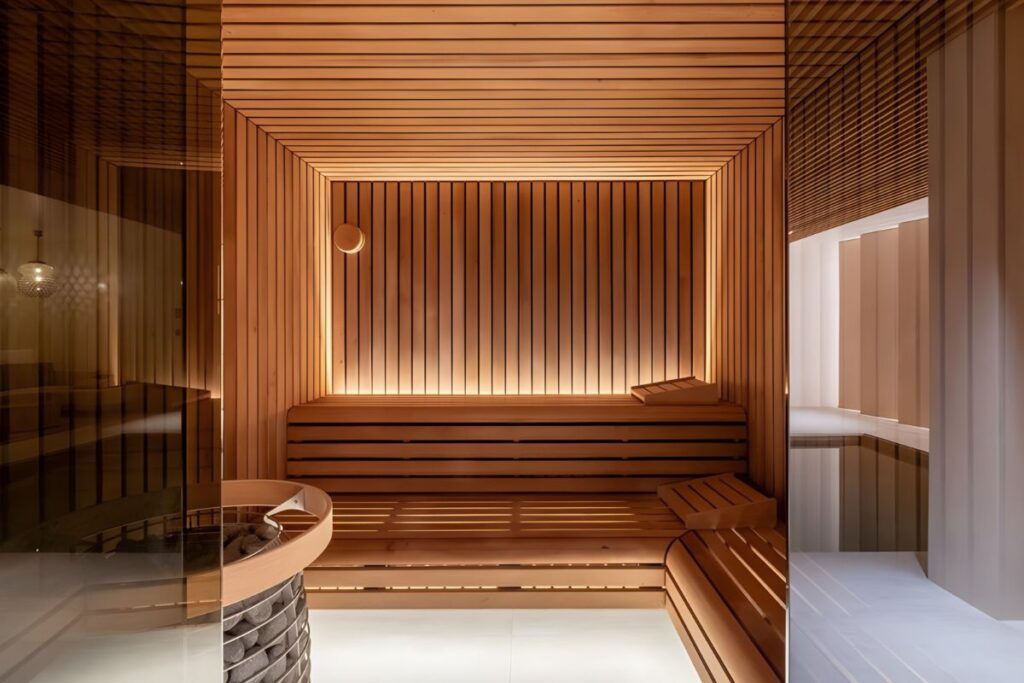
“The best sauna spaces are usually the simplest,” Erin adds. “Everything is where you need it, and the sauna feels like it has always belonged in the garden.”
That is ultimately what sets a successful garden sauna apart. It should not feel like a novelty or an isolated garden building, but a natural part of the outdoor space. Summer may be when homeowners begin thinking about their gardens, but a well-planned sauna gives them a reason to keep using it throughout the rest of the year.
Images supplied