When I first heard that the National Gallery, London would stage its first-ever Neo-Impressionist exhibition, I knew it would be a landmark. Radical Harmony: Helene Kröller-Müller’s Neo-Impressionists will launch on September 13th 2025 and will run until February 8th 2026 and promises to bring Georges Seurat’s dazzling Le Chahut to the UK for the first time, alongside works by Paul Signac, Théo van Rysselberghe, Jan Toorop and others.
But what makes ‘Radical Harmony’ especially intriguing is that it’s not simply a survey of a movement; it’s a love letter to one woman’s vision. Helene Kröller-Müller was a German-born Dutch collector whose radical eye and daring spirit shaped one of the most important collections of modern European art.
I had the rare opportunity to see both sides of this story, as before the aforementioned exhibition debuts in London, I travelled on a press trip to Arnhem in The Netherlands and then onto the Kröller-Müller Museum in Otterlo, where Helene’s collection lives today. There, among quiet pine forests and a sculpture garden so expansive it feels endless, I discovered why the National Gallery’s exhibition matters; and why you too, might want to follow your visit to this fascinating exhibition at the National Gallery in Trafalgar Square with a city break to Arnhem and the Kröller-Müller Museum.
Seeing ‘Radical Harmony’ in London
Let’s begin with London. When the exhibition opens in September, the Sainsbury Wing will fill with colour, geometry, and radical technique. Neo-Impressionism emerged in the late 1880s, with Seurat’s A Sunday on La Grande Jatte heralding the end of Impressionism and the start of something new: dots of pure colour systematically placed to capture light, rhythm, and harmony.
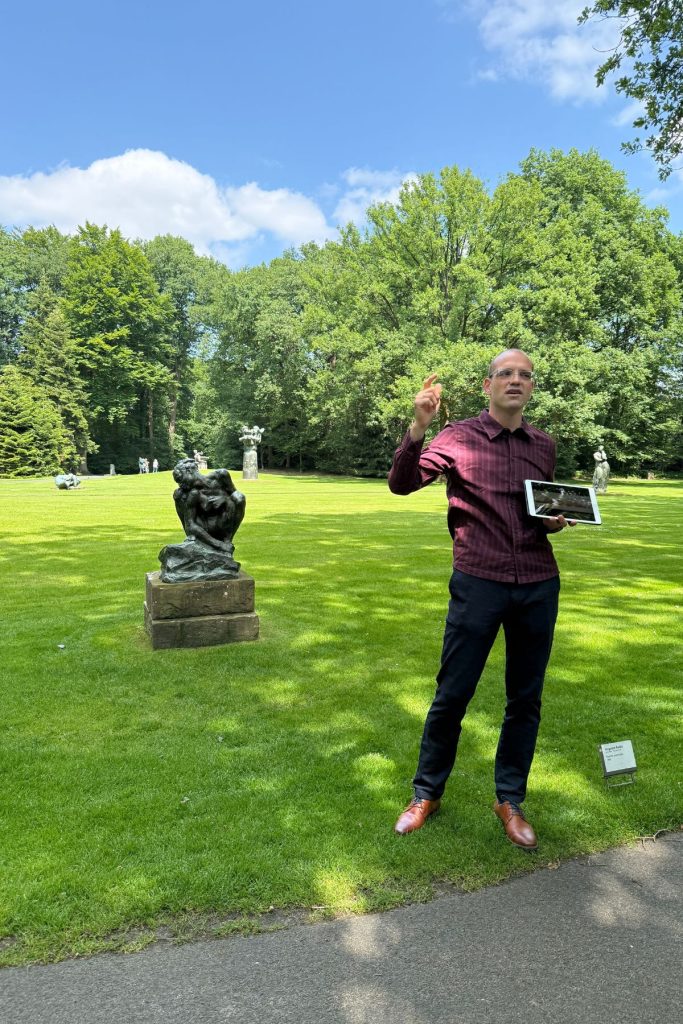

Whilst visiting the Kröller-Müller Museum I had the distinct pleasure of listening to curators Renske Cohen Tervaert (Kröller-Müller) and Julien Domercq (Royal Academy of Arts) introduce the show, they spoke of art that was not only aesthetic but political. Many Neo-Impressionists, they explained, sought to remake society in the wake of industrialisation, painting working-class struggles while simultaneously transcending reality through colour theory and optics. Critics at the time even claimed this new method signified “the death of painting” because the individuality of brushstrokes was replaced by a science of dots.
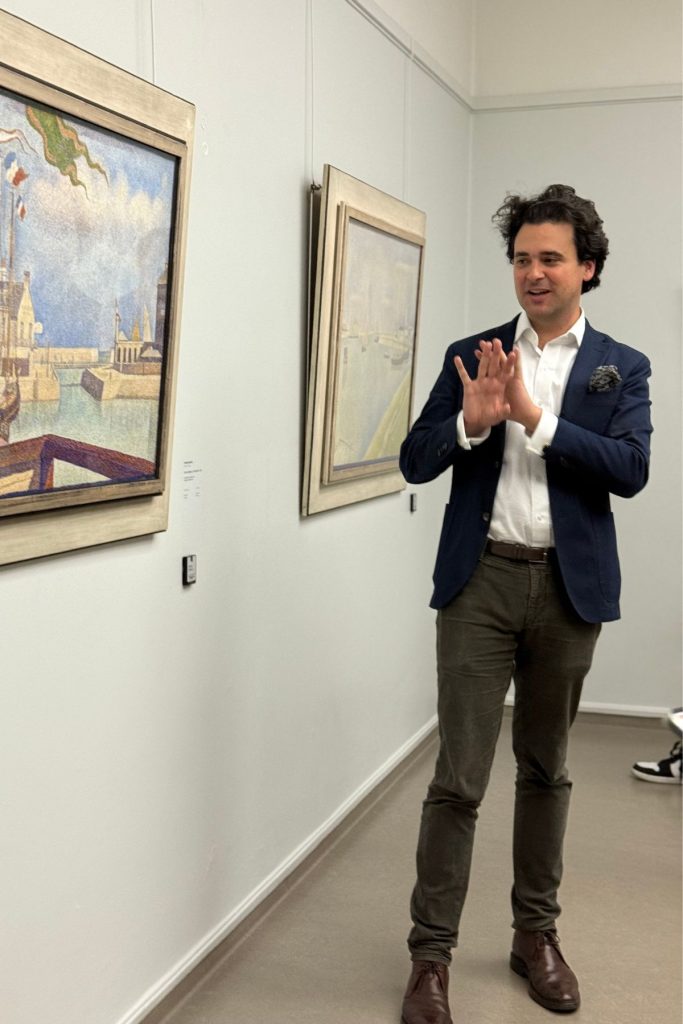
At the National Gallery, these tensions will be laid bare. You’ll encounter Seurat’s Le Chahut, alive with cancan dancers in pointillist rhythm, and his atmospheric Sunday at Port-en-Bessin and The Canal of Gravelines. You’ll see Signac’s The Dining Room (1886–87) alongside A Sunday, in a rare pairing. There will be Van Rysselberghe’s luminous orchards, Toorop’s brooding seas, and Henry van de Velde’s Twilight. And thanks to loans from the Rijksmuseum, Tate, and private collections, the exhibition expands beyond Helene’s purchases to reveal the full sweep of this radical moment.
It’s an intense encounter and the perfect introduction. But after experiencing the wider collections on show in Otterlo, I think the curious will look at this London exhibition as the beginning of a story, not the end. To really understand why Helene collected these works, and how she lived with them, you need to step out of the city and into her museum.
Arnhem and the Kröller-Müller: Stepping Into Helene’s World
My base for exploration in The Netherlands was the Dutch city of Arnhem, which offers a relaxed pace, tree-lined streets, and a cultural richness often overlooked in favour of the bigger city hitters in The Netherlands. From here, it’s a short bus ride to Otterlo, where the Kröller-Müller Museum is tucked inside the beautiful De Hoge Veluwe National Park, one of the Netherlands’ largest protected landscapes.
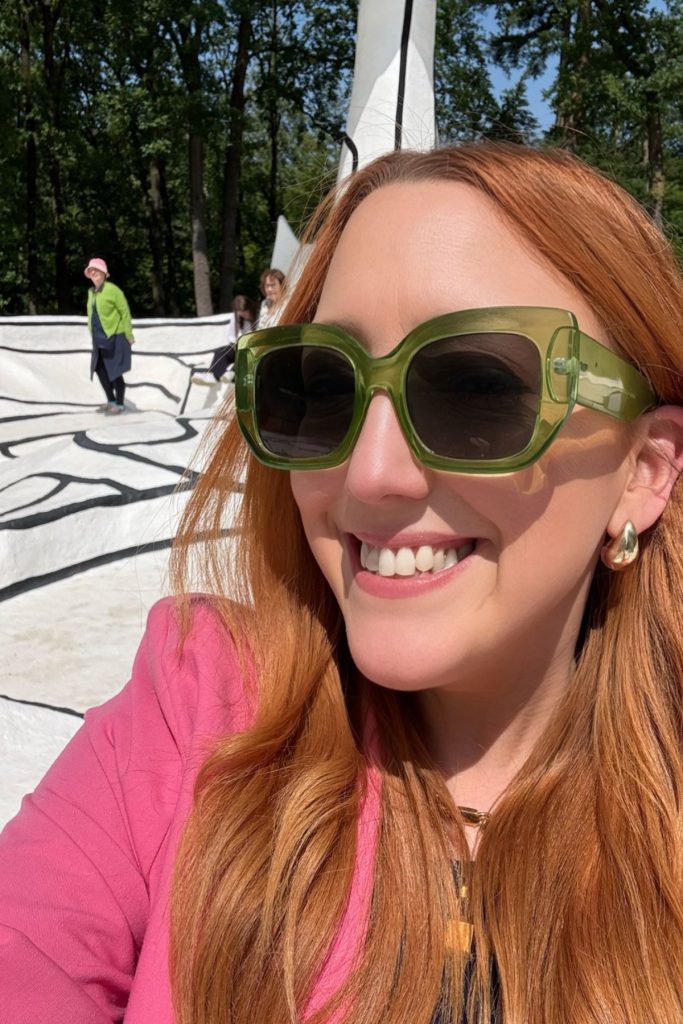
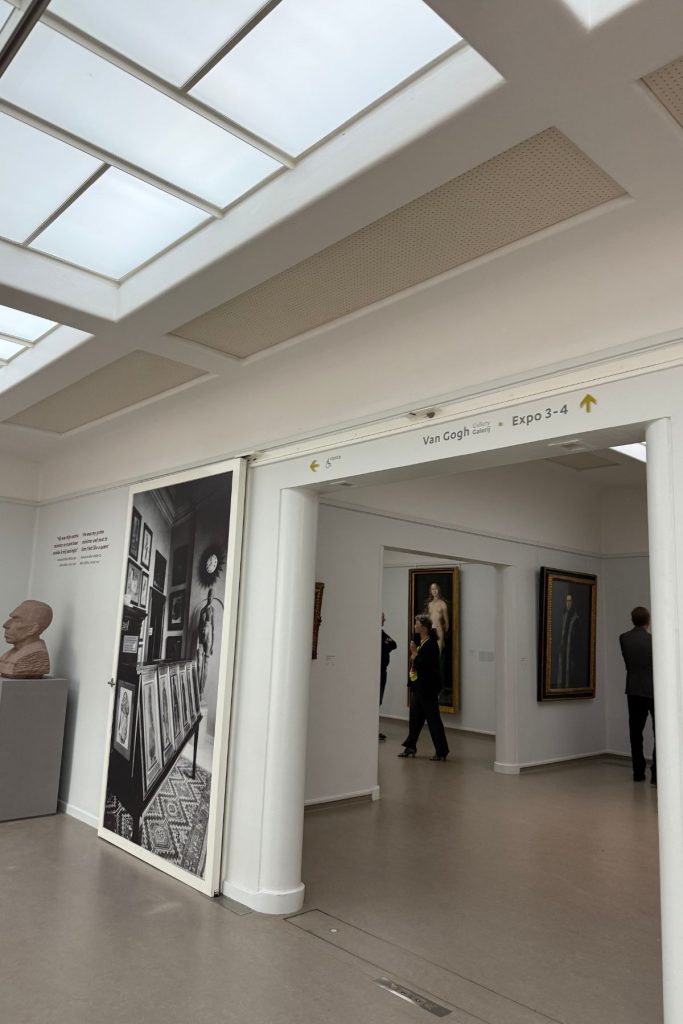
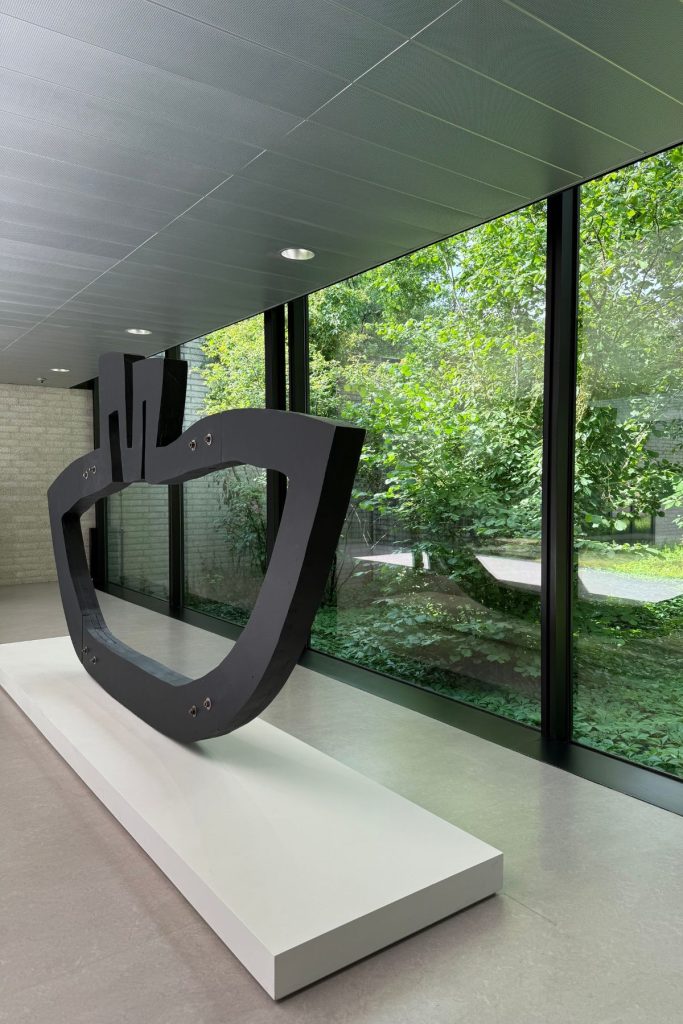
The museum is unlike anywhere else I’ve been. Step inside, and you find not only the world’s second-largest Van Gogh collection but also masterpieces by Monet, Picasso, Mondriaan, and, of course, the Neo-Impressionists who inspired ‘Radical Harmony’. Outside, the 25-hectre sculpture garden is its own wonderful outdoor gallery, dotted with works by Barbara Hepworth, Jean Dubuffet, Marta Pan and many others.


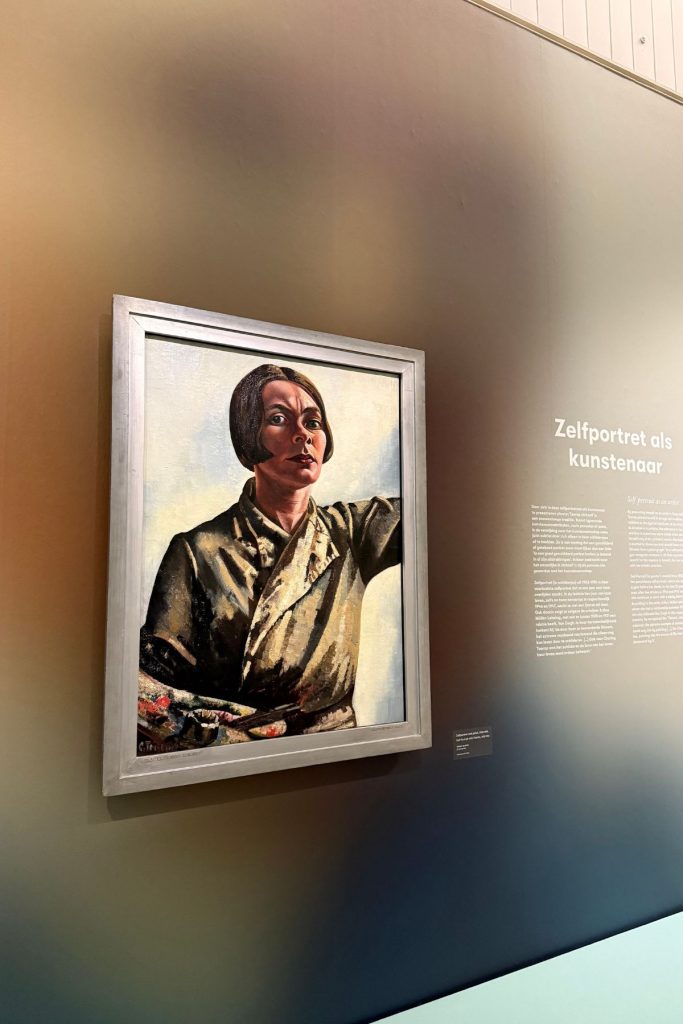
On my visit, Renske Cohen Tervaert led us through Helene’s permanent collection. She explained how Helene was among the first Europeans to display modern works on stark white walls, a choice that now feels obvious but was radical in the early 20th century and how Helene deliberately mixed French, Belgian, and Dutch artists, emphasising the movement’s pan-European scope. Helene’s vision wasn’t only aesthetic; it was a philanthropic act. She donated her entire collection to the Dutch government on the condition that a museum be built to house it, within the vast forested estate she and her husband Anton owned.
To stand in those galleries is to feel Helene’s presence: a woman ahead of her time, collecting works critics dismissed as “too scientific” or “too political” and building what remains the world’s most comprehensive Neo-Impressionist collection.
Planning Your Arnhem City Break
If you leave Radical Harmony in London with your curiosity piqued, a trip to Arnhem and then onto the Kröller-Müller Museum makes a perfect next step. Here’s how to do it:


Travel:
Take the Eurostar from St Pancras International to Rotterdam (from around £40–£50 one-way if you book early; journey time is around 3h 13m). From there, continue by train to Arnhem (1–1.5 hours). Arnhem’s local buses run directly to Otterlo and the Kröller-Müller.
Tickets:
A combined day ticket for the museum and park costs €26.90 per adult which gives you access to both the galleries and the sculpture garden. It’s worth every penny for a full day immersed in art and nature! Book here: https://krollermuller.nl/koop-je-ticket
Where to Stay:
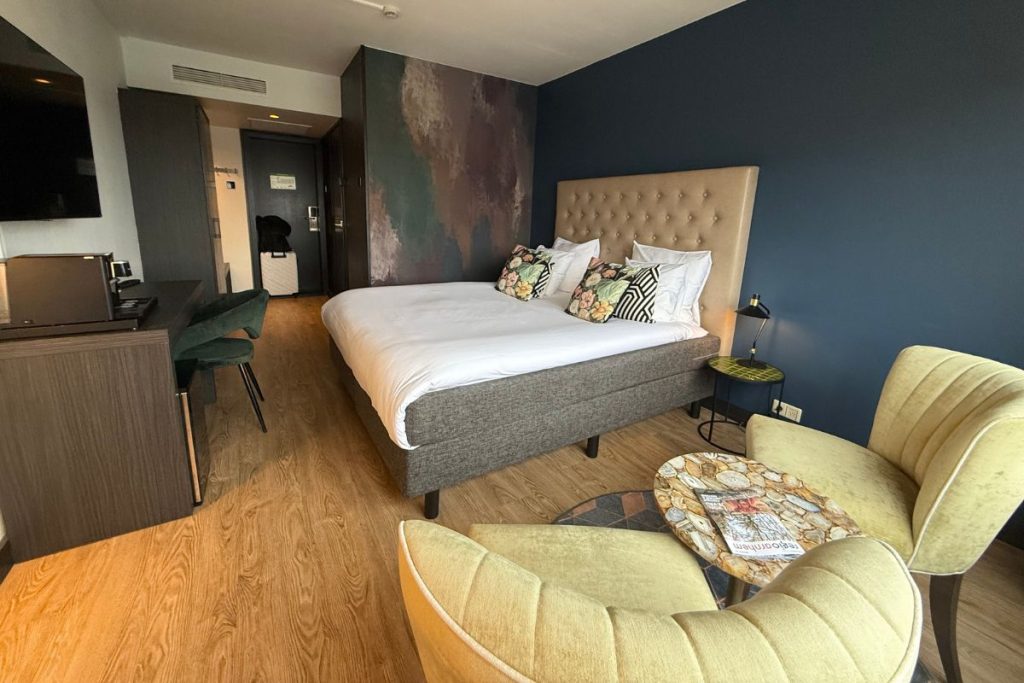
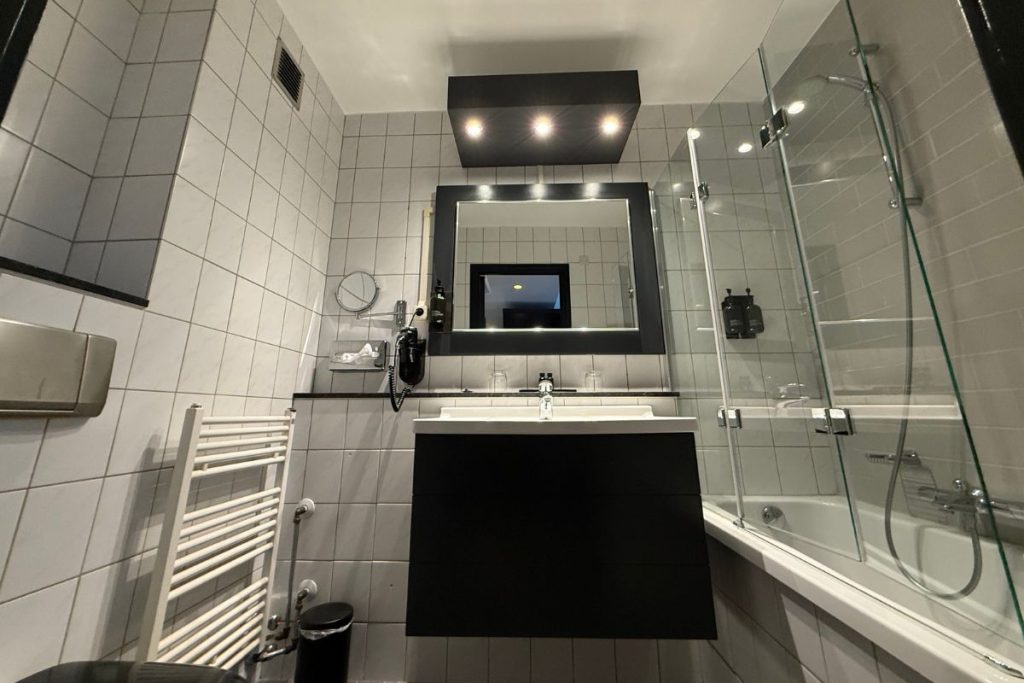
I stayed at Hotel Haarhuis, directly opposite Arnhem Central Station. It’s a stylish, modern base with a wellness centre and rooftop bar (also home to a funky and arty rooftop toilet that has to be seen to be believed!) with double room rates starting from around £82 per night. Book here: https://hotelhaarhuis.nl/
What to Do in Arnhem:
Arnhem rewards lingering… It’s truly a city where history, design and street life weave together. Here are the highlights I’d add on must-visit list:
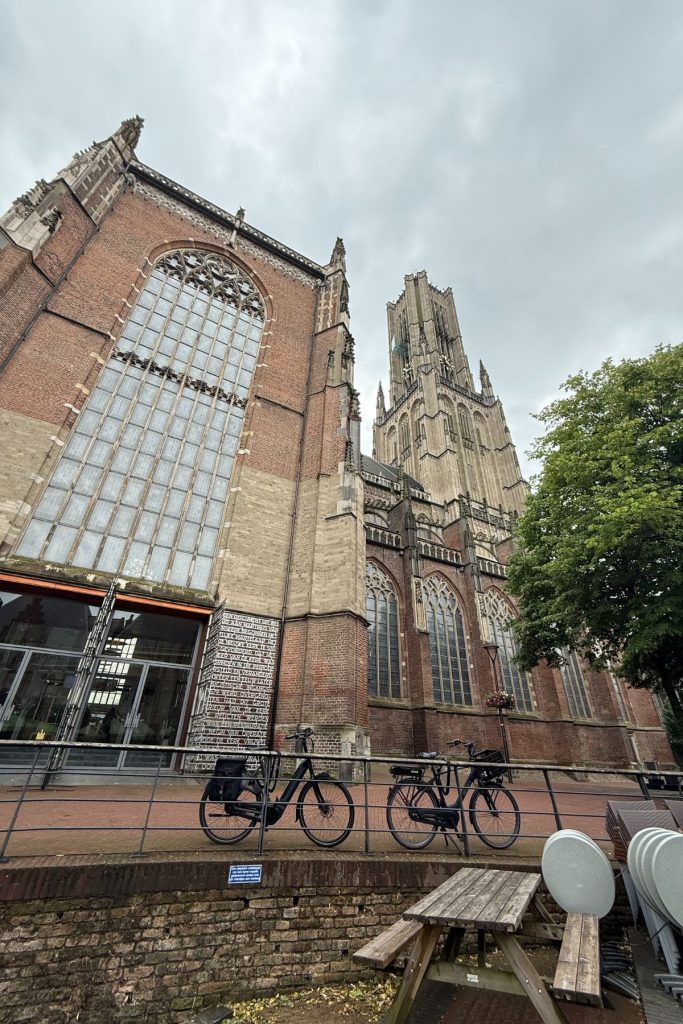
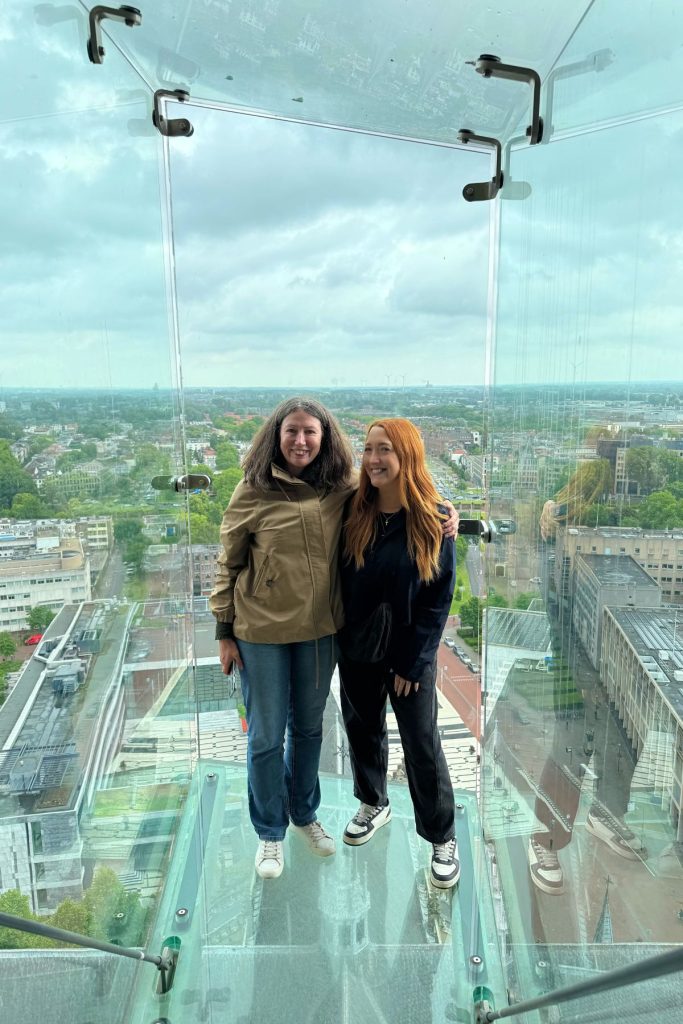
– Eusebius Church: Ride the glass elevator up Arnhem’s tallest spire, then step onto the see-through balconies, 73 metres above the ground. Equal parts terrifying and exhilarating, it offers unmatched city views. Look closer at the church itself: memorial sculptures dedicated to Covid circle the exterior, while inside, rotating fashion displays nod to Arnhem’s creative streak.
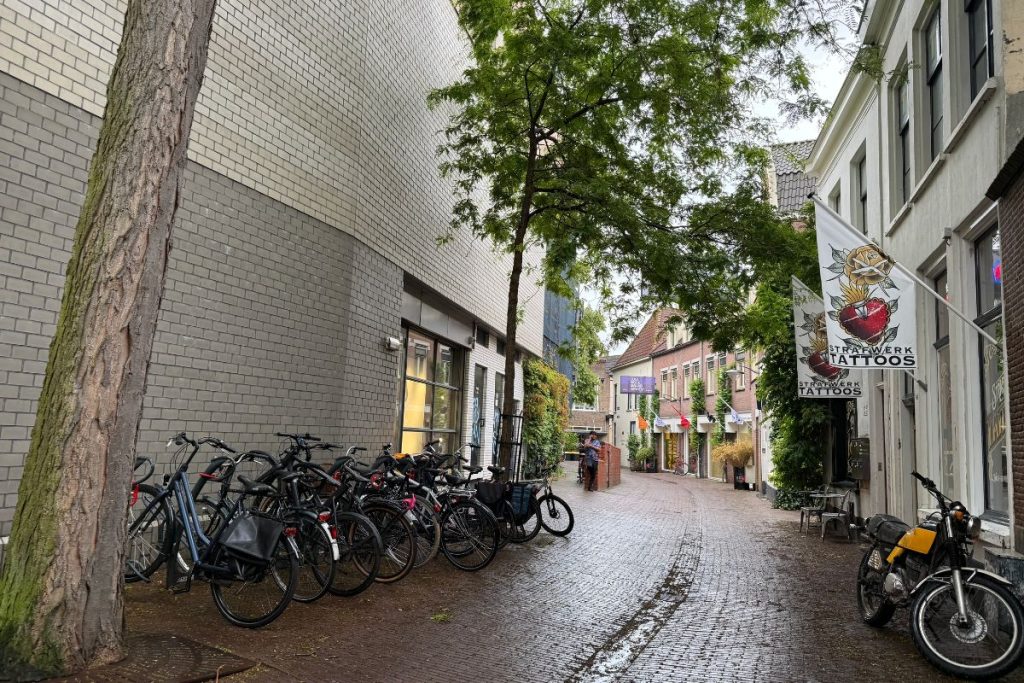
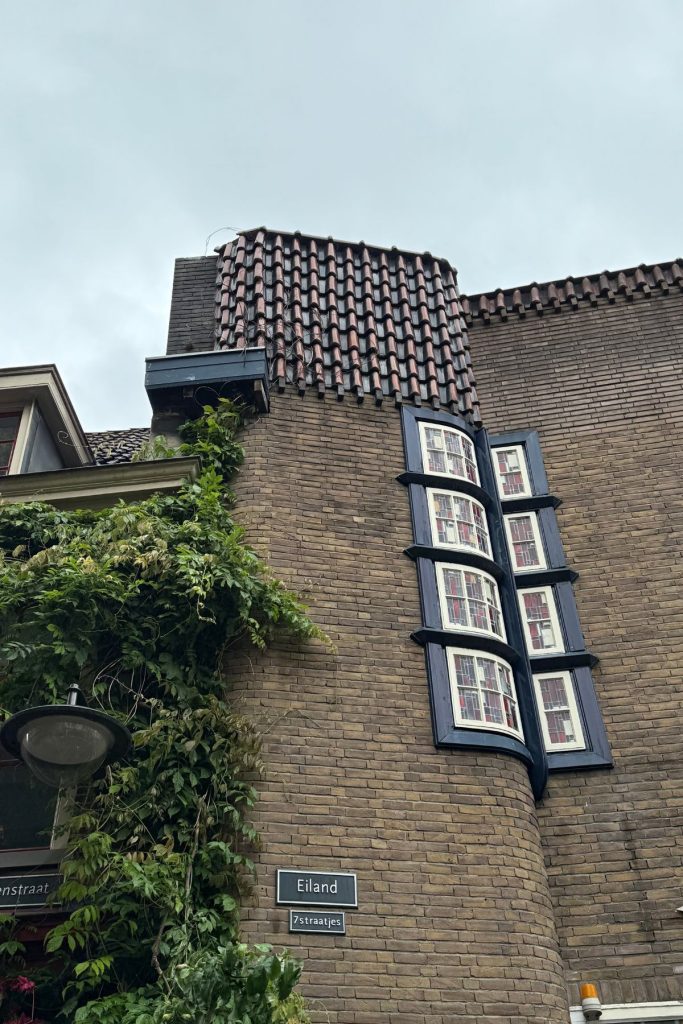
- 12 Straatjes: Arnhem’s answer to Amsterdam’s “9 Streets.” This cluster of cobbled lanes brims with vintage shops, indie cafés and Dutch charm. Perfect for an afternoon of wandering.
- Stolpersteine: Across Arnhem’s pavements you’ll spot brass cobblestones engraved with names which are tiny memorials marking the homes of Jewish residents murdered during the Holocaust. They’re easy to miss, but once seen, impossible to forget.
- Gelders Huis & Stadhuis: Striking, modernist civic architecture that reflects Arnhem’s forward-looking identity, standing in contrast to its wartime scars.
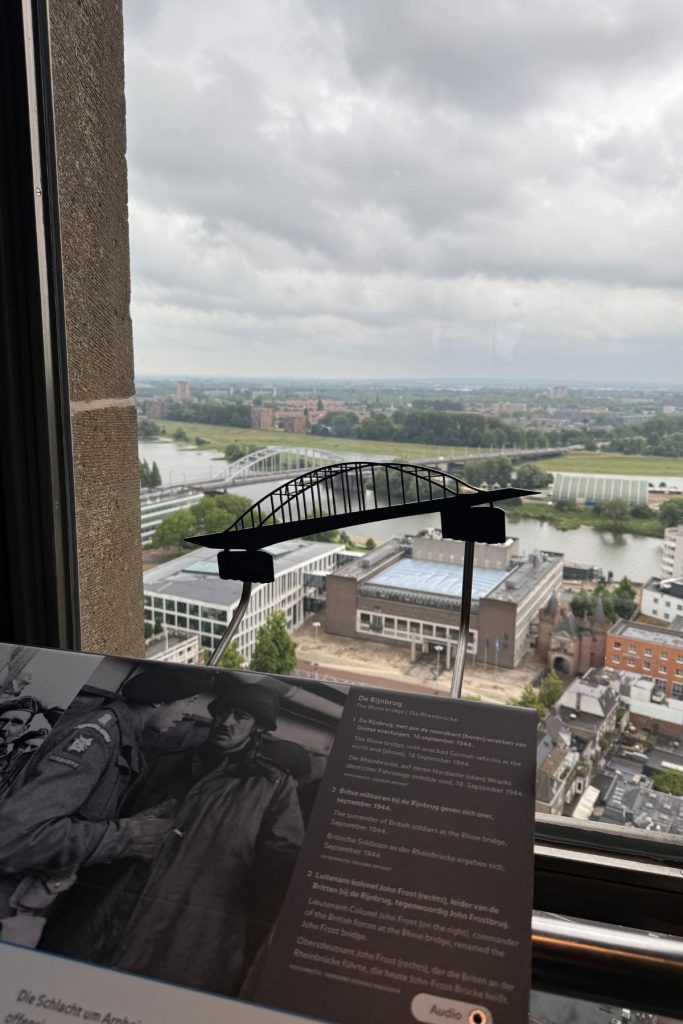
- The John Frost Bridge: The WWII landmark as seen in A Bridge Too Far. Today it’s a poignant reminder of Arnhem’s resilience.
- Modekwartier: Arnhem’s beating creative heart in Klarendal. Over 60 studios, ateliers and shops showcase local designers – from avant-garde fashion to homeware.
Why London and Arnhem Belong Together
Standing in the National Gallery this autumn, you’ll encounter Neo-Impressionism as a moment of radical change: luminous canvases hung in the heart of a bustling capital. It’s a heady, intellectual introduction. But if the dots and dashes of Seurat, Signac and Van Rysselberghe lodge themselves in your imagination, as they did in mine, then Arnhem and the Kröller-Müller Museum is where you should go next.
Go to the National Gallery first and let ‘Radical Harmony’ ignite your fascination. And then, whether later this year or the next, book that Eurostar ticket, head for Arnhem, and walk in Helene Kröller-Müller’s footsteps. Because this isn’t just an exhibition; it’s a journey. And it deserves to be followed all the way.
Radical Harmony: Helene Kröller-Müller’s Neo-Impressionists
13 September 2025 – 8 February 2026
The National Gallery | Sainsbury Wing
Admission charge | Members go free
Book or find out more at: Nationalgallery.org.uk
Review and images by Victoria Reddington @vic_reddington