One of the satisfying moments in learning to drive is understanding why a decision makes sense. You see what your instructor has been describing, connect it with what is happening ahead and begin to recognise the situation for yourself. A lesson gives you space to develop that understanding with someone beside you who can explain, demonstrate and guide your next attempt.
You have a part in that conversation too. Asking a question, describing what you noticed or explaining which part of a demonstration helped can make driving lessons more rewarding. For learners in South West London, where residential streets and busier roads offer varied learning situations, a good discussion helps connect the controls of the car with the decisions outside it.
Ask for the reason behind the instruction
An instruction tells you what to do at a particular moment. An explanation helps you understand when the same idea might apply again. Both have a place in a driving lesson. While you are driving, follow the guidance you need to handle the situation safely. When you are safely parked, there is time to explore the reasoning in more detail.
Choose a moment you remember clearly and ask what information mattered. You could say, “What did you notice first on that approach?” or “How did you decide which part of the street needed attention?” These questions invite your instructor to make their thinking visible. The answer may draw attention to something you saw without yet understanding its significance.
Then explain the idea back in your own words. You might say that an interrupted view prompted you to allow more time to assess what was ahead. Your instructor can confirm what you have understood and clarify anything you have missed. The exchange is a chance to connect an explanation with a real experience, rather than simply remember a phrase.
Give a demonstration a clear purpose
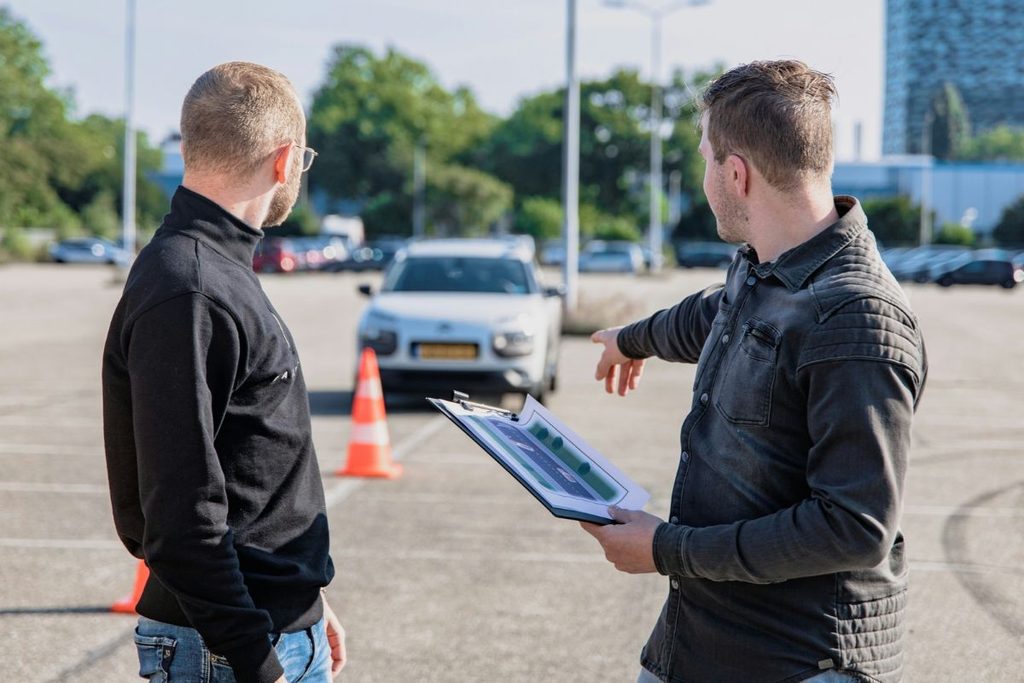
Watching an instructor demonstrate something can help you connect several separate actions. Before the demonstration, ask which part to concentrate on. It might be the timing of an observation, the way the car is positioned or how an early decision creates time for the next one. Knowing what to watch makes it easier to follow without trying to absorb every movement at once.
Agree when to discuss what you have seen. Your instructor may explain during a suitable demonstration or talk through it once parked. Let them manage the driving lessons and choose how to present the example. As a passenger, you can pay attention to the agreed point without also having to operate the controls.
Afterwards, describe what stood out and ask about any part you would like to see again. Before your own attempt, agree what support you will receive. Your instructor can choose an appropriate setting and explain how they will guide you through it. A demonstration is most valuable when you understand what you are being invited to practise, not just what the finished action looks like.
Describe the feedback that helps you learn
Feedback becomes easier to use when you can connect it with a particular moment. Ask your instructor to identify what you did, what effect it had and what to carry into the next attempt. For example, noticing something earlier might have given you more time to assess your options. That explanation tells you what to repeat and why it matters.
Tell your instructor when a particular explanation makes an idea clear. Perhaps talking while parked helps you picture the sequence, or a demonstration shows how separate actions fit together. Your preference may change with the task. Sharing that information gives the instructor a starting point for discussing how to explain the next skill.
When exploring tuition locally, the lesson information at Wimbledon Driving School can help you prepare for a conversation about your experience and learning goals. Ask how feedback and demonstrations could feature in your driving lessons. The aim is to understand how you and an instructor would work together, with room for questions as your skills develop.
Before the next lesson, choose one example from the previous session that you would like to revisit. Keep it specific enough that you and your instructor can picture the same moment. “The approach where I spotted the parked van earlier” is more useful than “junctions were better”. Ask what you noticed, which decision followed and whether the instructor needed to prompt you. You are building a description of a skill, not awarding yourself a score.
You can also ask your instructor to compare two examples from the lesson. Why did one situation call for more preparation than another? What changed in the view, the traffic or the space available? Discussing those differences while parked helps you understand why a familiar action may need adapting. Finish by agreeing what you will look for in the next suitable exercise. That gives the explanation somewhere to go and gives you a clear question to return to afterwards.
Understand how support develops into independence


There is a difference between completing an action with guidance and recognising when to take it yourself. Discuss that distinction with your instructor. They can explain which decisions you are starting to make independently and where a prompt still helps. Being clear about the support you are receiving makes your achievements easier to understand.
Ask how the next exercise will build on what you have just practised. Your instructor might suggest repeating an activity, adjusting one part of it or introducing a different setting when appropriate. You can contribute by explaining what you understand and which question remains. Decisions about increasing the demands should reflect your ability and the conditions on the day.
When a skill begins to feel familiar, ask your instructor what would show that you understand it in a different setting. Their answer can help you distinguish remembering a particular street from recognising the information that matters. Keep that distinction in mind when discussing the next lesson, with the instructor choosing the setting and level of support.
Confidence can grow from knowing both what you can do and when to ask for guidance during your driving lessons. There is no need to present every lesson as a performance. Being interested in the reasoning, open about your understanding and willing to practise gives you an active role in learning. The most rewarding result of a conversation may be the next moment when you recognise a situation and can explain your decision for yourself.
Images courtesy of unsplash.com and pexels.com