From selling vintage clothes out of a campervan to building a multimillion-pound fashion brand, Lucy & Yak has never followed the traditional rulebook. As the Yorkshire-founded business celebrates a major sustainability milestone with its first Circular Fashion Fair in Sheffield, Victoria Reddington meets co-founder Chris Renwick to talk about humble beginnings, confronting fashion’s waste problem and why responsibility shouldn’t end when a garment leaves the shop.
There aren’t many fashion brands that can trace their beginnings back to a campervan, 30 pairs of dungarees and two people happy to live on £150 a week. But then, there aren’t many brands quite like Lucy & Yak.
Fast-forward almost a decade and the business has 17 stores across the UK, a turnover measured in millions and a fiercely loyal following. Yet, as I discovered when I sat down with co-founder Chris Renwick at Sheffield’s Peddler Warehouse, success has never been about following the conventional path.
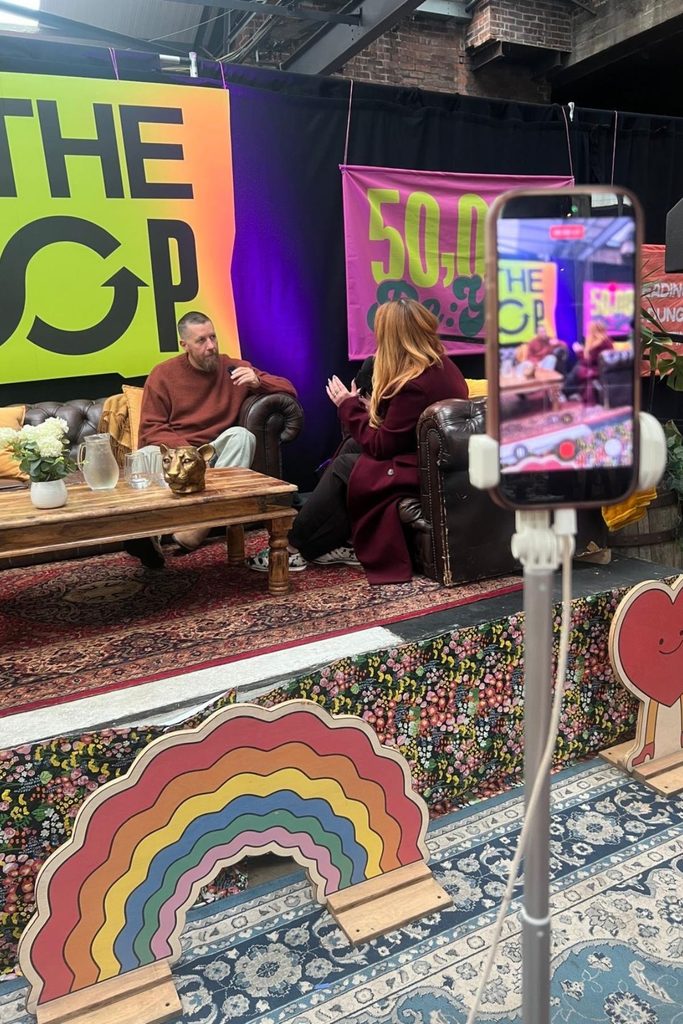
We’re meeting ahead of Lucy & Yak’s first Circular Fashion Fair, a three-day event bringing together sustainable fashion advocates, independent makers and industry experts to celebrate a significant milestone: more than 50,000 garments kept in circulation through the brand’s Re:Yak programme.
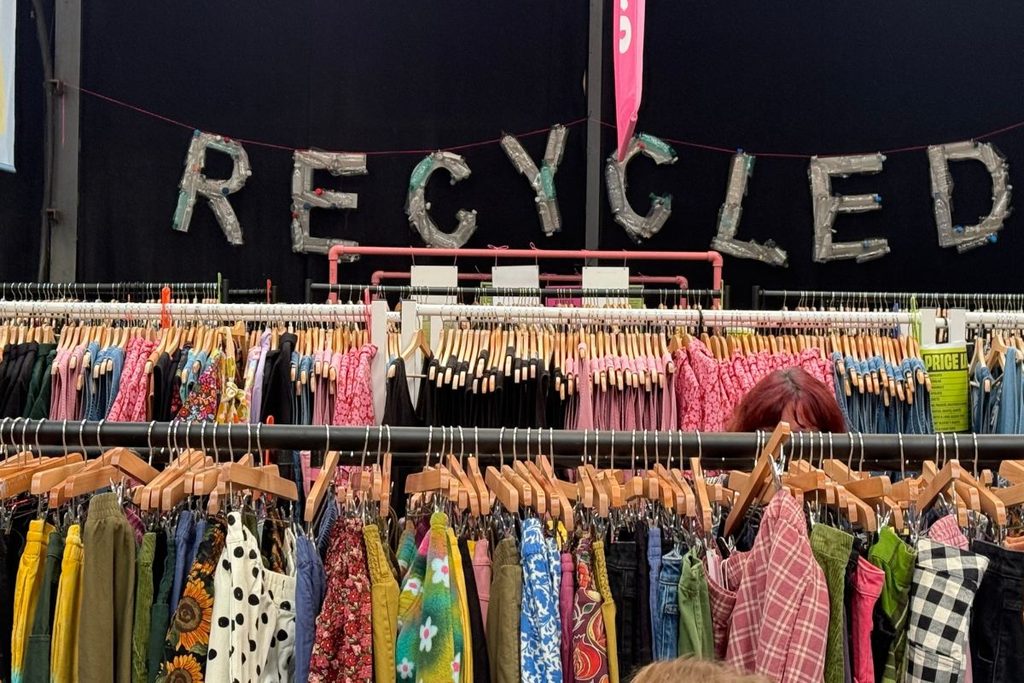
The warehouse provides an impressive backdrop, with more than 40 rails of preloved and imperfect clothing forming part of a weekend dedicated to rethinking how we buy, wear and care for our clothes. Chris is clearly pleased with the setting. In fact, there’s a certain full-circle moment to being here.
“One of the first big events we did was in this very room, which I didn’t realise until I turned up yesterday,” he tells me.
For a brand with its roots firmly planted in Yorkshire, it’s a fitting place to celebrate just how far the business has come.
FROM £150 A WEEK TO A MULTIMILLION-POUND BUSINESS
Lucy & Yak was founded in 2017 by Chris and Lucy Greenwood, following several years spent travelling through New Zealand, Thailand and China. When they returned to the UK, the couple moved into a campervan named Yak, travelling between cities, sourcing vintage clothing from charity shops and selling their finds through Depop.
“We were living on, like, 100, 150 quid a week,” Chris recalls. “I thought if we can make 150 quid a week, then that’s fine.”
Their first collection of 30 pairs of dungarees sold almost immediately.
“I was like, ‘I think we’ve got something. Let’s just see if it happens again.’ So we went straight back and did 60 pieces.”
The rest, as they say, is history.
What strikes me throughout our conversation is how little of the company’s success was planned in the traditional sense.
“The whole thing was just super organic. There was very little intent to anything that we ever did. We just sort of went with the flow.”
That sense of freedom clearly shaped their approach to business. Having spent years travelling without the usual financial commitments, neither founder felt particularly motivated by the prospect of accumulating wealth.
“Money was never the end game,” Chris explains.
Instead, they continually reinvested in the business, building a company that grew considerably larger than either had initially imagined. But with growth came decisions about its future.
WHY THEY CHOSE PEOPLE OVER PRIVATE EQUITY
By the company’s seventh year, Chris and Lucy were considering their next chapters. Their romantic relationship had ended, Lucy had started a family and both were beginning to think about stepping away from the business they’d built together. They explored the possibility of selling, including conversations with private equity companies; but something didn’t sit comfortably.
“It just never felt right,” Chris tells me.
The turning point came when Chris read a book by Julian Richer, founder of electrical retailer Richer Sounds, who had transferred ownership of his business to its employees.
“I read his book a few years back because he did the same thing. He sold his to the employees,” Chris explains.
The idea immediately resonated with him. Rather than selling to outside investors, Chris and Lucy could leave the business in the hands of the people who had helped make it successful.
“It just felt like the right thing to do, to leave it in the hands of the people that had been working on it for seven or eight years.”
For a couple who had never been particularly motivated by money, it was a decision that aligned with the values they’d held from the beginning.
“There was just something about taking money and legging it off into the sunset didn’t sit right with both of us.”
Today, Lucy & Yak is employee-owned, with Chris having stepped away from the day-to-day running of the company. It’s an unconventional decision, but perhaps not surprising when you consider the values that shaped the business from its earliest days, and those same values are central to its approach to sustainability.
THE LANDFILL THAT CHANGED EVERYTHING
Of everything Chris tells me during our interview, it’s his account of a trip to India that is particularly fascinating. While visiting a supplier in Ahmedabad, Gujarat, he passed an enormous landfill site.
Until that moment, he’d never seen one.
“It was like six, seven stories high,” he recalls.
He describes families moving around the site, tractors working across the waste and a seemingly endless mountain of discarded materials.
“I’d never seen anything like it. And I was like, ‘This is crazy. We need to do something with this.'”
It was a confronting experience for someone running a clothing business. So – despite Lucy & Yak’s commitment to more responsible materials and production methods – Chris recognised an uncomfortable truth: the company was still producing new clothing, and some of it would inevitably become waste.
“We’re taking raw materials, taking virgin materials, and we’re producing something, and some of it’s gonna end up in places like this.”
Rather than looking elsewhere for someone to blame, he began questioning what responsibility manufacturers should take for the products they create. The experience stayed with him for months and eventually led to the development of Re:Yak.
Conceived in 2020 and launched in 2023, the programme allows customers to return unwanted Lucy & Yak clothing in exchange for credit towards future purchases. What makes it different is that garments can be returned regardless of their condition. Chris was adamant that customers shouldn’t feel uncomfortable bringing back clothing that was damaged, worn out or no longer suitable for resale.
“We wanted every piece in,” he explains.
His reasoning is simple, consumers, governments and manufacturers all have a part to play in tackling textile waste, but Chris believes brands should stop passing responsibility elsewhere.
“We made it. It’s our responsibility.”
It’s a statement that gets to the heart of everything Lucy & Yak is trying to achieve.
WHY EVEN YOUR WORST-LOOKING DUNGAREES HAVE VALUE
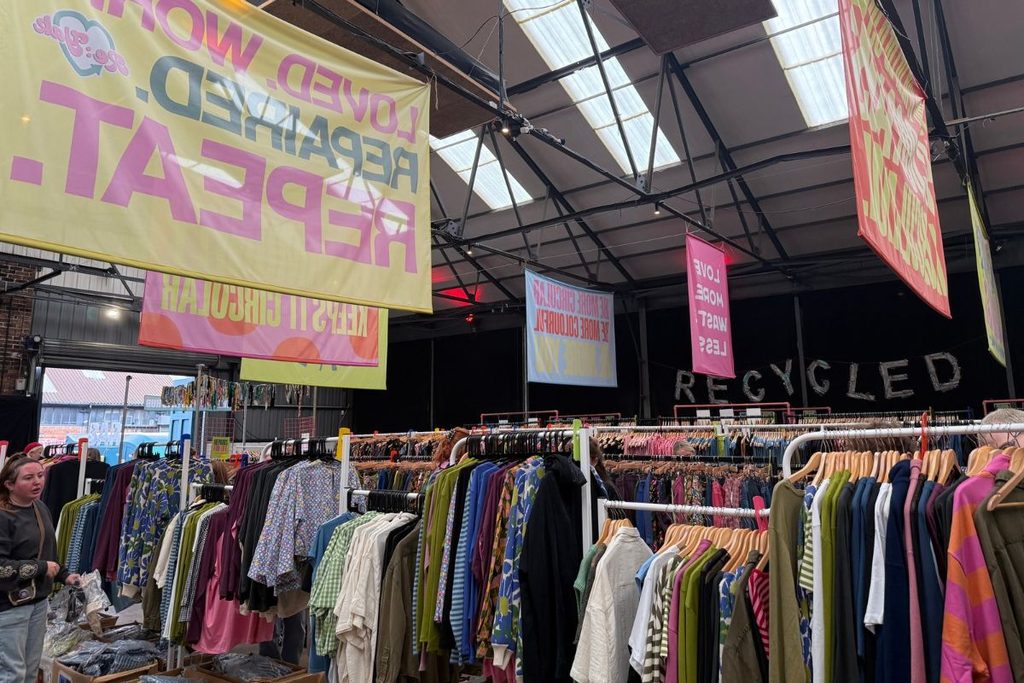
Under Re:Yak, customers returning a pair of Lucy & Yak dungarees receive £25 towards their next purchase, whether the garment is in perfect condition or has seen considerably better days. Other products operate on a tiered credit system. Then, once returned, garments are assessed and either resold, repaired, upcycled or recycled.
Chris explains that garments unsuitable for resale or repair can be processed through a specialist recycling partner, where the shredded textiles are used as filling for dog beds.
What’s great is that the figures suggest the approach is working.
“I think it’s something like three or four per cent of everything we’ve had back since it started has gone to recycling,” he says.
The remaining 96–97% has been suitable for resale, repair or upcycling.
Perhaps most surprisingly, the programme also influenced the company’s physical expansion. Chris explains that having more stores made it easier for customers to return garments and for staff to process them efficiently.
“We’ve got 17 shops now. So part of the retail growth was because we needed that network of shops for the Re:Yak.”
Rather than treating circularity as a separate sustainability initiative, Lucy & Yak has built it into the way the business operates. Three years after launching the programme, the company has now kept more than 50,000 garments in circulation. For Chris, however, there’s still more to be done.
THE NEXT CHAPTER: REPAIRS FOR LIFE
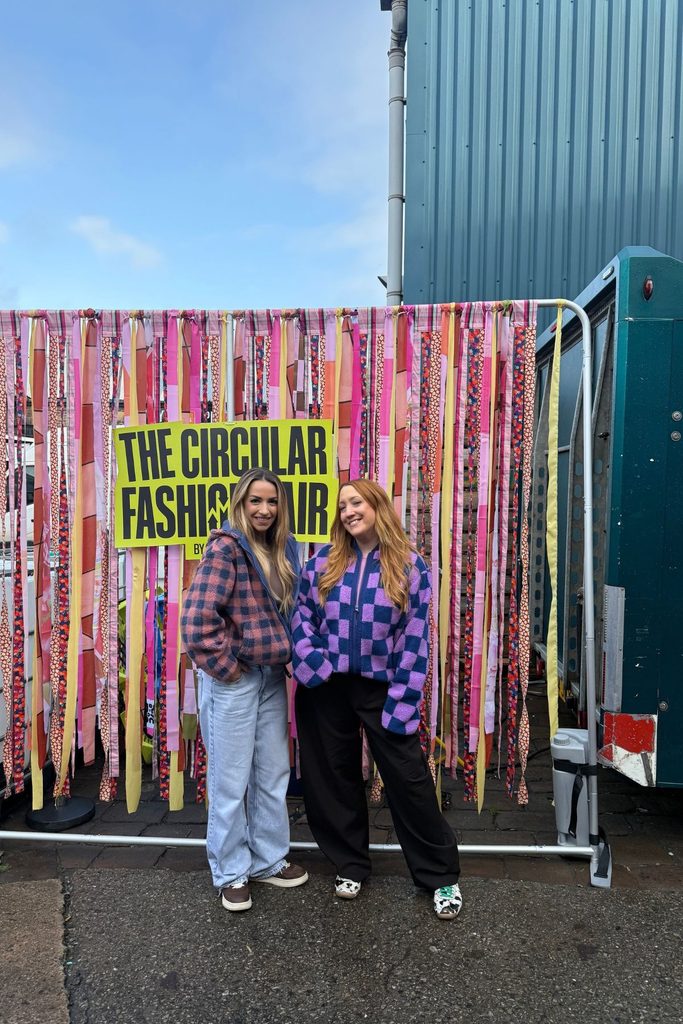
As we talk about what comes next, Chris reveals that Lucy & Yak is preparing to introduce another initiative, Repairs for Life. Inspired by the repair programmes operated by brands including Patagonia and Nudie Jeans, the scheme will offer free repairs on eligible Lucy & Yak garments to members of its Comfort Club loyalty programme. The idea is that customers can continue wearing their clothing for as long as possible, rather than replacing something because of a rip, tear or damaged seam. Chris wants the process to be straightforward:
“Some people, brands, they put on sort of initiatives, and then when you read the small print, it’s this, oh, this and this and this.”
His approach?
“Let’s just make it as easy as possible for people to do.”
It’s another example of the company’s belief that responsibility for clothing shouldn’t end at the point of purchase. This neatly brings us back to the reason we’re sitting in Sheffield.
BRINGING CIRCULAR FASHION BACK TO YORKSHIRE
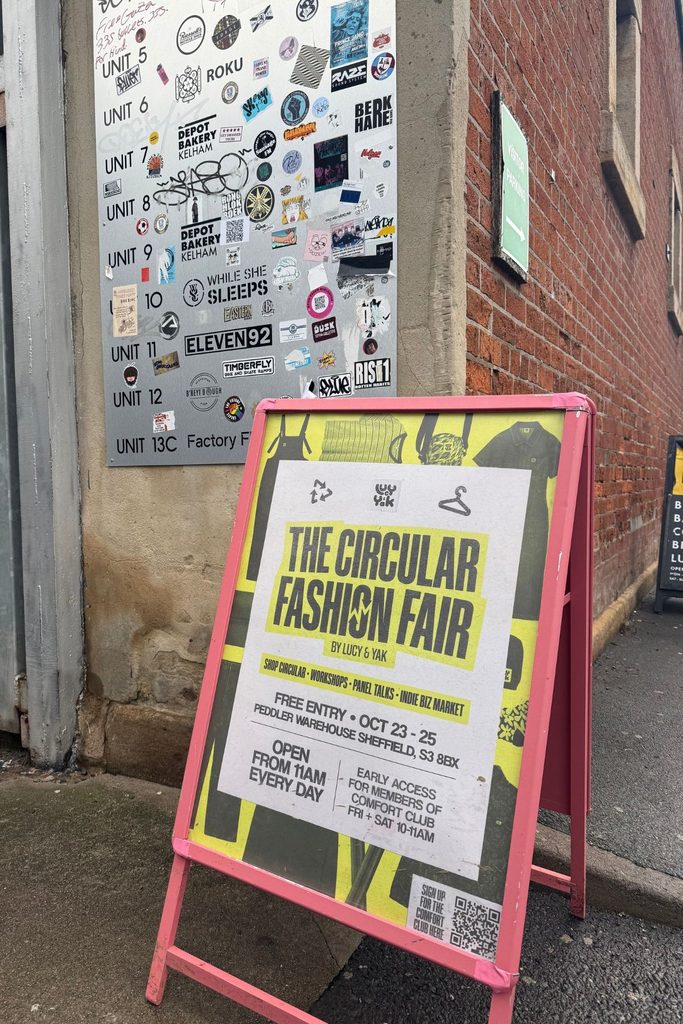
The Circular Fashion Fair is an opportunity to bring those ideas to life.
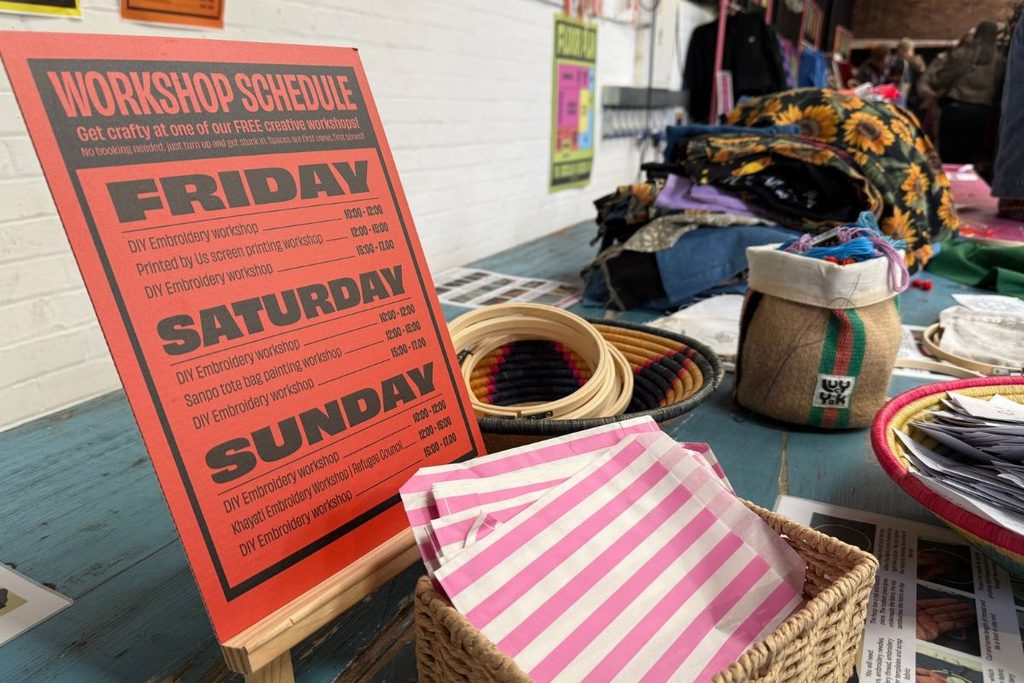
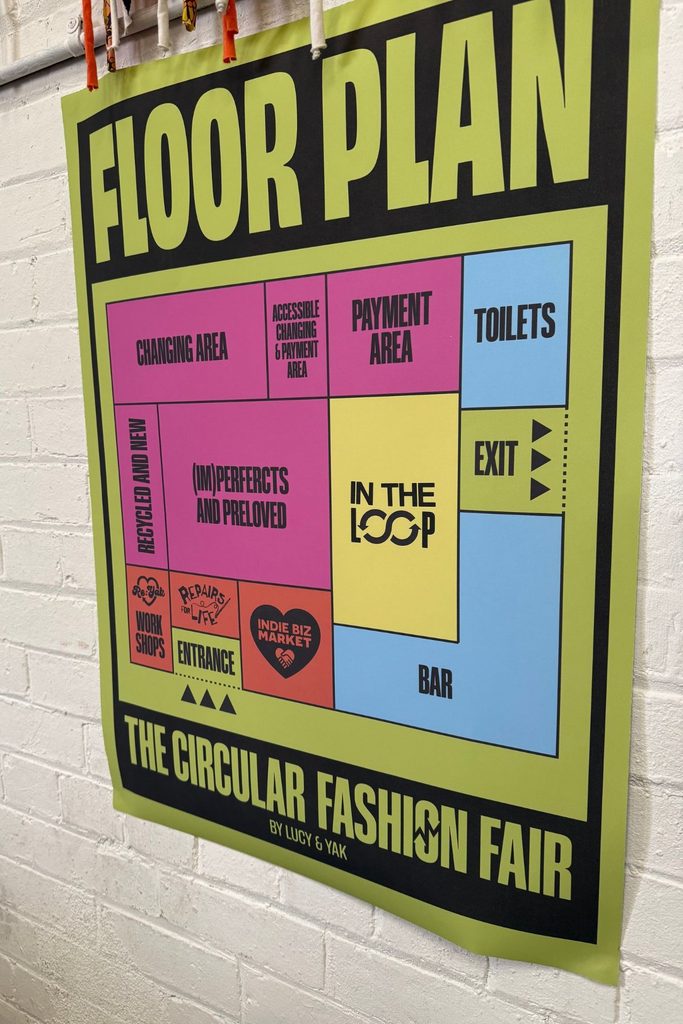
Across the weekend, visitors can browse preloved Lucy & Yak clothing, discover independent makers, watch live repairs and take part in creative workshops, alongside discussions about the future of fashion. It’s also about bringing together people who are challenging the industry’s established ways of working. Chris is particularly enthusiastic about the speakers taking part, including circular fashion advocate Rachel Kan.
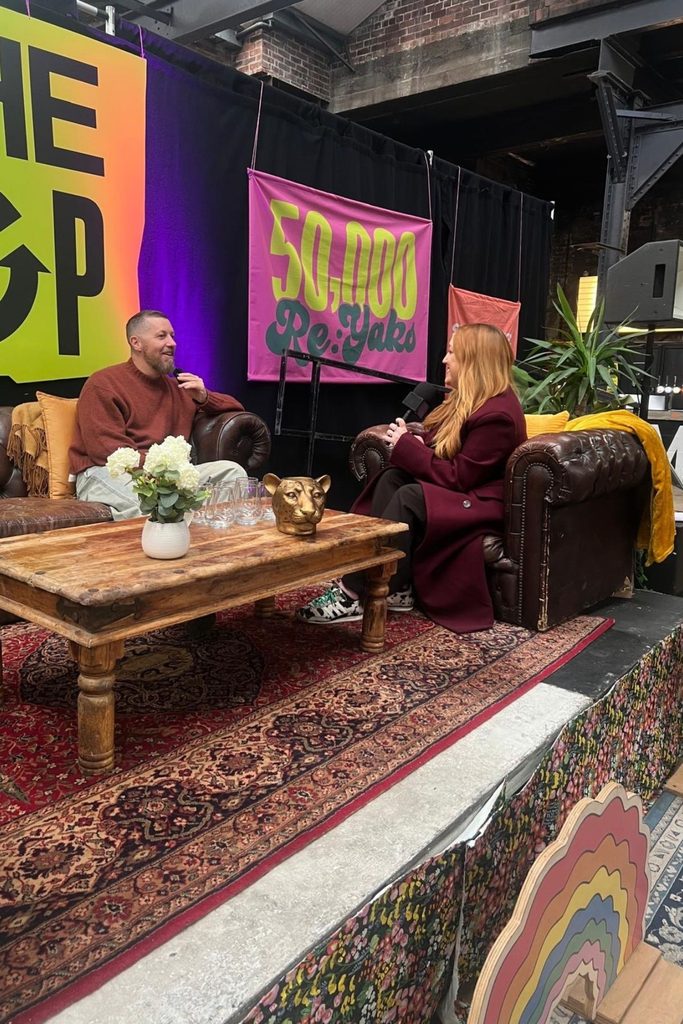
“It’s great being around people like Rachel, because they inspire me,” he says.
For him, the next phase of sustainability isn’t simply about choosing organic cotton or recycled fabrics. It’s about changing the relationship we have with the clothes already in our wardrobes.
“I think the conversation is really now about how can we recycle more? How can we keep stuff in circulation more?”
And there’s another reason Sheffield feels particularly appropriate; Lucy is originally from Barnsley, a connection that immediately caught my attention, having grown up there myself. Chris, meanwhile, grew up in Cumbria before spending time living in Newcastle and Yorkshire. Although he now lives in Brighton, his affection for the north is obvious.
“I love the north. I love Yorkshire. I love Yorkshire people,” he tells me.
“There’s just a different buzz about coming back to anything we do in Yorkshire.”
As for whether Sheffield’s Circular Fashion Fair could become a regular fixture, Chris is optimistic.
“I’m hoping we do more of these around the country. One of many.”
From living in a campervan to building a company that is now helping to reshape conversations around fashion waste, Lucy & Yak’s journey has been far from ordinary, and while Chris has stepped away from the day-to-day running of the business, he clearly hasn’t lost his enthusiasm for what it might achieve next.
He tells me he attempted to take a break and go travelling again, although it didn’t last particularly long.
“I can’t remember if I got bored and came back or if they called me back. After this long Lucy & Yak is in my bones.”
It’s a fitting response from someone who never set out to build a fashion empire in the first place, but after investing nine years of his life into the brand, I suspect he’ll always be involved in some capacity.
“I don’t know if they’ll ever get rid of me fully,” he laughs.
I suspect he’s right.
Friday 23 – Sunday 25 October 2026
Peddler Warehouse, 92 Burton Road, Neepsend, Sheffield, S3 8BX
Entry: Free, no ticket required
The three-day event features more than 40 rails of preloved and imperfect Lucy & Yak clothing, live garment repairs, workshops, an independent makers’ market and discussions with leading voices in sustainable fashion.
Find out more: lucyandyak.com/pages/circular-fashion-fair
Interview and images by Victoria Reddington @vic_reddington