In a busy commercial kitchen, the grill can be one of your most valuable pieces of equipment. It’s used throughout the day to knock out everything from a perfectly toasted burger to a plate of steaming hot vegetables. From steaks and chicken to paninis and other tasty menu items, a commercial grill is a workhorse that can be relied upon to get the job done.
Because it’s such a central part of kitchen life, picking the right one is crucial. With a dizzying array of models, sizes, cooking surfaces and fuel options on the market, the right choice can have a major impact on how efficient, consistent and speedy your kitchen runs. But how on earth do you know which commercial grill will be right for you? Well, here are the key things to consider before you make your final decision.
First Things First – Think About What You’ll Be Cooking
When it comes to choosing a commercial grill, the type of food you’ll be churning out is the number one thing to think about. Different grills are designed for different cooking methods, so it really comes down to what’s on your menu. Here are some of the most common options to consider.
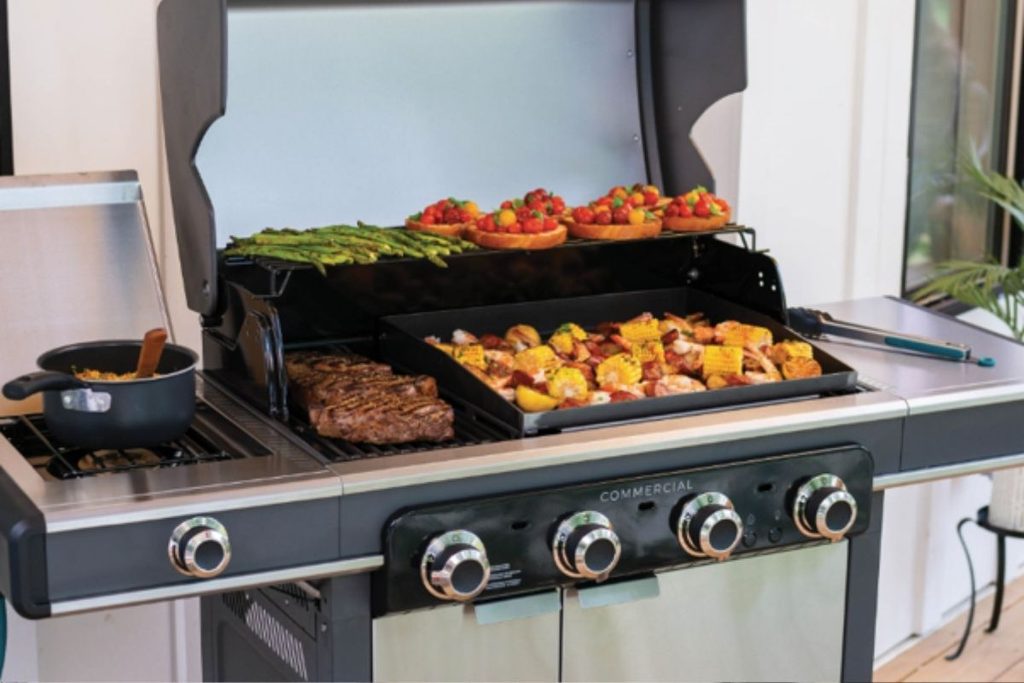
Chargrills and Griddles
If your menu is all about burgers, steaks, chicken, sausages and other meats, then a chargrill or griddle is probably your best bet. Chargrills cook food right over a hot surface or grate, giving you that perfect char and flavour that customers just love. Griddles, on the other hand, are just a heated surface. And that’s exactly what you need for cooking up everything from burgers and breakfast dishes to fresh veg and other ingredients.
Contact Grills
If you’re running a cafe, takeaway or other kitchen that’s into toasted sandwiches, paninis and similar fare, then a contact grill is a must-have. They’ve got heated plates on both sides, which means you can cook your food from above and below at the same time. The result is perfect, even results in half the time, and they’re compact enough to fit on even the smallest of worktops.
Salamander Grills
Salamander grills are usually used to give your dishes that final, special something. Their intense heat is perfect for browning, melting and adding that final crisp finish to a dish. They’re a real asset in restaurants where presentation is key, and that final flourish can be the real difference between a good meal and a great one.
Choosing the Right Size Grill for Your Kitchen
The size of your grill is really important. If your kitchen is slammed with orders on a regular basis, a grill that is too small can be a nightmare for your staff during peak periods. On the other hand, a grill that is way bigger than you need is just going to take up valuable space and waste energy.
Before you choose a grill, you need to think about how much food you typically have to cook at once, and how busy your kitchen gets during the really hectic periods. If you’re a big restaurant, takeaway or high-volume kitchen, you’ll probably want a larger cooking surface that lets your staff knock out multiple portions at the same time. Smaller cafes or places with a more limited menu might do better with a compact countertop model.
Measure the space you have available before buying a grill. Also, make sure there’s enough room not just for the equipment itself but also for your staff to work safely and comfortably around it. The best grill for your business isn’t necessarily the biggest one. It’s the one that gives you the right amount of cooking capacity without using up too much space or resources.
Smooth vs. Ribbed Cooking Surfaces
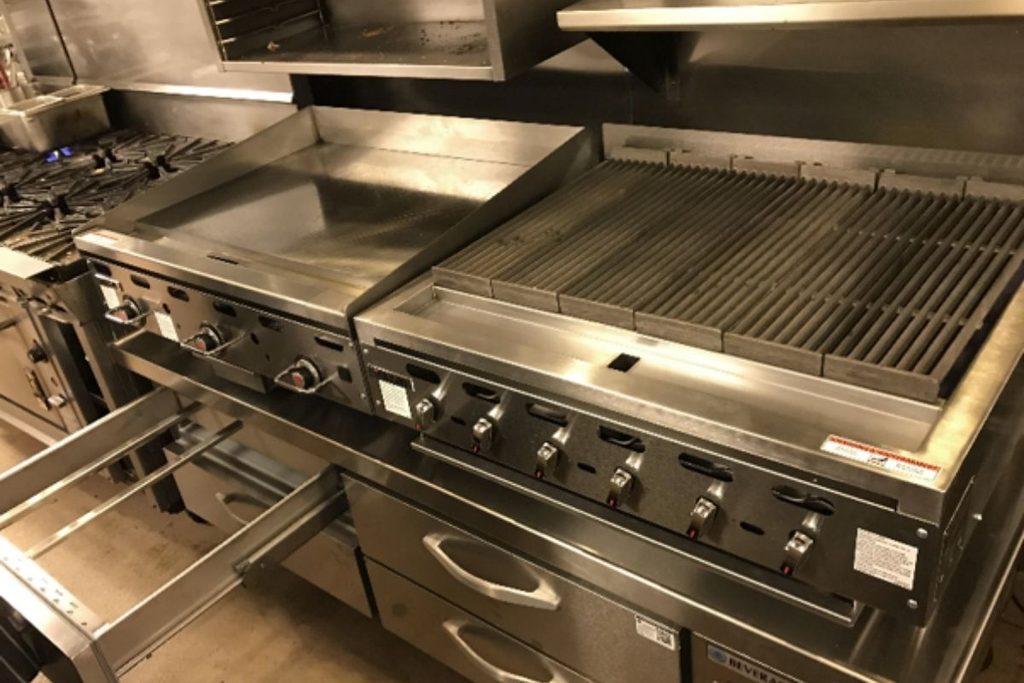
The type of cooking surface your grill has can also make a big difference in how it performs. A smooth plate is great for a wide range of foods and makes it a lot easier to cook smaller bits and bobs. A ribbed plate, on the other hand, will give you those nice distinctive grill marks and is perfect for meats, sandwiches and anything else where looks are important. If you’re serving a mix of different dishes, a grill with interchangeable cooking surfaces is probably a good bet.
Think About the Fuel Type
When you’re choosing a commercial grill, you’ll also need to decide whether to go with a gas or electric model. Both can give you reliable cooking performance, but they each have their own requirements and advantages. Your choice will depend on your kitchen setup, what you’re serving, and how you like to run things on a day-to-day basis.
Grills are a top pick for professional kitchens that need to crank out super-high cooking temperatures and be able to adjust the heat on the fly. They can get up to speed fast and let your staff dial in the temperature as needed during service. You just need to make sure your kitchen can handle the installation requirements – that means hooking up a gas supply and getting the ventilation sorted.
If you don’t have a gas connection, an electric grill might be a more practical option. They’re easy to install where there’s a power supply available, and they let you dial in the temperature really precisely. They also come in all sorts of different sizes and configurations, so you can find one that fits your needs whether you’re a small cafe or a busy commercial kitchen.
So, when you’re comparing gas and electric models, don’t just think about the initial cost. Think about the kind of connections you’ve got available, the installation requirements, how often you’re going to be using it and the running costs to get a sense of which option makes more sense for your kitchen.
Good Build Quality & Durability
A grill is put through the wringer in a fast-paced professional kitchen where it may be fired up non-stop all day long, day in and day out. So for it to keep going strong and delivering top-notch results, you need to put a premium on build quality and durability. A well-made grill should be able to handle the rigours of regular use and still perform consistently and reliably.
When shopping for a new grill, take a close look at the materials it’s built out of. Good stuff like stainless steel is all the rage in commercial kitchens because it’s tough, corrosion-resistant and relatively easy to clean. Don’t just look at the main body of the grill either. Pay some attention to the quality of the cooking plates or grates, the controls and other bits that are gonna get used a lot.
High-quality grills not only have secure controls and stable construction, but also have features that are designed to reduce the risk of accidents when things get really busy. They also tend to have removable parts, accessible surfaces and easy-clean materials, which can make cleaning up a breeze at the end of a long shift.
Images attributed to Unsplash.com and Pexels.com.