Lonely Planet, has collated the world’s most fascinating landmarks and landscapes, created naturally or by human hand, to reveal its top nine secret wonders of the world. Taken from its new title Secret Wonders of the World, a compilation of 385 of the world’s most extraordinary under the radar places and sights, the global travel expert has hand-picked its top recommendations of the most spectacular, unique and quirky locations for explorers to seek out.
From a UNESCO World Heritage listed ex-industrial age iron works in Germany to the beehive huts dotted along the coast of south-west Ireland, there are weird and wonderful sights to be spotted across the world for the ever curious to find, as discovered by Lonely Planet.
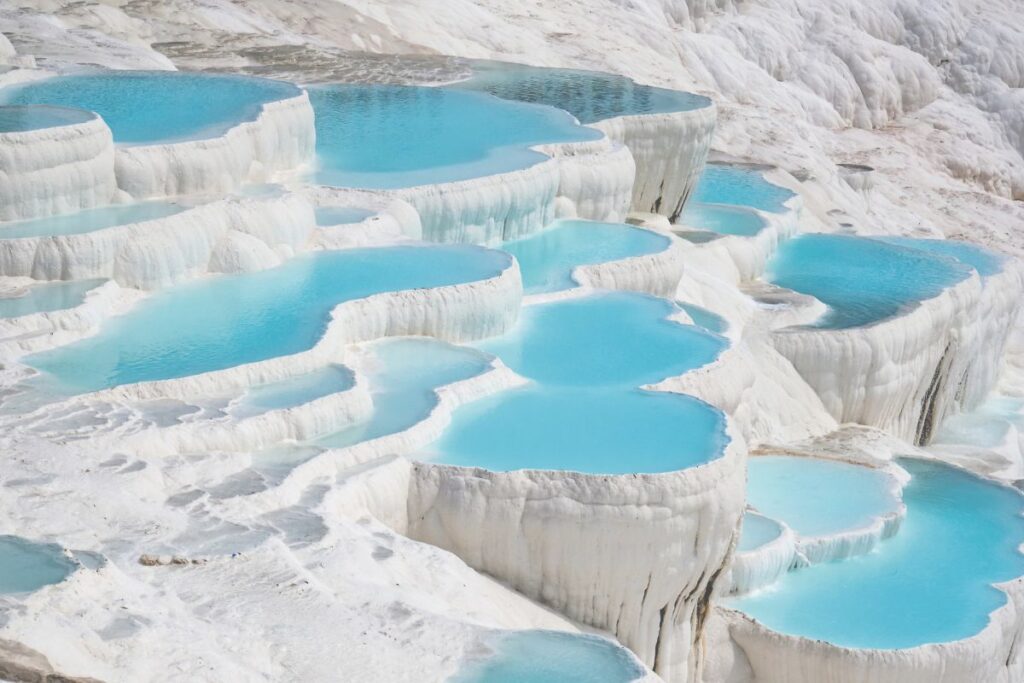
Pamukkale-Hierapolis, Türkiye:
Tiptoe through enchanting pools of turquoise water in bright white travertine, lily-pad shaped trays on the way up to the plateau, passing by petrified waterfalls. Finish the trip with a soak in the thermal pools where ancient, columns from Greco-Roman remains lie beneath the water, a reminder of the ancient ruins of Hierapolis on the hillside above.
Andre Chet/ Shutterstock ©
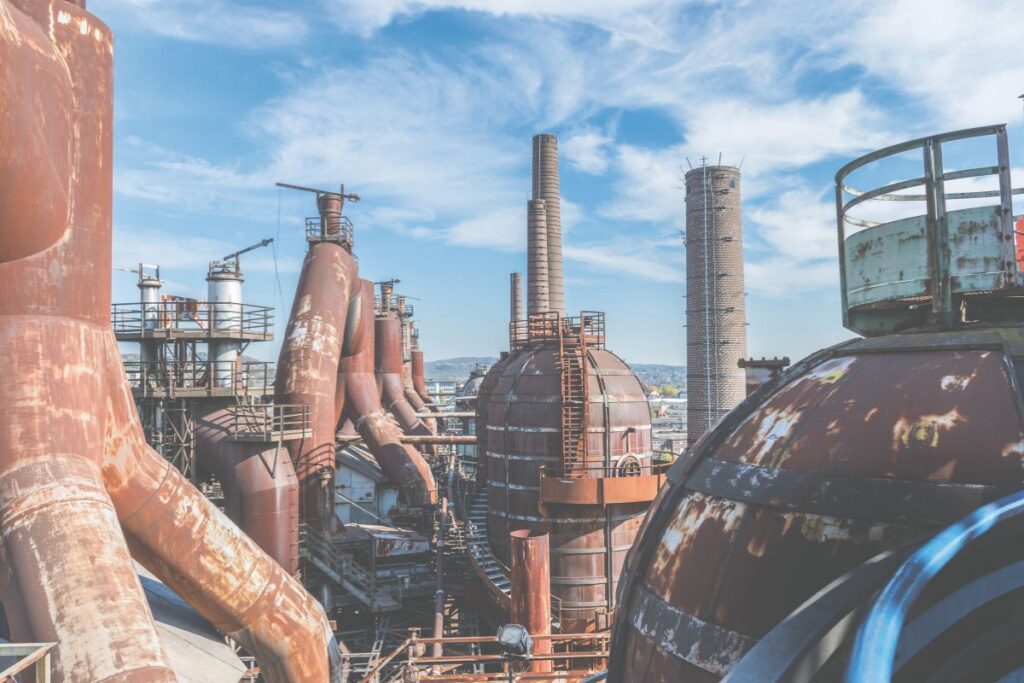
Völklinger Hütte, Saarland, Germany:
Völklinger Hütte or Völklinger Ironworks, in south-west Germany is the only surviving snapshot of Europe’s 19th century iron-making industry. Once the country’s biggest manufacturer of steel beams and the blueprint for factories across Europe, production stopped in 1986 and it was pronounced a UNESCO World Cultural Heritage Site. The impressive and beautifully stark ironworks is now a museum, gallery space and the venue for the Urban Art Biennale.
Patrick Verhoef/ Shutterstock ©
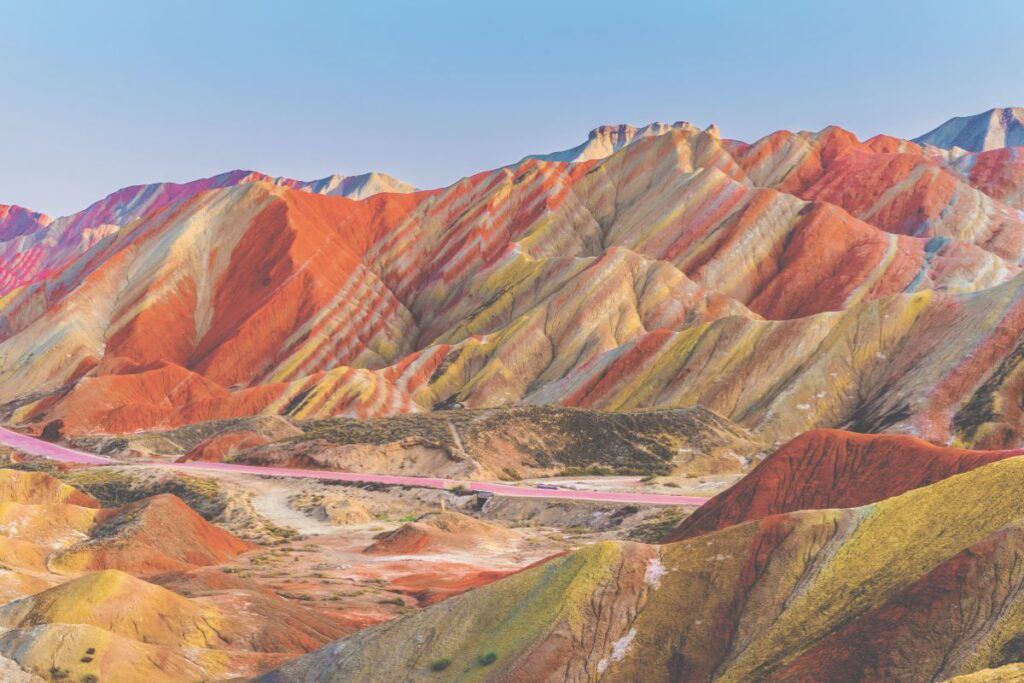
Zhangye Danxia National Geopark, Gansu, China
Spanning a 193-sq-mile site in the northern-central province of Gansu, this mountainous area consists of colourful bands from pale green to vermilion and is a record of more than 20 million years of geological history. Zhangye Danxia National Geopark is full of walking trails, sightseeing cars and a healthy amount of lookout points. The best spot is the fourth and largest viewing platform which offers an incredible view of the ‘Seven-Colour Mountain’. Visit in the wet season between May and September as the combination of rain and the sunrise or sunset makes the colours pop.
Thongchai.S/ Shutterstock ©
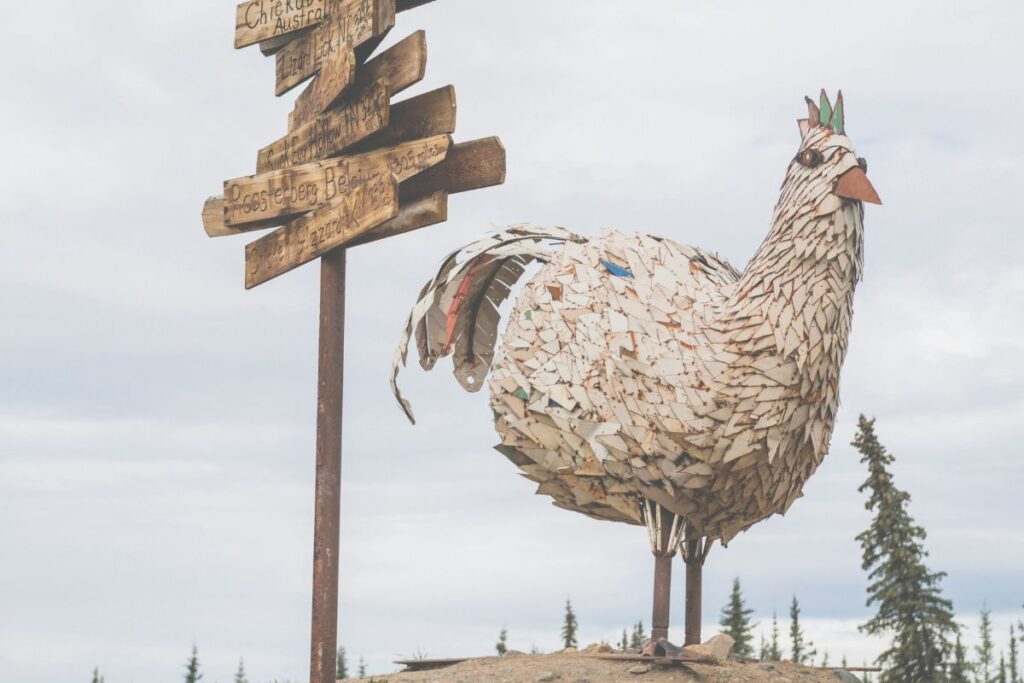
The Village of Chicken, Alaska, USA
Chicken in Alaska is one of the state’s last gold-rush remnants, named after the miners of the town could not agree on the spelling of a more local bird. The town of Chicken is home to a bar decorated with underwear (fired from a cannon), baseball hats, licence plates and handwritten notes. The town is only accessible from April to September and in summer the residents play host to revellers attending the Chickenstock music festival, to listen to folk, bluegrass and, of course, to dance the chicken dance.
Justin Foulkes / Lonely Planet ©
Moray, Maras, Peru
Whilst Peru may be famous for the Incan palace of Machupicchu, the Inca were also busy experimenting and researching agricultural techniques in these fascinating concentric circles near Cusco. This incredible landscape is ingenious in its design with the variation of depth, size and position relating to the sun and wind. All creating small differences in climatic conditions on each terrace that correspond to the different growing conditions that would have been found across the Inca Empire.
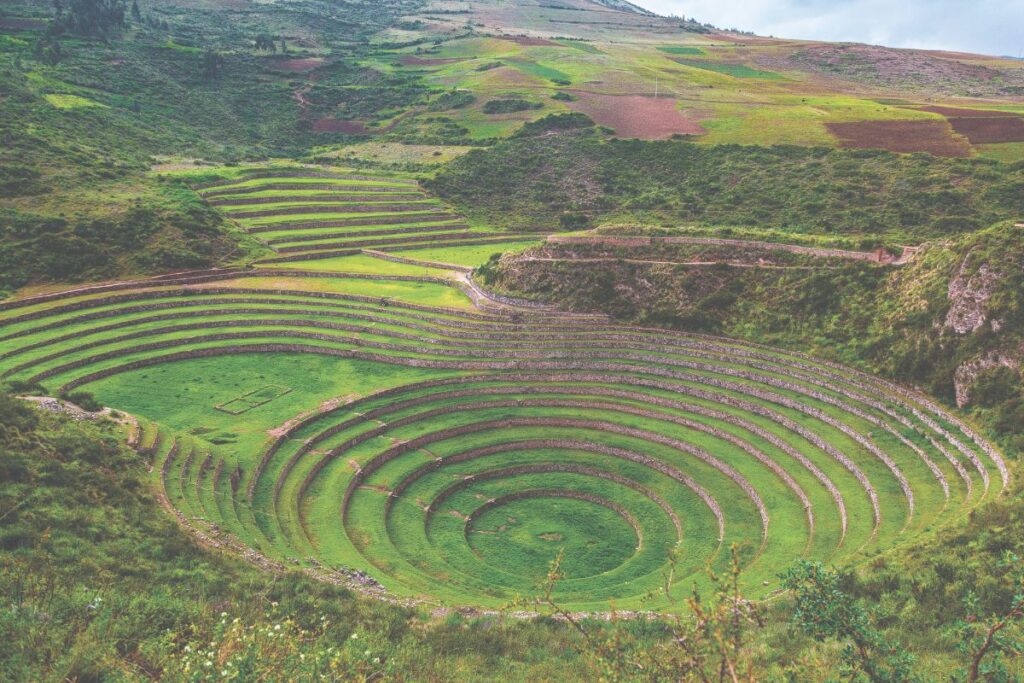
Vadim Petrakov//Shutterstock ©
Campanile de Curon, South Tyrol, Italy
On a backdrop of pristine nature with mountains and forested shores, the eerie bell tower of a 14th century church juts out from the water of Lake Resia. The ‘scene’ was created in the 1950s, when the construction of a dam joined three lakes into one and submerged the village of Curon Venosta, leaving only the bell tower visible above the water. When the lake freezes over in the midwinter, it is possible to walk out to the tower and is visible from Italy, Switzerland and Austria.
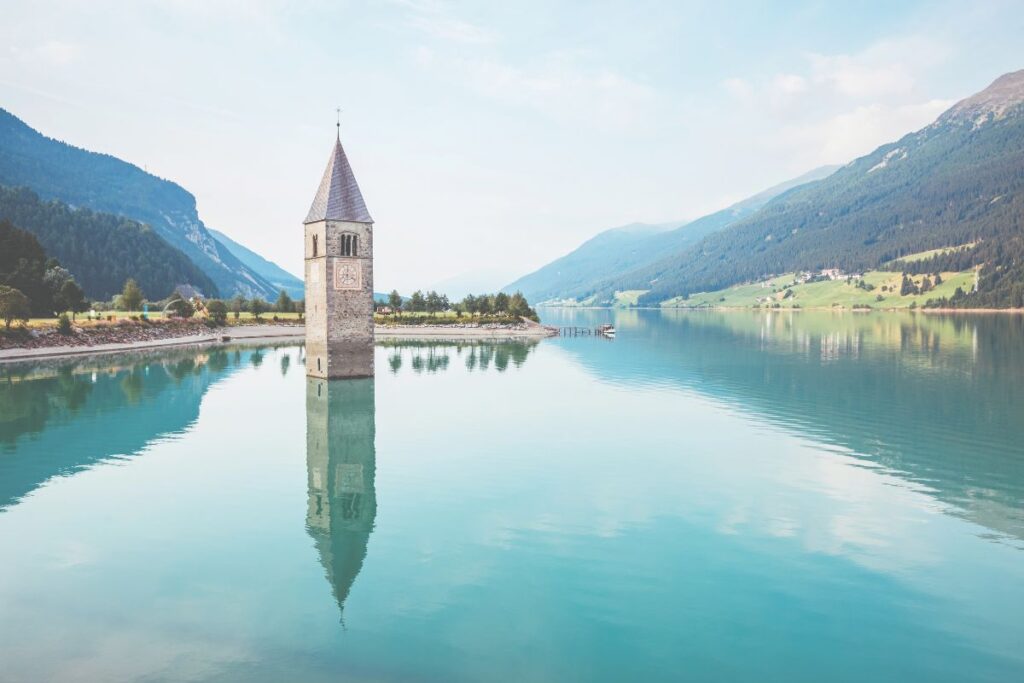
CreativeTravel Projects/Shutterstock ©
Beehive Huts, South-West Coast, Ireland
Beehive huts or clochán are as familiar site as pubs or sheep along the southwest coast of Ireland. Constructed without mortar using the corbelling technique familiar across Ireland and the British Isles, these domes are throwbacks to an agrarian and perhaps spiritual pasts that historians date to the 8th century CE. They are thought to have been used as grain storage, shelters against sudden storms , or even as suitably austere temporary dwellings for monks and pilgrims on their way to Cnoc Bréanainn.
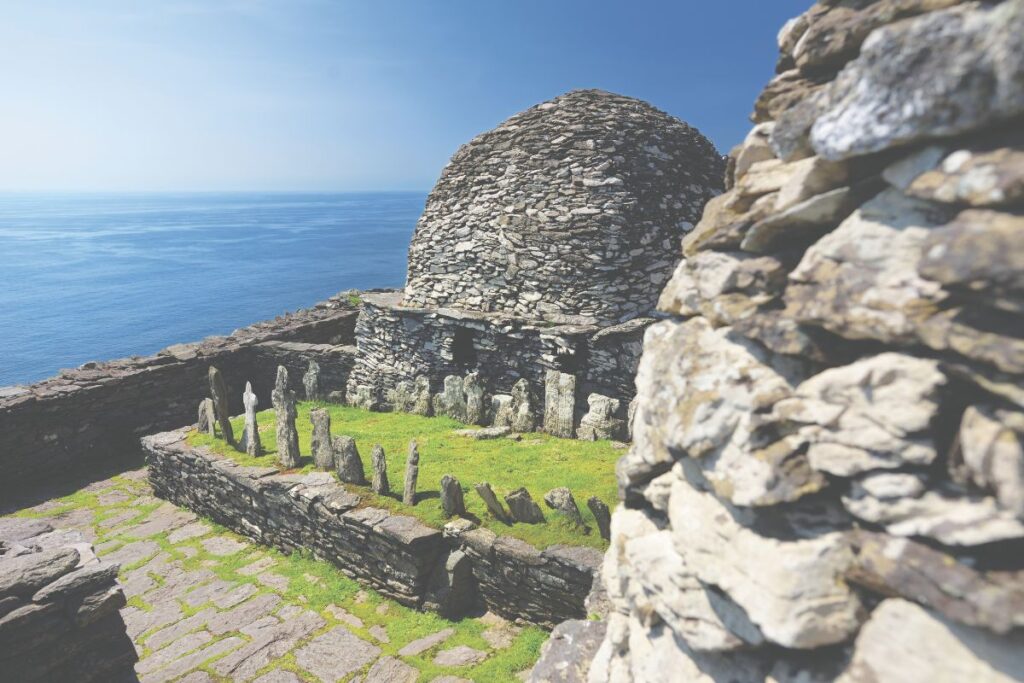
MNStudio/ Shutterstock ©
Chiricahua National Monument, Arizona, USA
Part of the American national park system, Chiricahua National Monument was established over 100 years ago to protect the impressive balancing rocks in south-east Arizona. Adventurers can explore the creeks, volcanic formations, and grottoes and venture to the frankly named Big Balanced Rock, impressively perched on an improbably narrow pedestal.
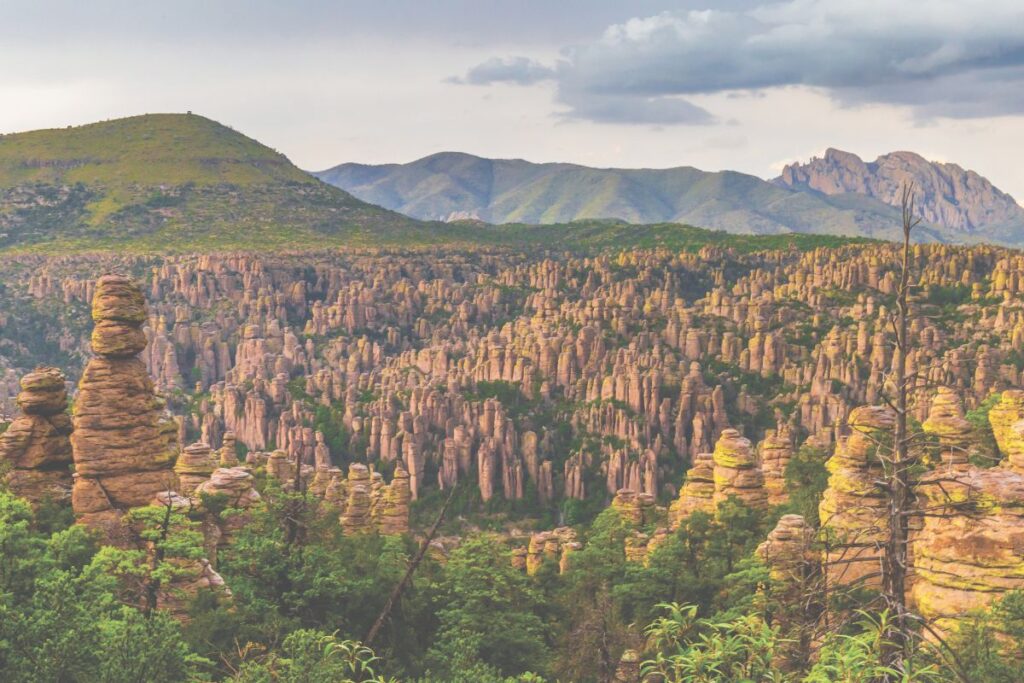
AZCat/Shutterstock ©
Quinta da Regaleira Wells, Sintra, Portugal
Two foreboding spiral staircases lurk beneath the UNESCO-protected estate of Quinta da Regaleira just north of Lisbon. The lavish residence and gardens, commissioned by coffee tycoon António Carvalho Monteiro were designed with a blend of Gothic, Moorish and Renaissance styles. The two ‘wells’ hold no water but instead were used in secretive Masonic rites. One of the wells has nine levels hinting to Dante’s nine circles of Heaven and Hell and the other has steps numbered according to Masonic principles that descend to a huge Knights Templar cross.
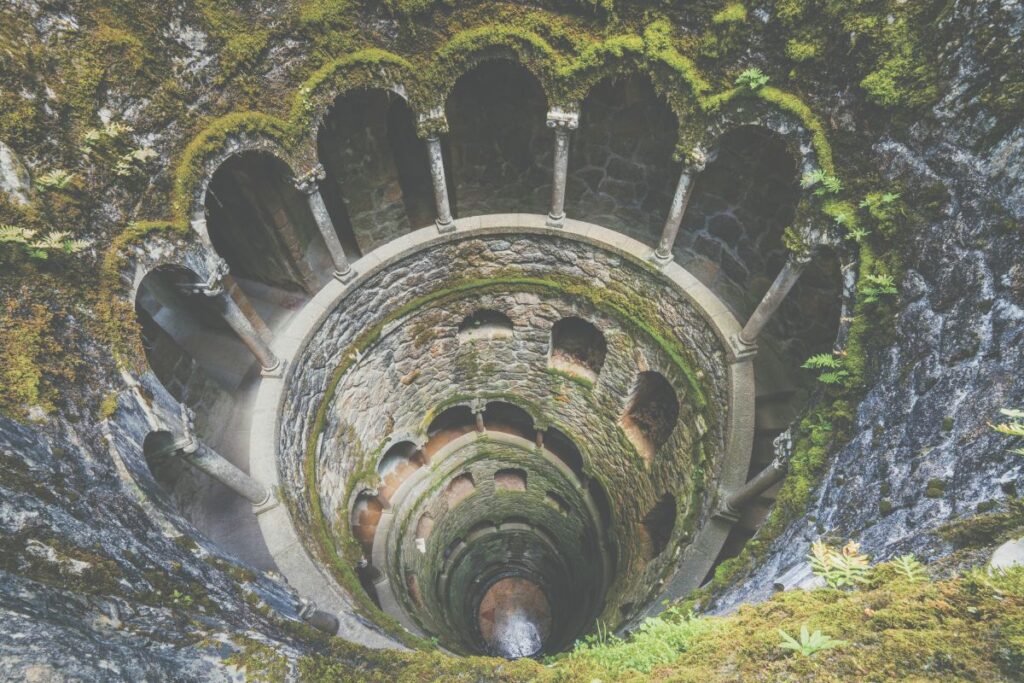
Engel Ching/Shutterstock ©
To discover more wonderous sights, Lonely Planet’s new title is a compendium of historical oddities, bizarre natural phenomena and obscure architecture, perfect for those who love a deep dive into the weird and exploring the unknown.
Lonely Planet Secret Wonders of the World is available to purchase now at shop.lonelyplanet.com and wherever good books are sold. RRP £22.99.
About Lonely Planet: Lonely Planet. Our Guides. Your Stories.
Lonely Planet is the trusted, comprehensive resource for seeing the world. We empower travellers with inspiration, insights, and utility that unlock the wonder of travel and shape memories for life.
For more than fifty years Lonely Planet has been at the forefront of the rapidly-changing world of travel. Today Lonely Planet is the world’s leading travel publisher, with over 800 titles in print, iconic guidebooks spanning the entire globe as well as best-selling gift and illustrated titles to inspire and empower travellers, as well as inform.
Lonely Planet has always been more than just a publisher, even if through our books we already impact the lives of millions of travellers every day. Reaching beyond, we are revolutionising our digital presence to remake Lonely Planet as a true community of like-minded travelers.
Lonely Planet can be found on lonelyplanet.com, mobile, video, social media, and in myriad languages, armchair and lifestyle books, ebooks and more.
Join Lonely Planet online at lonelyplanet.com/newsletter as well on Facebook (facebook.com/lonelyplanet), Instagram (instagram.com/lonelyplanet), TikTok (@lonelyplanet), and YouTube (https://www.youtube.com/lonelyplanet).
Images supplied credited by image above