Going on holiday is one of the most exciting times of the year for many, but if you experience any discomfort with your back or spine, that discomfort felt while travelling doesn’t always end when you get off the flight.
Having a stiff back, an aching neck or sore shoulders after a long flight are often seen as unavoidable consequences of flying, yet these post flight pain symptoms are becoming increasingly common, and in some cases, can develop into more serious problems.

According to a Spine Universe Patient Survey, 88%[i] of travellers report a noticeable increase in back or neck pain immediately after getting off a flight. While cramped seating and limited legroom are often blamed, the real issue isn’t always your flight class or the length of your flight; it’s the combination of prolonged sitting, muscle fatigue and even poor lifting after carting suitcases around the airport.
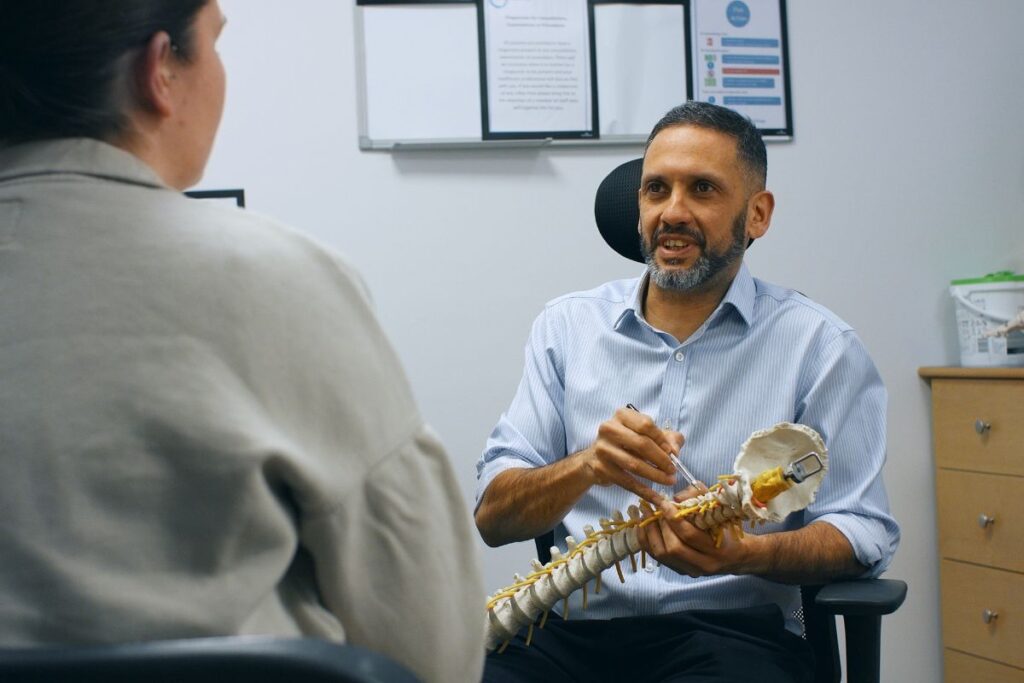
Spinal Neurosurgeon, Anthony Ghosh, says that understanding what happens to your back during the travel can really help reduce the risk of injury and make flying a lot more comfortable.
The 90 minute spine tipping point
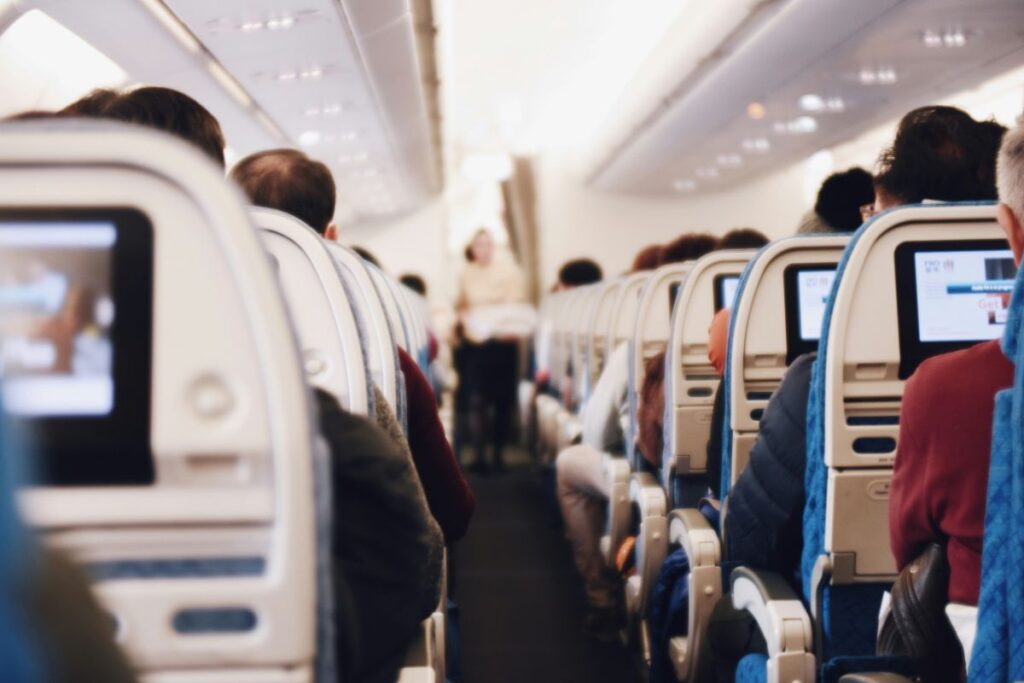
One of the biggest challenges during flying is simply sitting still for too long. If you are on a short haul flight, there often isn’t enough room in the cabin to get up and move around, and even on longer haul flights, there isn’t really enough room to be able to relax and move comfortably around the cabin. Studies examining prolonged sitting during flying suggest that around 90 minutes [ii]of continuous sitting is when many people start to experience significant muscle fatigue and a bit of pain in the muscles responsible for supporting the spine.
These postural muscles work continuously to keep our bodies stable when we’re seated, and as they tire, the body naturally seeks a more relaxed position, which, contrary to popular belief, isn’t necessarily a bad thing.
“One of the biggest misconceptions is that we need to sit bolt upright for an entire flight,” explains Anthony.
“It’s actually perfectly natural to slouch or slump a little bit. That’s simply because the spinal muscles are relaxing. What becomes the problem is trying to hold yourself perfectly upright for hours on end, which can actually fatigue those muscles a lot more quickly.
“Instead of sitting in a rigid position, just change your posture regularly, allowing different muscle groups to share the workload of your body. Move the position of your arms, your legs, and even your neck and head. All of this can help to move different muscles during a prolonged period of sitting.”
However, prolonged sitting still places increased stress on ligaments, joints and discs of the spine, particularly when the back remains rounded for extended periods, but if you combine this with the natural dehydration that can occur during the flight, this can help explain why many passengers feel noticeably stiffer and experience post flight pain after getting off the plane.
Why lifting luggage can trigger travel injury
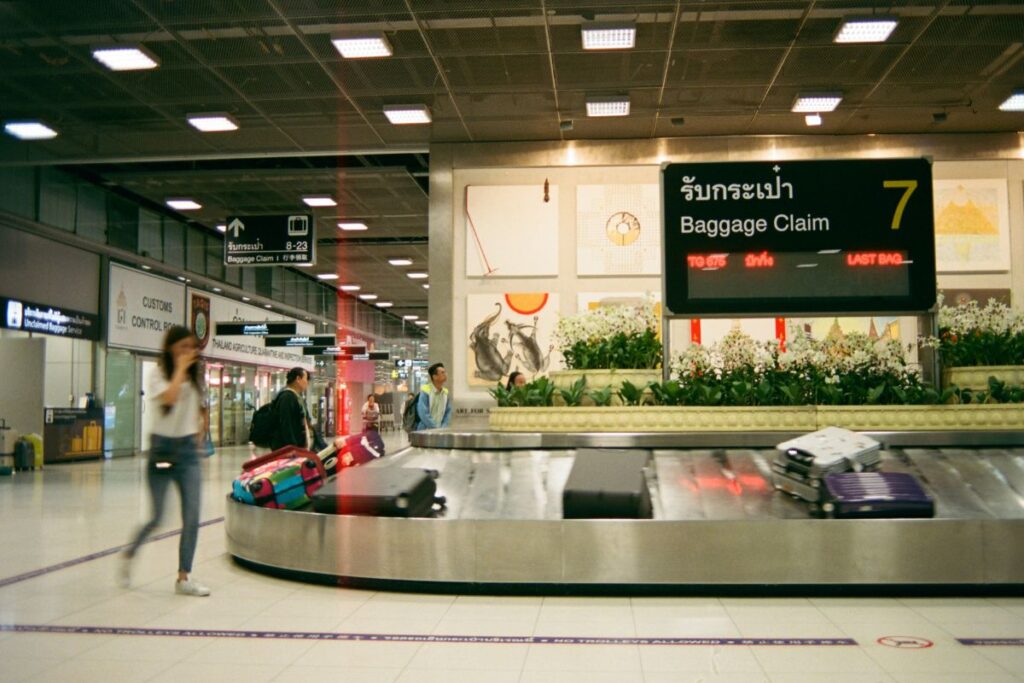
There are also some ‘dangers’ which come immediately after landing, and that’s collecting your luggage.
“After spending hours seated, many of us suddenly lift a heavy suitcase or are stretching up to get into an overhead locker to pull out a bulky bag,” says Anthony.
“With fatigued muscles, we are often less able to stabilise the spine effectively, meaning greater forces may be transferred through the spinal structure itself, which can leave some back pain or tightness.
“When we travel, we’re often asking our bodies to go from prolonged inactivity, straight into awkward lifting,” says Anthony, “and that’s why it’s so important to prepare your body for these movements. I often encourage my patients to learn how to do controlled hip and hinge movements, where the movements come from bending through the hips, rather than excessively rounding your back.
“This allows the powerful muscles of the posterior chain, including your glutes and your hamstrings, to contribute to lifting. A good lifting technique also means keeping your luggage close to your body, avoiding any twisting while carrying weight, and also taking a moment before attempting to lift a heavy case over your head.”
Can you train for travel?
One of Anthony’s biggest tips is training for real-life travel, and one of the best ways you can do this is to train your body in the movements which are closely related to these travel tasks.
“One of the exercises I often recommend, says Anthony, “is a two-handed single dumbbell floor-to-overhead press. This exercise begins by lifting the dumbbells from the floor, using a hip hinge similar to a deadlift. As the body straightens, the weight is brought safely to chest height, before being pressed overhead. Then, the movement is reversed, under control, until the weight returns to the floor. This is a movement we often see when we are picking up a suitcase and putting it into an overhead locker. If you perform a few repetitions of this exercise, just two or three sets, three times a week, it will strengthen several important muscle groups involved in lifting your luggage safely.”
A dumbbell floor to overhead press is a great exercise for building the posterior chain, as it really strengthens the muscles that support the spine.
“I always suggest starting with a lighter weight, before gradually progressing to something similar to the weight of your average cabin bag,” advises Anthony.
Getting into these small habits can make a big difference in preventing travel-related back pain and other post flight pain symptoms. Getting in tune with your body doesn’t always require complicated exercise during the flight, as having a good base of movement at home, or beforehand with some stretches at the airport, can really help with any pain.
Anthony also recommends standing and walking whenever it is safe to do so. Even after a short flight, making a little walk to the toilet can be enough to interrupt prolonged sitting and encourage a bit of circulation.
Movement also carries wider health benefits, and long-haul flights are often associated with an increased risk of conditions such as deep vein thrombosis, in which regular movement forms part of the general advice to reduce that risk.
Another top tip is also to remain hydrated. “Keeping hydrated not only supports your overall health during travel, but it also helps maintain the hydration of the spinal discs which receive nutrients and water primarily through diffusion rather than a direct blood supply,” advises Anthony. “So having some water during your flight can also help to keep your spine somewhat pain-free.”
If you struggle with back pain during a flight, don’t feel you have to avoid flying; instead, keep the body moving, vary your sitting positions and stay hydrated during the flight to help ease any pains. And, if you can put in some time to strengthen the muscles used to lift luggage safely, you can reduce the strain that flying and travelling puts on your back, so you always arrive at your holiday destination and back home feeling a lot more comfortable, without those post flight pain symptoms.
[i] (Source: Spine Universe Patient Survey)
[ii] (Source: United Kingdom & Ireland General Aviation Study)
Images courtesy of unsplash.com and pexels.com. Some images supplied