It starts with good intentions. You find a supplier offering a better price per unit if you order in bulk, so you do. Or a seasonal opportunity comes up and you want to be ready. Or your business grows faster than expected and the garage fills up before you’ve had a chance to think about what comes next.
Whatever the reason, you’re now sitting on more stock than you can sensibly store at home. It’s in the hallway, stacked in the spare room, possibly starting to take over the kitchen. And you’re wondering whether this is just a temporary inconvenience or a sign that something needs to change.
The good news is that this is a very normal stage for anyone running a small product business from home. The slightly less good news is that ignoring it tends to make things worse. Here’s what you actually need to know.
Why Home Storage Stops Working

Most people start selling products from home because it’s cheap and convenient. You control the stock, you pack the orders yourself, and there’s no warehouse rental eating into your margins. It works well up to a point.
That point is usually somewhere around the moment you can’t walk through your own living room.
Beyond the obvious space problem, storing goods at home creates other issues. Products can be damaged by temperature changes, damp, or poor stacking. Insurance on standard home contents policies rarely covers commercial stock. If you’re buying and selling regularly, HMRC expects your business records to reflect what you’re holding and what it’s worth. A pile of boxes in a spare bedroom doesn’t lend itself to accurate stock counts.
For anyone serious about growing a product business, home storage is a starting point, not a long-term strategy.
What Pallet Storage Actually Is

Once your goods are stacked and wrapped on a pallet, they can be moved, stored, and tracked as a single unit. This is how the vast majority of commercial goods move around the UK and Europe. Products go onto pallets at the point of manufacture or import, get stored in warehouses on racking systems, and then get picked and dispatched when orders come in.
You don’t need to be running a large operation to use this kind of service. This is where a lot of small business owners are surprised. Many freight and logistics companies offer storage to businesses of almost any size, and a decent pallet storage guide will walk you through how costs are calculated, what services are available, and what questions to ask before you commit.
Rates typically start from around £1.50 to £5 per pallet per week, depending on location, pallet size, and whether you need any additional services like pick and pack. That’s often significantly less than the cost of renting even a small self-storage unit, and it comes with proper handling and security built in.
What Happens to Your Stock in a Warehouse

This is the question most people have but don’t quite know how to ask. You hand over your goods to someone else’s facility and then what?
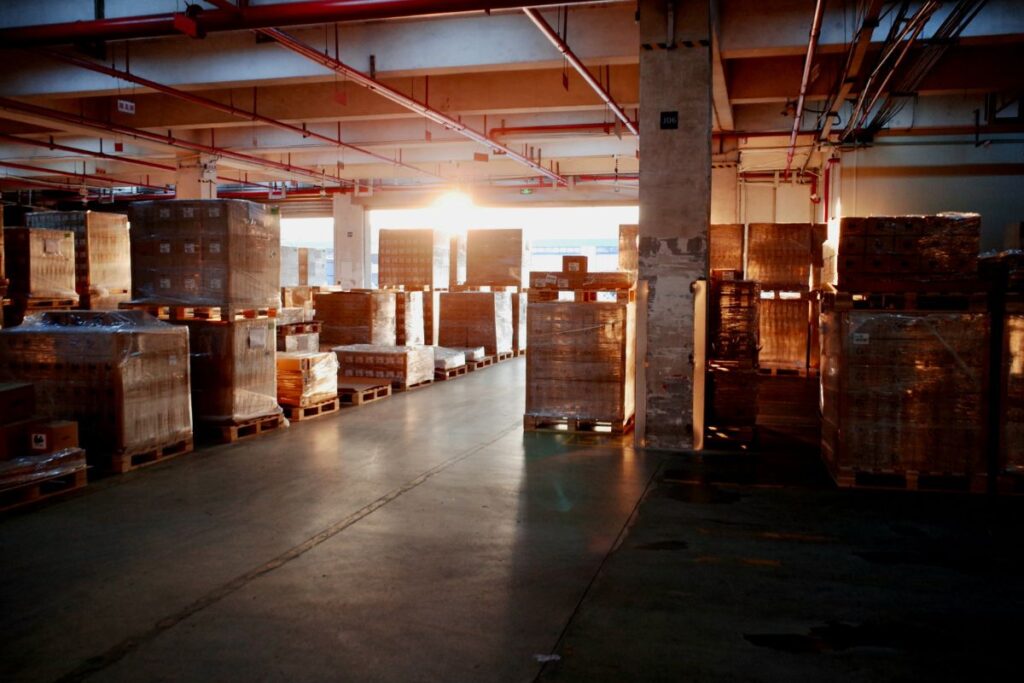
In a proper warehousing operation, your pallets go onto racking in a secure, alarmed building with CCTV. You should be able to access a stock inventory system, usually web-based, that shows you what’s being held and updates in real time as items come in or go out. If you need to inspect your goods, that should be possible during normal working hours.
When an order comes in, the warehouse picks the relevant items, packs them if needed, and dispatches them to your customer. This is called a pick and pack service, and for small businesses it removes the need to touch every order yourself. Orders go straight from warehouse to customer, which saves time and often improves accuracy.
The Chartered Institute of Logistics and Transport (ciltuk.org.uk) notes that third-party logistics, or 3PL, has expanded significantly among smaller businesses over the past decade, precisely because the barrier to entry has dropped. You no longer need to be a large retailer to access professional storage and fulfilment.
The Cost of Getting It Wrong

Storing goods badly costs money in ways that aren’t always obvious at first.
Damaged stock is the most direct. Goods stored incorrectly, whether stacked unevenly, exposed to moisture, or simply handled too many times by people who aren’t trained to handle freight, are more likely to arrive at their destination in a state that leads to returns, refunds, and unhappy customers.
Then there’s the opportunity cost. If your stock is sitting in a spare room, it’s not easily accessible, not counted accurately, and not ready to scale. When a larger order comes in, you’re scrambling rather than ready.
There’s also the question of what you’re actually insuring. Many home and contents policies explicitly exclude commercial goods. According to the Association of British Insurers (abi.org.uk), policy exclusions for business use of residential properties are among the most commonly disputed claims. If something goes wrong and your stock isn’t covered, you carry that loss entirely.
Choosing Where to Store Your Goods
Location matters, but perhaps not in the way you’d expect.
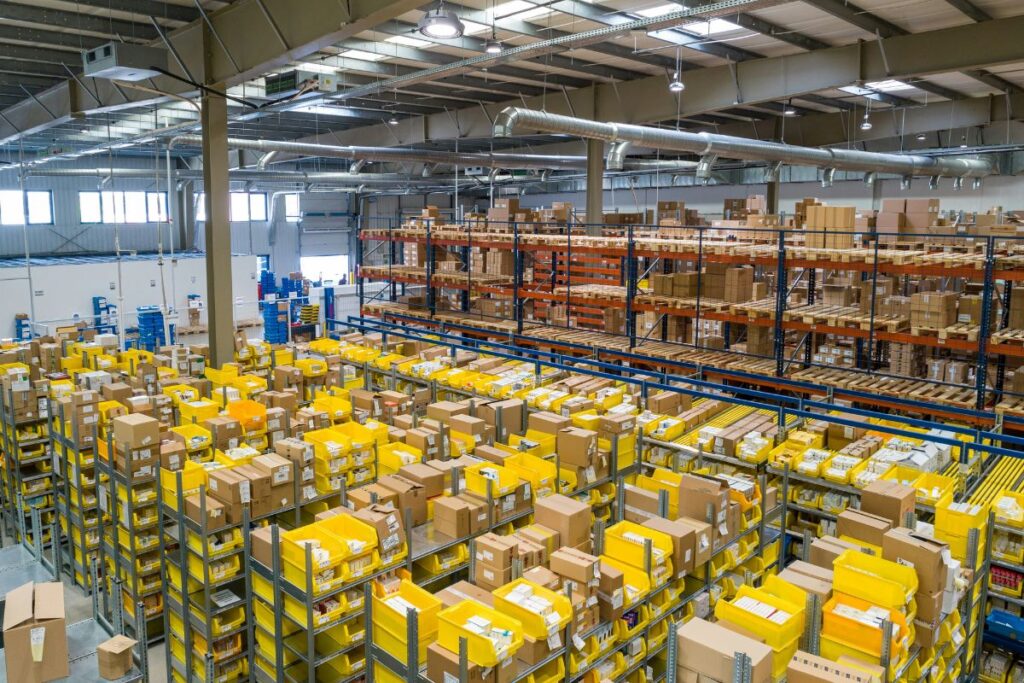
If you’re dispatching to customers across the UK, the most useful thing is to be near a major transport hub rather than near your own home. The Midlands, for example, sits within a four-hour drive of around 90% of the UK population, which is why so much of the country’s warehousing and distribution infrastructure is concentrated there. Birmingham alone has over 2,500 premises occupied by transport and storage businesses.
If most of your orders go to London, a warehouse in or near the capital might make more sense. If you’re importing from Europe, proximity to a port or customs clearance facility becomes relevant.
The other thing to consider is whether the facility integrates with how you currently operate. Some warehouses link directly with e-commerce platforms like Shopify or WooCommerce, so orders trigger dispatch automatically. Others work on a more manual basis. Neither is right or wrong, but knowing which you need before you sign anything saves headaches later.
What to Ask Before You Book
Not all warehouse facilities are the same. A few questions worth putting to any provider before you commit.
What’s included in the base rate? Some operators quote a headline rate and then add handling fees, in-and-out charges, and administration costs separately. Get a full breakdown before you compare prices.
What’s the minimum contract length? Some facilities require a three or six month minimum. Others are flexible. If you’re testing the service or dealing with seasonal stock, flexibility matters.
Can you access your inventory online? Real-time stock visibility is standard with good operators. If a facility can’t offer this, that’s worth knowing.
What are the security arrangements? Alarmed premises and CCTV are a baseline. Some facilities also have on-site staff overnight or work with bonded warehouses for higher-value goods.
Is there a minimum pallet count? Some warehouses are set up for larger volumes and aren’t practical if you’re storing two or three pallets. Others specifically cater for smaller businesses.
When It’s Time to Make the Move
There’s no single right moment, but there are some signals worth paying attention to.
If you’re regularly turning down larger orders because you don’t have the capacity to fulfil them, that’s a clear one. If you’re spending hours each week on packing and dispatch that could be spent on the parts of your business that actually need you, that’s another. If stock is getting damaged or lost at home, or if your insurer has told you that your current setup isn’t covered, it’s past time.
The shift from home storage to a proper warehousing arrangement feels like a big step. It isn’t always. Many businesses make it while still relatively small, and the reduction in stress alone tends to make it worthwhile pretty quickly.
Your spare room deserves to be a spare room again.
Images courtesy of unsplash.com and pexels.com