Most practitioners who go independent do it for the same reasons. They want control over their diary, the treatments they offer and the products they use, and they want the clients they have built up to stay with them. That part is easy to picture. The harder part is everything behind it: insurance, licensing, pricing, software and finding people to book in.
The steps below regarding starting an aesthetic clinic in the UK, are in roughly the order they need doing, because some decisions depend on others.
Training and insurance
Clients are putting their face in your hands, and they will ask where you trained. Pick accredited courses with supervised practice on real models, not just theory. More injectors are now working towards a Level 7 qualification, and insurers increasingly look for it.
If you want to offer botulinum toxin or any other prescription-only medicine, you need a prescriber who sees each client face to face before treatment. Set that up before you open. It affects your booking flow, since the prescriber consultation has to happen before the toxin is given.
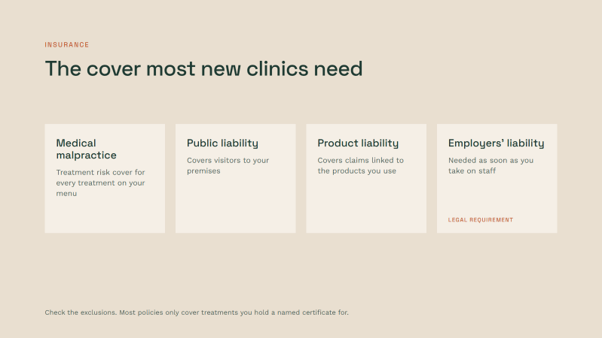
For insurance, you will usually need:
- Medical malpractice or treatment risk cover for every treatment on your menu
- Public liability for your premises
- Product liability
- Employers’ liability once you take on staff, which is a legal requirement
Check the exclusions. Most policies only cover treatments you hold a named certificate for, so adding a new treatment usually means updating your cover too.
Regulation and premises
The rules for non-surgical aesthetics are changing. England is introducing a licensing scheme for non-surgical cosmetic procedures, and Scotland, Wales and Northern Ireland each handle things differently. Check where things stand for your nation, and phone your local council, before you sign a lease.
Some things apply to almost everyone:
- Some councils already require a special treatments licence for certain procedures
- In England, Botox and dermal fillers cannot be given to under 18s for cosmetic reasons
- You hold personal and health data, so register with the ICO and have a privacy policy
- Every treatment needs signed consent and an up to date medical history
For premises, most people start by renting a treatment room in an existing aesthetic clinic or salon. It keeps overheads down, and you are not stuck in a long lease if the area turns out to be wrong. Whatever you pick, you need privacy, good light, a hand wash basin and surfaces you can properly clean.
Menu and pricing
Launch with a handful of treatments you are confident in and that people in your area already ask for, such as anti-wrinkle injections, fillers, skin boosters or peels. You can add more once bookings are steady.
Before opening, work out three sets of figures. Setup costs cover training, insurance, equipment, furniture, first stock and branding. Monthly costs cover rent, products, software, marketing and what you pay yourself. Then cost each treatment: product, consumables and the time it really takes, including consultation and aftercare.
Look at what clinics near you charge, but don’t set out to be the cheapest. Clients who choose you on price leave for the next discount, and putting prices up later is awkward. Charge for your training and the products you use.
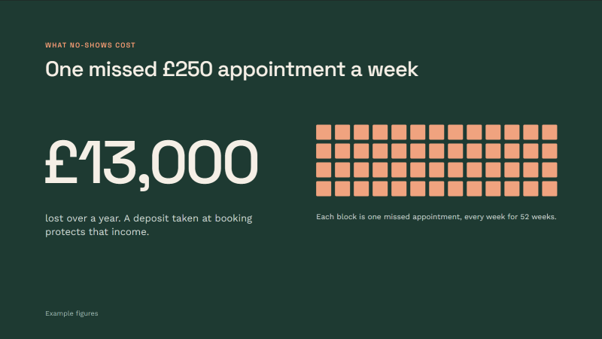
Write your deposit and cancellation policy before your first booking. One no-show on a £250 filler appointment is £250 gone, and over a year they add up.
Picking clinic software
A lot of new clinics run on Instagram DMs, paper consent forms, a phone calendar and a spreadsheet. That is manageable with ten clients. At fifty, someone gets double booked, a consent form can’t be found when you need it, and you are answering messages at 11pm.
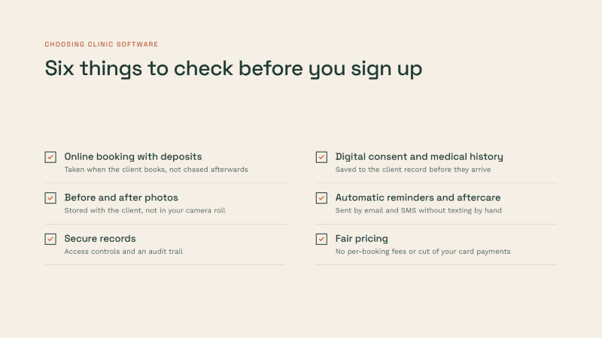
When you compare platforms, check that they cover:
- Online booking with a deposit taken when the client books
- Digital consent and medical history forms saved to the client’s record
- Before and after photos stored with the client, not in your camera roll
- Automatic reminders and aftercare messages
- Secure storage, access controls and an audit trail
- Pricing with no per-booking fees or cut of your card payments
Generic salon booking apps are built around hair and nails. Aesthetics needs consent, treatment notes, injection records and aftercare linked to each appointment, so it is worth using something built for that.
Why we recommend Beautay
Beautay is booking and clinic management software made for UK aesthetic practitioners. It works for a single treatment room and scales to multi-site clinics. It covers the list above, plus a few things that help once you are busier:
- A branded booking website with your logo and a client portal
- Digital consent forms, treatment notes and before and after photos attached to each appointment, with injection plotting
- Free SMS and email reminders and aftercare messages
- A waitlist that fills cancelled slots automatically
- Deposits and prepayments through Stripe to cut no-shows, with no extra transaction fee from Beautay
- Loyalty points, referrals, gift cards and email and SMS campaigns
- Stock, room and staff scheduling
- Encrypted records, role-based permissions, two-factor login and audit logs
Plans start at £24.95 a month. Each additional practitioner is £9.95 a month, and Beautay takes no share of your card payments. You can try it free for 30 days without entering a card.
For someone opening their first room, that is a manageable monthly cost, and you won’t need to move everything to a new system when you take on staff.
Finding clients and keeping them
Your first clients will mostly be people who already know you: past clients, friends and their friends. Message them personally when you open. In aesthetics, people want a recommendation from someone they trust before letting a new practitioner near their face.
Online, a couple of channels done properly will do more than a thin presence everywhere:
- Google Business Profile. Fill in every section, add real photos of your room, and ask each happy client for a review.
- Instagram and TikTok. Post real results (with written consent), short videos explaining treatments, and what a visit actually looks like.
Put your booking link in every bio, profile and email signature, so someone who is interested can book straight away.
Be careful with advertising. You can’t promote prescription-only medicines such as botulinum toxin to the public, and the ASA regularly acts on aesthetics adverts. Focus on your experience, what happens at a consultation and results you have achieved.
Repeat clients are where an aesthetic clinic becomes profitable. Send aftercare after each treatment, and a reminder when a top-up is due, which for anti-wrinkle injections is often around three to four months. A referral reward gives regulars a reason to recommend you. If your software sends these automatically, it happens every time instead of only when you remember.
Getting started
If you are planning to open an aesthetic clinic in the next few months, start with training, insurance and a call to your council, since those take longest. The software side is much quicker. Beautay has a 30-day free trial, so you can build your booking page and consent forms before your first client books.
Feature image unsplash.com. Other images supplied