When you spot a mouse in your home, it can be a frightening experience. The most obvious reaction is to buy traps from the local shop. To trap a mouse, you need bait like peanut butter or cheese. Then, within a few days, you catch a mouse. Then most people will assume the problem is completely solved and move on.
But, a few weeks later, you discover fresh droppings in your home again. This happens because mice are persistent pests. They are known to adapt quickly to human environments. So, you can easily understand that setting snap traps will not resolve the underlying issues in a property. If you suffer from pest problems quite often, professional pest control Bristol services can address the root cause effectively.
Now, this blog is created with the intention of making you understand why these rodents return despite your best efforts.
Hidden Nesting Places Inside the Property

The over-the-counter snap traps are usually designed to catch rodents that venture into the open. But to remove the nests hidden deep within your walls, snap traps are not effective. It is known that a female mouse reproduces at an extraordinary rate. A single female can produce up to ten litters every year. Each of these litters can hold around six pups.
Mice nests are hidden in a secret location in a warm area that humans rarely inspect:
- Inside cavity walls and behind plasterboard.
- Beneath kitchen cabinets and under built-in appliances.
- Within loft insulation and floor voids.
- Behind hot water cylinders and boiler cupboards.
This means that when you are happy that the snap trap caught the mice, there could be dozens more that are still safe inside the building structure. This active nest will produce new mice offspring at lightning speed.
Unsealed Entry Points Allow Continuous Access
The idea of a snap trap is targeting individual pests inside your home. Traps are not designed to prevent new rodents from entering from outside. A mouse can very easily enter through a gap as tiny as 6 millimetres.
Common Rodent Entry Points Include:
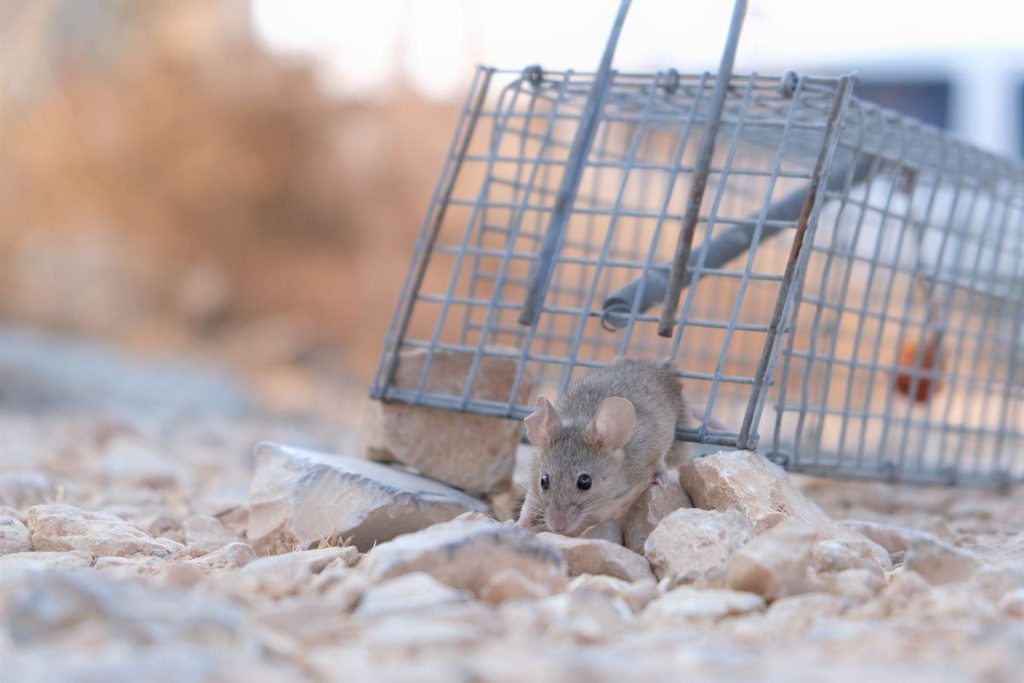
- Air bricks: An unprotected ventilation bricks will offer direct access to subfloor voids.
- Rooflines: If there are soffits, fascia boards, and loose tiles, then those will give direct entry to the loft.
- Pipework gaps: If the brickwork entry of pipes and cables is not done properly then rodents can use it to enter your house.
- Door gaps: If there are worn draught excluders under your back doors that leaves sufficient space for a rodent to enter.
Even if you catch mice in your kitchen but leave an open pipe gap in the external wall, other mice will simply take their place.
Abundant Food and Water Sources
Like humans and other living beings, mice also need food to survive. But due to their size, they do not need a lot of food. For example, an adult mouse will be full if it gets 3g of food per day. So, if your place has easy access to food, rodents will not leave.
Common Attractants Include:

To know how to get rid of mice, you must understand their nature first.
- If you don’t cover your dustbin and outside waste bins, those can attract rodents easily.
- It is common for food grams to fall under the kitchen counter while cooking. If you don’t clean them regularly, those can attract rodents.
- If you have a garden and there is bird food scattered which can attract rodents.
- If you have a pet at home and the food bowls are left out overnight on the floor, that is a very easy way to attract rodents.
- Your pantry can act as a feast location for rodents if there are unsealed food boxes on the lower shelves.
If you think that setting a snap trap with food like peanut butter and other food crumbs accessible nearby will stop a rodent infestation, then you are wrong. The rodents will easily avoid your bait food and survive on the other food sources available nearby.
The Limitations of DIY Mouse Trapping
There are human traps and snap traps available easily in the market, but if you want to get rid of rodent infestation completely, then you cannot solely depend on these traps.
- Incorrect Trap Placement
People sometimes make the mistakes of placing the traps in the middle of open rooms. But you must know that mice do not have a good eyesight. That’s why they travel along wall edges to stay hidden. If the traps you place are far from the wall, then mice will not get trapped in it.
- Mismanaged Baiting Techniques
If you place too much food as bait on the traps, then mice might not trigger the spring mechanism. If you touch the weight food with your bare hands, then your human scent will be left behind in that food. This scent will obviously act as an alert system for any possible threat.
- Failure To Address Scent Trails
Mice are known to mark their territories with their urine trails. These trails are used by other mice, drawing them to your property. These traps are effective, but they are just designed to kill individual pests. But this urine chemical trail does not get erased by traps.
Effective Methods for Complete Mouse Clearance

If you want a long-term protection from rodent infestations, implementing effective pest control requires a tried-and-tested approach. The process should combine both eradication and preventive measures for any future infestation.
If you want to get lasting relief from mice, then you must do the following things along with correct sanitation:
- Secure food storage: Put all your dry goods into rigid glass or metal containers with airtight lids. Cleaning under kitchen appliances regularly is particularly important.
- Apply proper mouse infestation treatment: Use physical trapping with targeted baiting stations in secured areas. Such areas should be away from children and pets.
- Clear external shelter: Always make sure to trim overgrown garden vegetation away from house walls. If you have firewood stacks, keep them elevated off the ground and placed far from the main building.
- Conduct a thorough audit: Check exterior brickwork, air vents, and utility entry points for signs of grease marks or gnawing.
- Seal all openings: Using steel wool and quick-setting mortar to block holes is known to be remarkably effective. It is because mice are known to chew through expanding foam and soft plastics.
Frequently Asked Questions
Q: Why do mice keep coming back into my house?
A: The main reason mice come back is to get food, shelter, and warmth that your place offers. If you do not seal the holes and the gaps in and around the house, then rodents will keep coming back and infestation will keep growing.
Q: Can mice chew through expanding foam?
A: Yes. Mice have sharp teeth that can gnaw through soft rubber, expanding foam, timber, and plastic mesh. To stop mice from gnawing and destroying your property, use wire mesh or mortar for effective sealing.
Q: How long does it take to fully eradicate a mouse problem?
A: If the issue is not critical, then that can be controlled in a few days. When it comes to multiple concealed nests, you need the best pest control Bristol has to offer to provide a proper professional pest control treatment.
Q: Are sonic mouse repellents effective?
A: There are ultrasound devices that give long-term success from rodent infestation. Mice quickly acclimate to the noise when food and warm shelter are present.
Q: What is the best way to get rid of mice permanently?
A: A complete structural proofing, all tested and proven Bristol pest control treatments by professionals, and keeping strict food hygiene at home are the key ways to prevent mice infestation permanently. Snap traps can certainly decrease the mice population for a very short time. But, if you are looking for a sustainable solution, then you need to hire a pest control expert from trusted local team like Aman Pest Control. They will find all structural vulnerabilities first and remove all food attractants. Then they will make sure all the entry points to your property are sealed correctly, discover hidden nests and remove them, and offer you tips to prevent all future infestations.
Images courtesy of unsplash.com and pexels.com