Exposed brick, iron columns and a view of an old crucible stack: there are worse places to drink a morning coffee. Sheffield City Council describes Kelham Island as “one of the first industrial conservation areas in the country to be designated”, and the council’s list of its landmarks includes the Grade II* listed Cornish Place, now residential. Across the North, former mills and workshops have become some of the most characterful homes around.
What the photographs rarely show is what had to come out first. A workshop that spent a century making cutlery or tools, and perhaps its last few decades as cheap offices, leaves a very particular kind of mess behind where skip hire is essential.
Why plasterboard is the first skip hire question
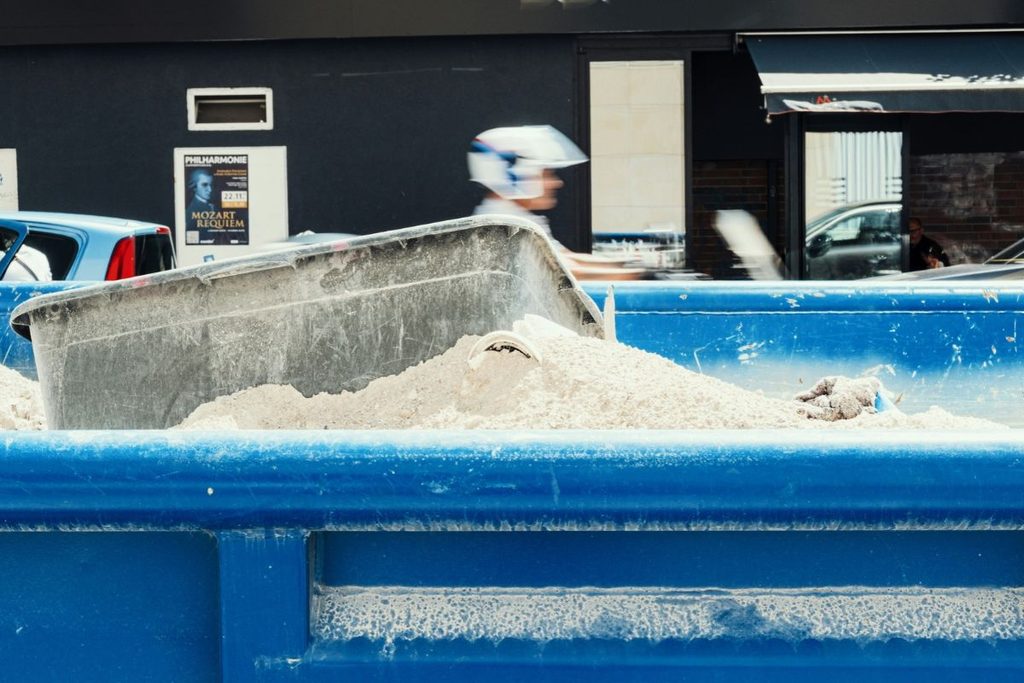
Most old workshops have been altered many times, and the later layers are often the first to go: office partitions, suspended ceilings and dry-lined walls. They look like ordinary rubble, but they aren’t treated as such. According to Sheffield skip hire company easySkip “Hazardous waste, electrical items, mattresses and upholstered furniture, carpets, plasterboard and tyres are not accepted in any skip”. Plasterboard, including dry-lined partition walls, must always be disposed of separately and never in a mixed skip. The rule comes from landfill law. Environment Agency guidance states: “You must not send gypsum-based waste (for example, plasterboard) to a landfill cell that accepts biodegradable waste.” Skip firms generally want to know about plasterboard in advance for that reason, so it is worth counting the partitions before booking anything.
Check what is protected
The next question is what may be touched at all. Kelham Island’s conservation area was designated in May 1985 and extended in 1999, 2008 and 2025, and the council describes it as one of the most important areas in Sheffield for showing the development of the metal trades. Other parts of the North have their own designations and listed buildings.
Listed status matters most. In England and Wales, carrying out unauthorised works to a listed building is a criminal offence, with a possible prison sentence of up to two years. That covers more than obvious demolition, and historic details can be protected even when they look like scrap to a contractor in a hurry. Sheffield’s Conservation Unit and its equivalents elsewhere are the people to ask before anything is stripped out.
Asbestos comes before the crowbar
The Health and Safety Executive says that buildings constructed after 2000 are unlikely to contain asbestos, which tells you what to assume about a Victorian works with decades of repairs. Roof sheets, pipe lagging, old ceiling tiles and textured coatings are all places where it might be found.
HSE guidance is clear that “There is a legal requirement for all ACMs to be removed, as far as reasonably practicable, before major refurbishment or demolition”, ACMs being asbestos-containing materials. A refurbishment or demolition survey, carried out by a competent surveyor, is how they are found. It needs to happen before the skip arrives, because asbestos has its own disposal route and cannot simply be thrown in with everything else.
The residue of a working building
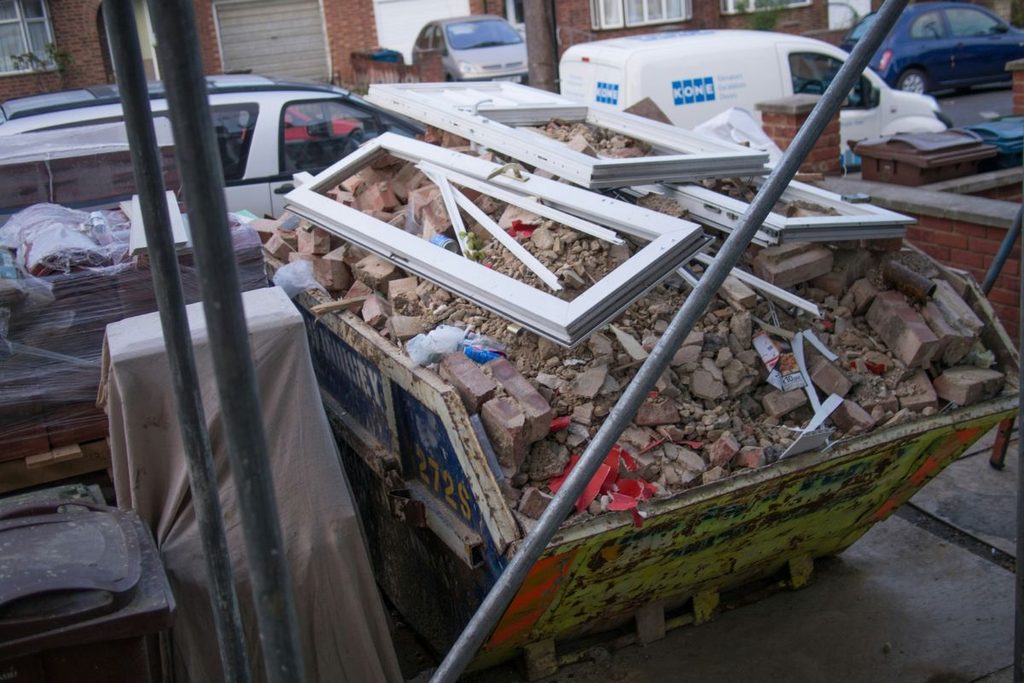
Old industrial buildings carry traces of what happened inside them, and it is sensible to expect the unexpected:
- Oils and coolants: Cutting fluids, old drums and contaminated rags may count as hazardous waste. They have to be kept apart from general rubbish and dealt with by a specialist.
- Metal: Swarf, old fittings and redundant machinery can have real value. Scrap dealers must be licensed by the council, and they cannot legally pay in cash.
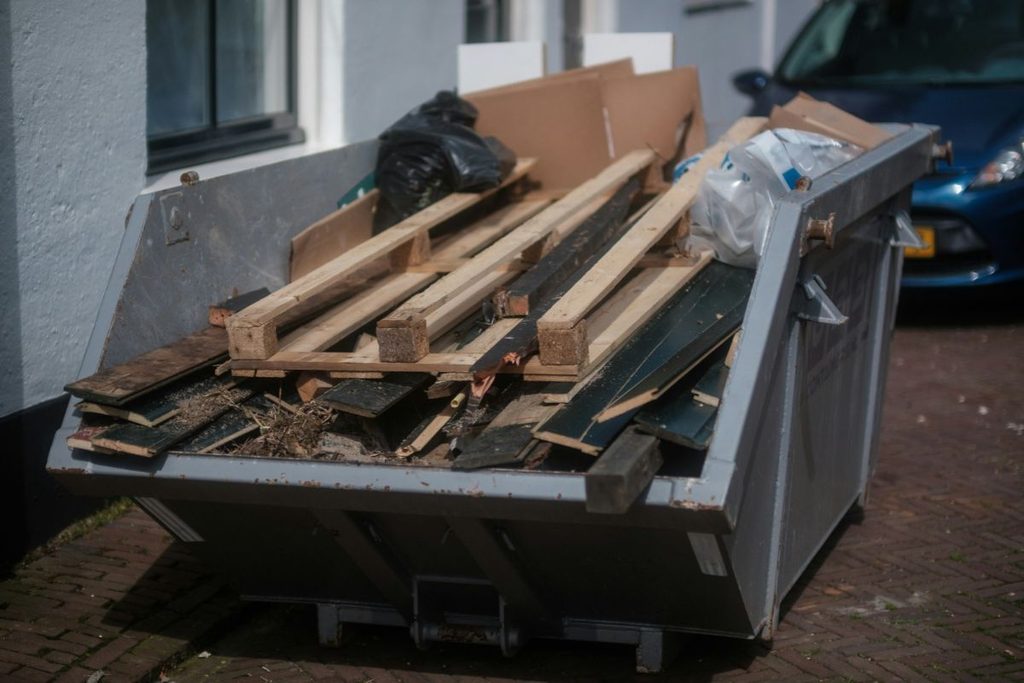
- Timber: Old beams may be sound enough to reuse, but anything heavily treated, tarred or soaked in oil is not ordinary waste wood. Mention it to whoever is taking it away.
- The ground itself: Yards around former works can hold contamination. A planning condition may require an investigation before any soil is removed, so check first.
The waste firm’s questions are worth answering carefully. Under the rules for sending waste to landfill, components needing specific treatment, including gypsum and asbestos, must be separately identified. Getting that right on day one is far cheaper than sorting a mixed load later.
Getting it out of a narrow yard
Then there is the practical matter of moving it. Many of these buildings sit on tight cobbled streets, with arches, shared yards and neighbours who have only recently moved in. A skip on the public road needs permission from the highway authority and, in England and Wales, must be properly lit during the hours of darkness and marked with the owner’s name and contact details.
Sheffield’s Clean Air Zone adds another consideration. It covers the inner ring road and city centre, and non-compliant lorries pay £50 a day, though private cars are exempt. Anyone arranging their own transport for rubble or materials should check the vehicle first, and it is reasonable to ask whether any charge is included in a contractor’s price.
Phasing the work also helps. Several smaller, separated loads are usually easier to manage on a tight site than one large, mixed one, and they stand a better chance of being recycled.
Keep the story
The best conversions tend to hold on to something from the building’s working life. Old doors, hooks, gantries and worn benches can be turned into features for very little money, and salvaged brick or stone can be reused rather than carted away. Anything of real interest is worth photographing before it moves, and local history groups may be glad of the records.
Clearing out a workshop is slower and messier than a brochure suggests, but it is also the moment when the building gives up its secrets. Handled in the right order, with the survey first and the skip hire last, it leaves far less to regret.
Images courtesy of unsplash.com and pexels.com