The filling is what can make a duvet feel warm, light, heavy, airy or stuffy, and it’s the first thing to decide when you’re buying one. Natural fillings, such as down and feather, have been the traditional choice, and they still have plenty of admirers.
For most households, though, a modern synthetic duvet filling is now the more practical buy, because the best of them match natural fillings for comfort while being easier to wash, kinder to allergy sufferers and often made from recycled materials. This guide explains how each type behaves, who suits which, and what to check on the label before you buy.
Natural Fillings
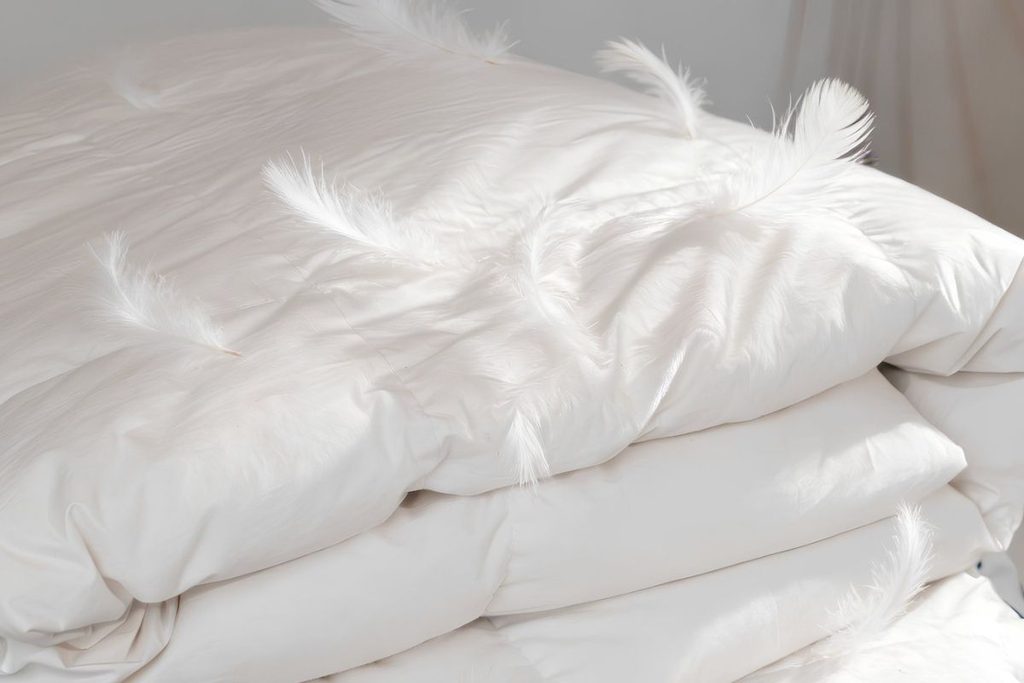
- Down is the soft, fluffy layer beneath a bird’s feathers. It traps a great deal of air for its weight, so a down duvet is light, warm and lofty. It’s also the most expensive filling, it needs professional cleaning, and it isn’t suitable for anyone with a feather allergy.
- Feather is heavier and denser than down, and it’s usually blended with down to bring the price down. Feather duvets feel weightier on the body, which some people love and others find a little heavy.
- Wool is breathable, wicks moisture well and regulates temperature naturally. Wool duvets are a good choice for warm sleepers, and they’re heavier than down.
- Silk is light, smooth and hypoallergenic, and it drapes closely to the body. It sits at the premium end of the market.
Synthetic Fillings

- Hollowfibre is a polyester fibre with a hollow core, which traps air for warmth. It’s affordable, washable and hypoallergenic, and it tends to feel a little flatter than down.
- Microfibre uses much finer polyester strands, which gives a softer, more down-like feel while keeping the practicality of a synthetic.
- Recycled fibres are the newest development, and the one most people are best served by. Fibres spun from recycled plastic bottles can be combed into light, airy clusters that behave very much like down, and they’re machine washable at 40°C. Sleep brand Simba’s duvets are a good example of how far this has come. Its Hybrid™ Duvet is filled with Simba Renew Bio™, a recycled bottle fibre, and its Hybrid™ 3-in-1 uses Simba Renew™ blended with 20% plant-derived Modal to encourage airflow and wick away moisture. You get the loft and softness people buy natural duvets for, with none of the upkeep.
Natural And Synthetic Compared
| Natural (down and feather) | Synthetic (modern recycled fibre) | |
| Feel | Light and lofty | Light and down-like |
| Warmth for weight | Excellent | Very good |
| Washing | Usually professional cleaning | Machine washable at home |
| Allergies | Not suitable for feather allergies | Hypoallergenic |
| Price | Higher | Lower |
| Sustainability | Depends on sourcing | Can use recycled materials |
Which Suits You?

- You love a light, cloud-like duvet. Down is the classic choice, and a modern recycled-fibre duvet gets very close to it for less money and far less upkeep.
- You have allergies or asthma. Choose synthetic, and make sure it’s washable at 40°C or above.
- You sleep warm. Look for a breathable filling and a lower tog. A synthetic blended with a moisture-wicking fibre such as Modal is a strong option, and Simba pairs its Modal blend with a cooling Stratos® cover on the other side.
- You want to wash it at home. Synthetic, every time.
- Sustainability matters to you. Look for recycled content and a maker that’s transparent about its materials. Recycled bottle fibres give waste plastic a second life, which is hard for any filling to beat.
- You share a bed with someone who feels the cold. A duvet you can adjust is the answer, and a synthetic 3-in-1 gives you three warmth levels from one purchase.
Tog, Cover And Construction
The filling decides how a duvet feels, and three other things decide how it performs.
- Tog measures warmth. Around 4.5 tog is a summer duvet, 7 to 10.5 tog covers spring and autumn, and 10.5 tog and above is for winter. Some synthetic duvets combine two togs in one, which is much harder to do with a natural filling. Simba’s Hybrid™ 3-in-1 is a 3.5 tog and a 7 tog that snap together to make 10.5 tog, so one purchase covers the whole year, and its Summer Duvet is a 4.5 tog for the hottest months.
- The cover fabric matters for breathability. Cotton is the most common, and a cotton and Modal blend adds softness and airflow. Look for cooling technology if you run warm. Simba’s duvets have Stratos® on one side, which is designed to be cool to the touch, and in independent testing by HeiQ it was up to 3°C cooler than untreated fabric.
- Stitching keeps the filling where it should be. Box or square stitching stops the filling migrating to the edges, which is a common complaint with cheaper duvets.
Reading The Label
Before you buy, check for:
- the duvet filling type and, for blends, the proportions
- the tog rating
- the cover fabric
- washing instructions, including the temperature
- the stitching pattern
- any certifications, such as OEKO-TEX® for the textile
If you’d like a quick way to compare togs, recycled fillings and cooling features on real products, Simba’s duvet comparison lays its three synthetic duvets out side by side, including their sustainability notes.
FAQs
Is a synthetic duvet as warm as down?
A good synthetic is very close. Down traps slightly more air for its weight, so a down duvet can be marginally lighter at the same tog, but you’re unlikely to notice a difference in warmth if the tog ratings match.
Can I wash a natural duvet at home?
Most down and feather duvets need professional cleaning, and washing them at home risks clumping and damage. Check the care label. Synthetic duvets are usually machine washable at 40°C.
How long does a duvet last?
A well-cared-for duvet lasts several years, and a synthetic that’s washed regularly tends to stay fresher for longer than one you can only air. Signs it’s time to replace one include lumping, flat patches and a persistent smell after washing. Simba’s duvets come with a 1-year guarantee and a 30-night trial.
Are recycled-fibre duvets sustainable?
They use materials that would otherwise be waste, which is a good start. Look for a maker that publishes its sourcing and sustainability information. Simba is a certified B Corp and publishes an annual impact report.
What’s the best duvet for a guest room?
A washable synthetic duvet filling in a mid tog, or a 3-in-1 that lets you set the warmth for the season. Hypoallergenic fillings are safest when you don’t know your guest’s sensitivities.
Images courtesy of unsplash.com and pexels.com