A well-equipped metal fabrication workshop helps you measure accurately, cut efficiently, shape material consistently, and complete strong, clean assemblies.
The right metal fabrication tools also reduce wasted stock, rework, and unnecessary strain. Start with dependable essentials rather than collecting specialized equipment before daily tasks require it.
Cutting Tools For Fast, Accurate Work
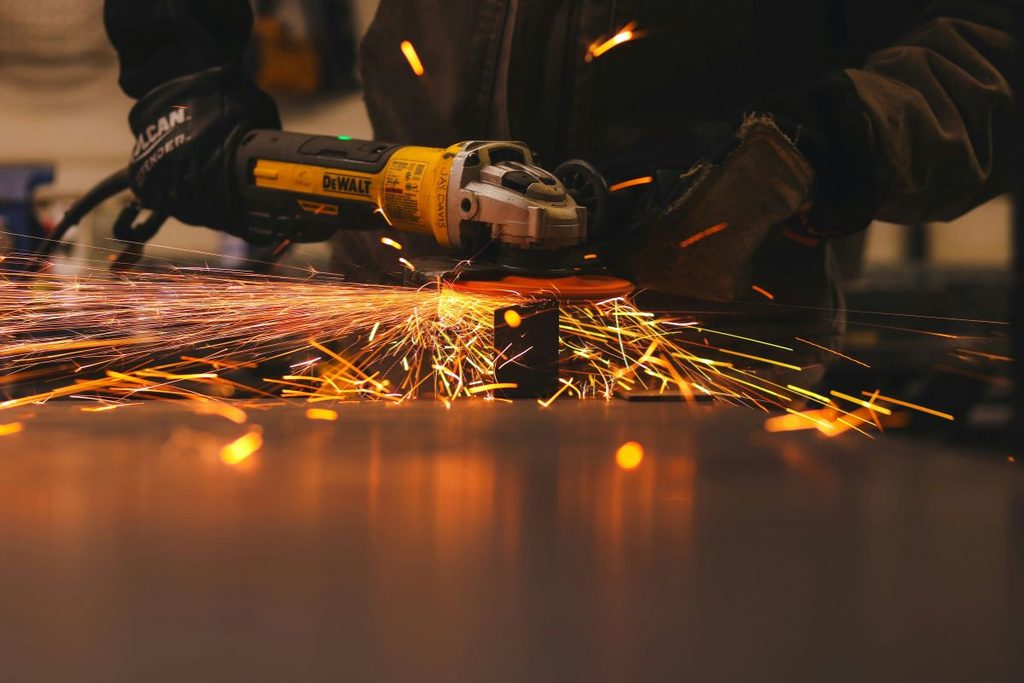
A Hypertherm plasma cutter is a valuable addition for cutting conductive metals such as mild steel, stainless steel, and aluminum. Plasma cutting produces fast, precise cuts without the mechanical force required by a saw. Pair the cutter with a sturdy cutting table, replaceable consumables, an air compressor with proper filtration, and a grounding clamp. An abrasive chop saw or metal-cutting bandsaw remains useful for straight cuts, tubing, angle iron, and heavier stock. An angle grinder with cutting wheels provides flexibility for trimming, beveling, and accessing tight areas.
Welding Equipment For Strong Assemblies
A multi-process welder gives a workshop flexibility across MIG, TIG, and stick applications. MIG welding suits production work and general steel fabrication, while TIG welding offers greater control for stainless steel, aluminum, and appearance-sensitive joints. Stick welding remains practical for outdoor work and heavier materials. Essential accessories include welding leads, electrode holders, wire feeders, shielding-gas regulators, spare contact tips, welding wire, electrodes, and anti-spatter spray.
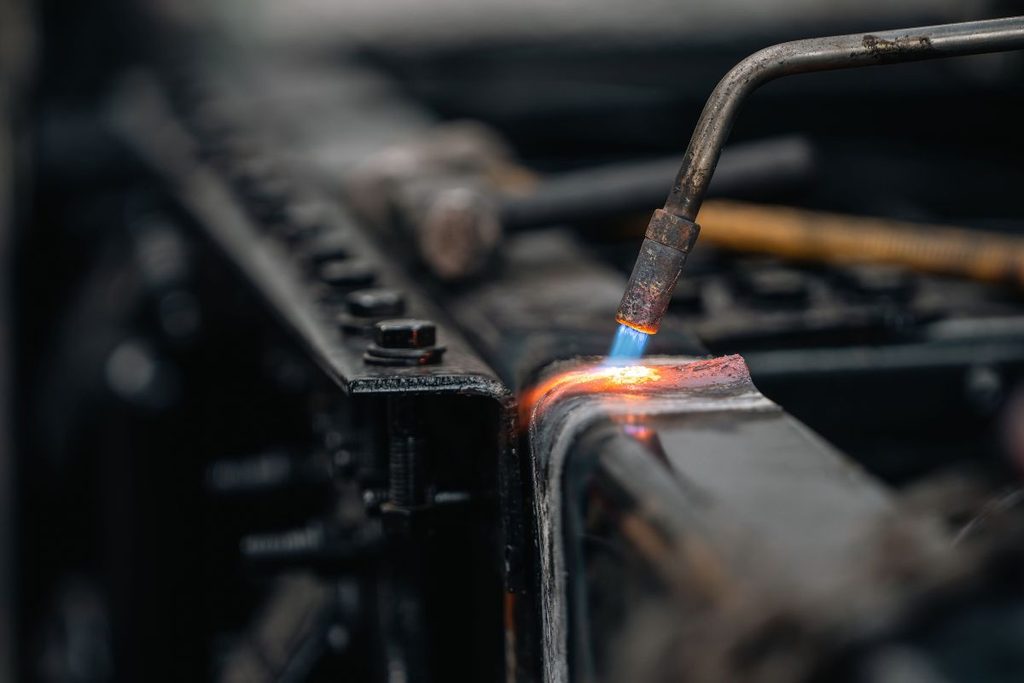
A welding table with clamping holes provides a stable, heat-resistant surface for assembly. Add magnetic squares, locking pliers, C-clamps, pipe clamps, and adjustable fixturing tools. These items hold components in position, maintain repeatable angles, and reduce movement during welding. Strong fixtures improve accuracy without requiring constant manual repositioning.
Measurement And Layout Tools
Accurate layout prevents expensive mistakes before cutting begins. Keep a combination square, steel rule, tape measure, machinist’s square, center punch, scriber, calipers, bevel gauge, and level within easy reach. A digital caliper provides quick readings for thickness, outside dimensions, inside dimensions, and hole diameters. For larger projects, a layout table with a flat, verified surface supports consistent marking and inspection.
A portable height gauge or surface gauge helps transfer dimensions across larger workpieces. Marking blue, soapstone, paint markers, and fine-point permanent markers suit different surfaces and temperatures. Check measuring tools regularly against known standards, especially when fabricating parts that must fit together.
Forming And Drilling Equipment
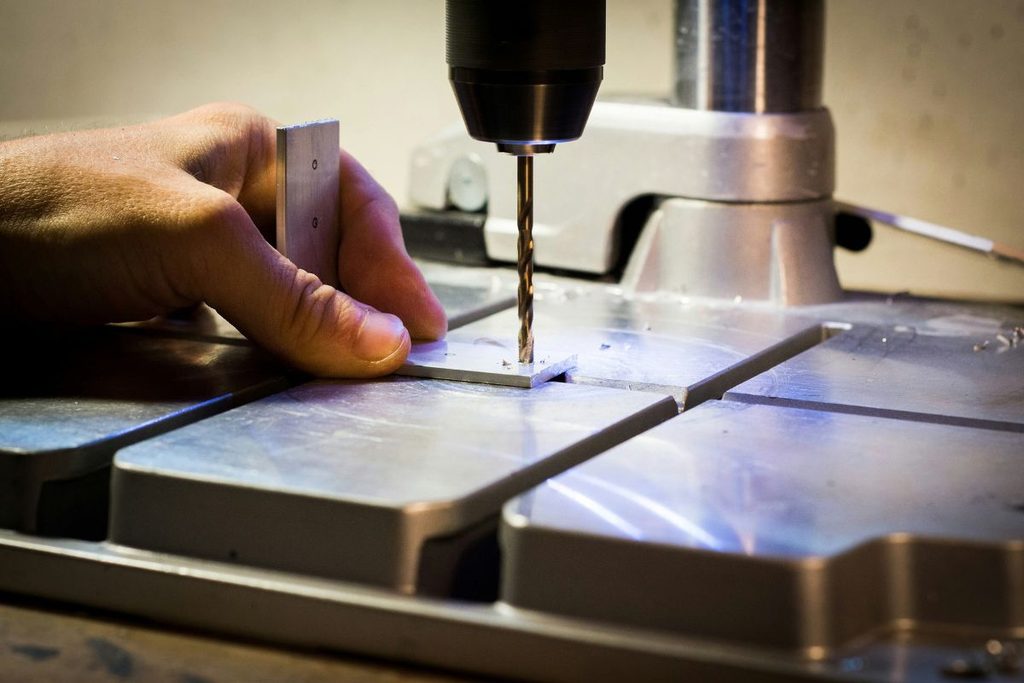
A drill press offers better control and alignment than a handheld drill, particularly for repeated holes or thicker plate. Stock high-speed-steel drill bits in multiple sizes, along with step bits, countersinks, hole saws, cutting fluid, and deburring tools. A magnetic drill provides useful portability for large beams and structural components.
For forming work, a hydraulic press, bench vise, hand seamer, sheet-metal brake, and manual shear are essential metal fabrication tools and cover many common operations. A press helps straighten, bend, and install bearings or bushings. A brake creates clean sheet-metal bends, while a shear produces straight cuts without the heat-affected edge associated with thermal cutting.
Grinding And Finishing Tools
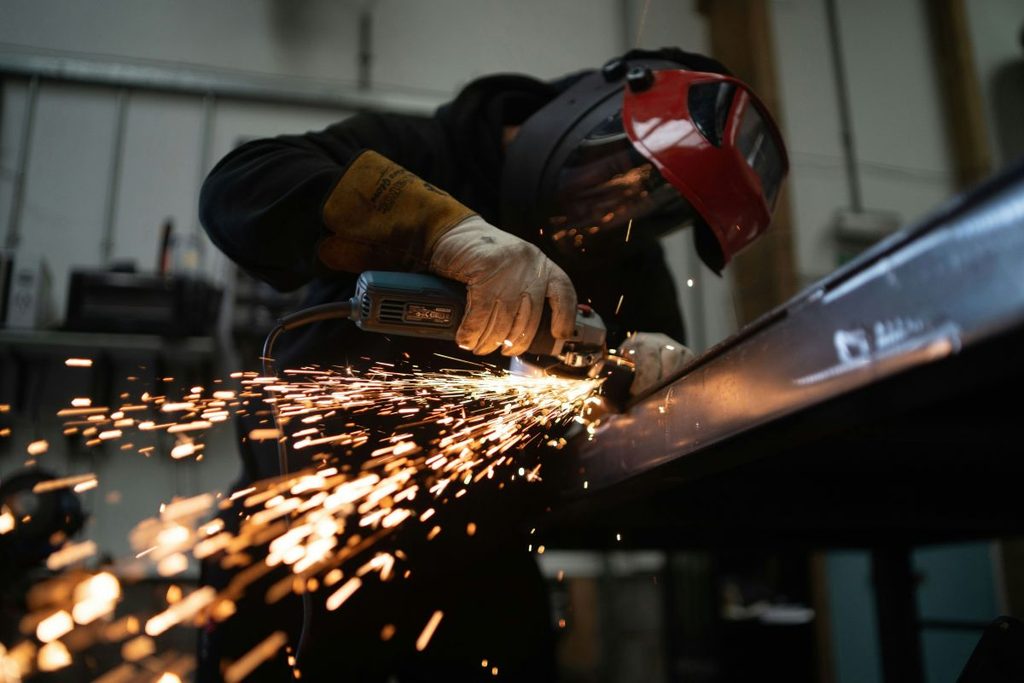
Grinding tools prepare edges, remove weld spatter, smooth rough cuts, and refine finished surfaces. Keep flap discs, grinding wheels, wire wheels, sanding discs, and polishing pads available in suitable grits. A bench grinder supports general sharpening and deburring, while a belt grinder provides more controlled edge finishing. Use guards, correctly rated wheels, and properly adjusted tool rests. OSHA guidance addresses guarding, eye protection, ventilation, and hot-work precautions for fabrication activities.
Safety And Workshop Support
Safety equipment belongs beside production tools, not in a separate storage area. Stock an auto-darkening welding helmet, impact-rated safety glasses, a face shield, flame-resistant clothing, leather gloves, hearing protection, welding curtains, fire blankets, and suitable fire extinguishers. Provide local exhaust ventilation or another effective fume-control method, and keep gas cylinders secured upright with compatible regulators and hoses. A first-aid kit, spill-control supplies, lockout equipment, and clearly marked electrical disconnects complete the basic setup. A clean, organized workshop improves visibility, protects equipment, and makes every fabrication task more predictable.
Images courtesy of unsplash.com, pexels.com and Freepix.com