Some events feel impressive from the moment you enter the room. The space has depth, attention naturally moves towards important areas, and even simple moments seem deliberately staged.
That cinematic quality rarely comes from spending heavily on decoration. It is usually created by thinking about an indoor event in much the same way a filmmaker approaches a scene: controlling light, perspective, movement, sound and timing.
Whether you are planning a corporate celebration, awards evening, product launch or private party, these ideas can help create a more immersive experience.
Build the Atmosphere With Light
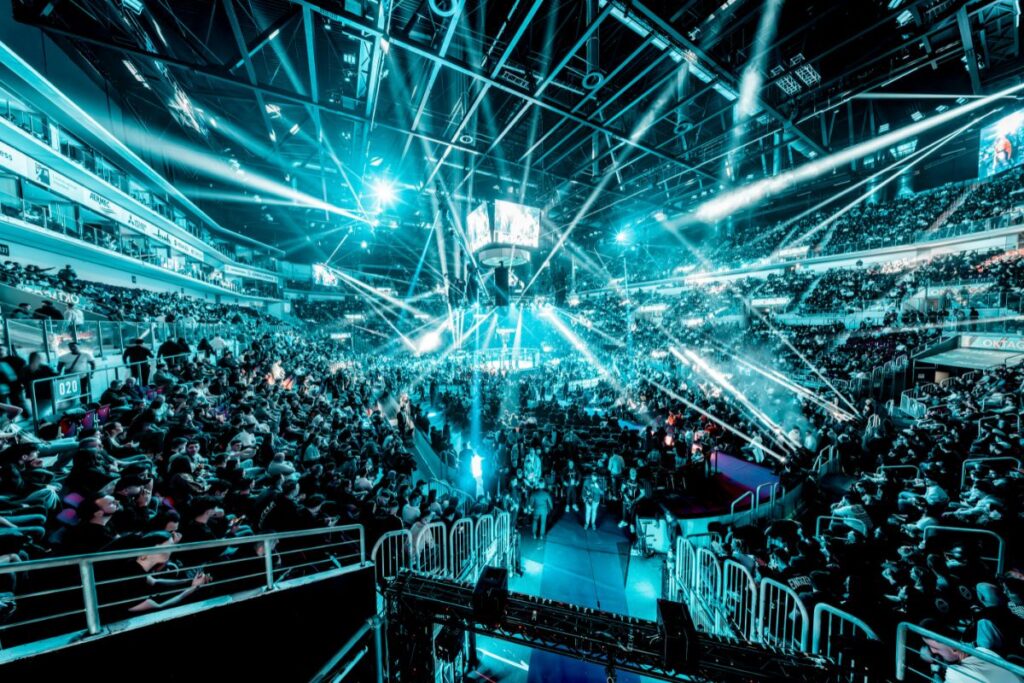
Cinema would look very different if every scene were illuminated evenly from above. Yet this is effectively what happens in many event spaces when standard venue lighting is left unchanged.
Professional lighting for events can help transform a room by creating contrast, highlighting architectural features, and directing attention towards particular areas.
Consider lighting the walls, tables, stage, and decorative features separately rather than treating the room as one space. Different layers of light can create depth and make even a relatively simple venue feel more dramatic.
Think About the First Reveal
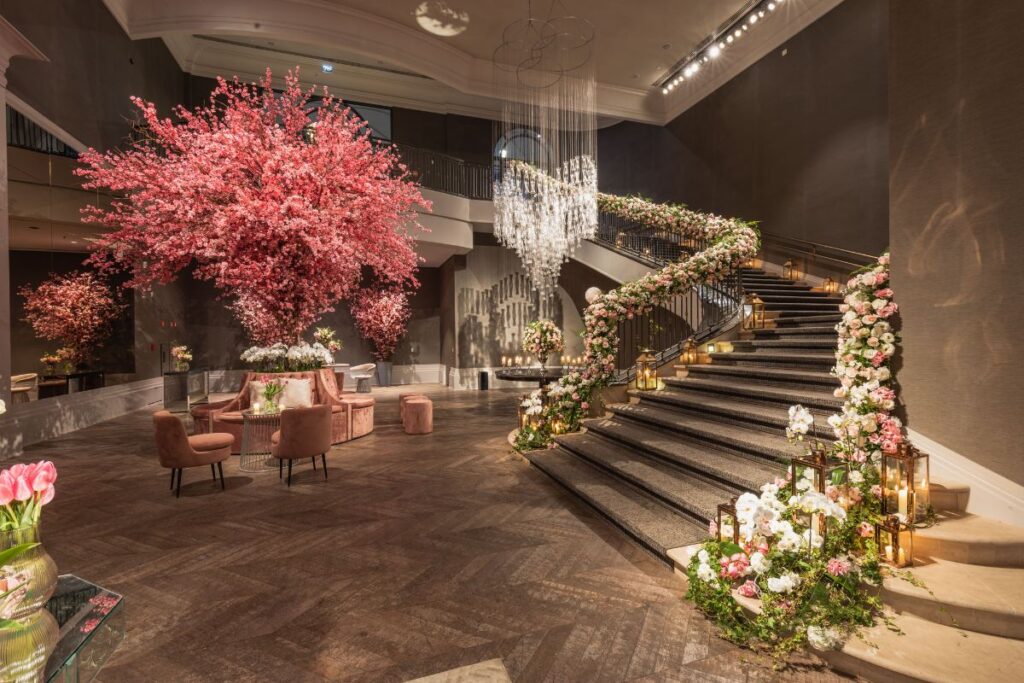
Films rarely introduce an important location without considering how the audience will first see it. Events can borrow the same principle.
Think about the guest’s journey from the entrance into the main space. Could a corridor deliberately reveal very little before guests enter a dramatic room? Could curtains conceal the main event area until the right moment?
A strong reveal creates contrast between the outside world and the environment you have designed.
Create a Clear Visual Focus
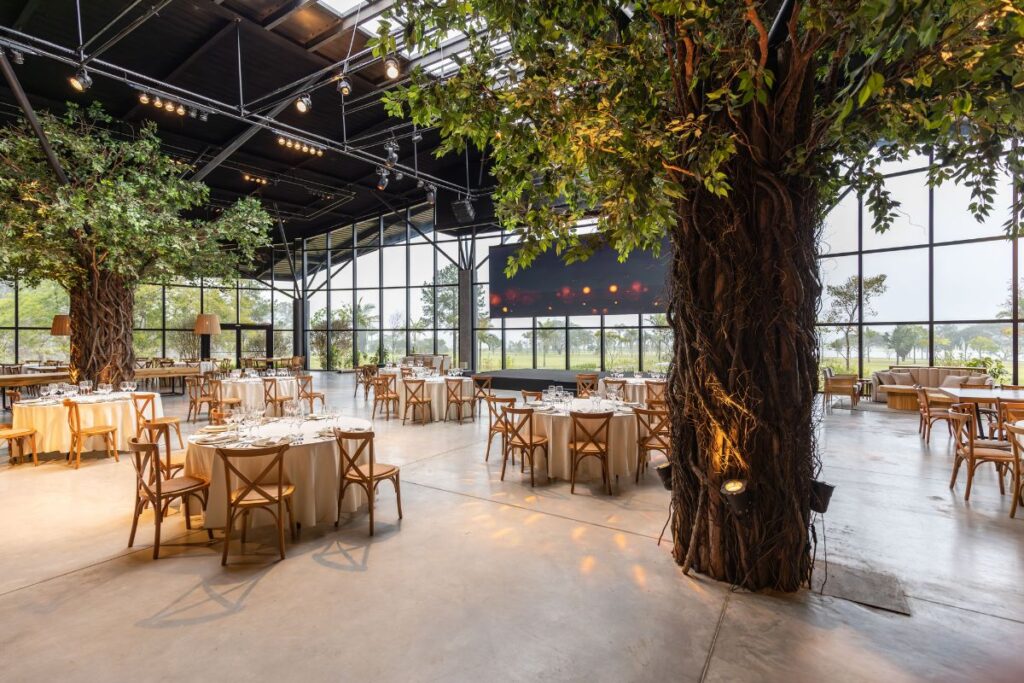
Walk into a beautifully designed event, and your attention should naturally go somewhere. That focal point might be a stage, installation, bar, dance floor, projection, or central table arrangement. Without one, large rooms can feel visually confused because every element is competing for attention.
Use lighting, positioning, and scale to establish a hierarchy. Supporting features should complement the main attraction rather than fighting with it.
Use Sound to Shape the Space
Cinematic atmosphere is not purely visual. Sound can change how guests perceive a room before they have consciously noticed the décor. Music played quietly during arrivals can build anticipation, while changes in volume and tempo can signal that the evening is moving into another phase.
Sound effects can also work when used carefully. A subtle audio element accompanying an entrance, product reveal, or presentation can make a relatively simple moment feel far more significant.
Introduce Movement
Static spaces can look beautiful, but movement brings them to life. This could come from animated projections, moving lights, performers, video installations, or even curtains opening to reveal another part of the venue.
The movement does not need to be constant. In fact, carefully timed changes often have greater impact. If the room looks exactly the same from arrival until departure, guests quickly become accustomed to it. Allowing the environment to evolve keeps their attention.
Design for Different Perspectives
An event should work from more than one viewpoint. Consider what guests see when they enter, sit down, approach the bar, or look towards the stage. You should also think about photographs and video.
A feature that looks impressive directly in front of you may disappear completely when viewed from another angle. Testing sightlines beforehand can reveal empty areas, distracting equipment, or competing visual elements that need adjusting.
Let the Evening Have Different “Scenes”
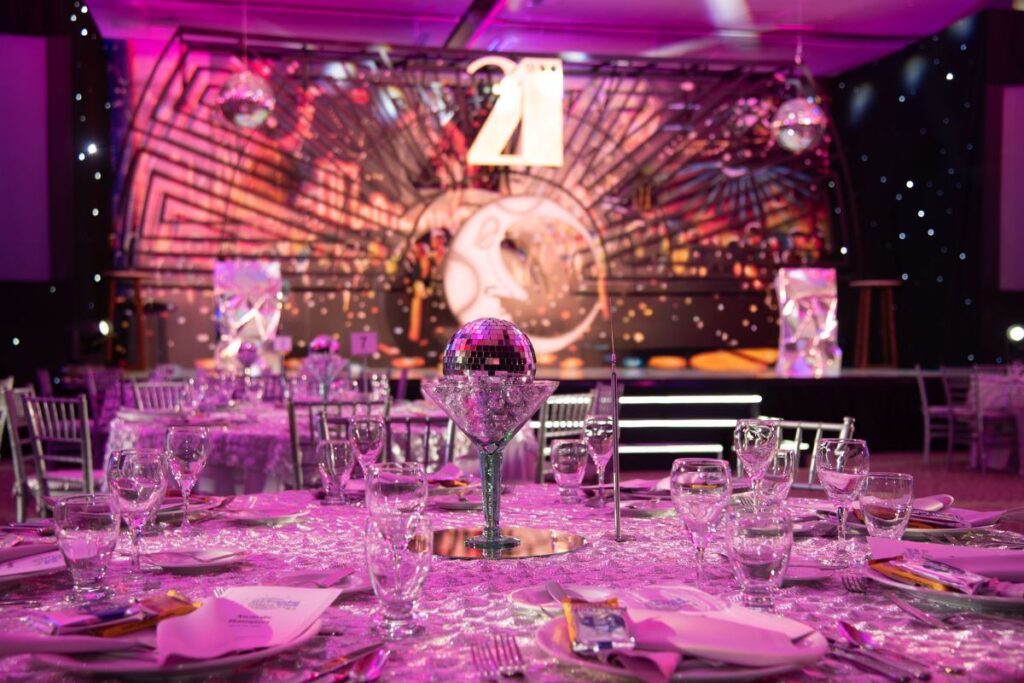
One of the easiest ways to create a cinematic feeling is to stop treating an event as one continuous experience.
Instead, divide it into chapters. Arrival might be atmospheric and restrained. Dinner could feel warmer and more intimate. A presentation or reveal can introduce greater drama before entertainment shifts the energy again.
Lighting, music, and staging can change subtly between each stage, helping guests recognise that the evening is progressing without requiring constant announcements.
Make Every Detail Serve the Experience
A cinematic event does not need to resemble a film set. What matters is creating an environment where attention and atmosphere feel deliberately controlled. Light should lead the eye, sound should reinforce the mood, and movement should arrive at meaningful moments. When those elements work together, an ordinary indoor event venue can become a setting that feels completely different for a few hours, which is often what guests remember long after the event ends.
Images courtesy of unsplash.com and pexels.com