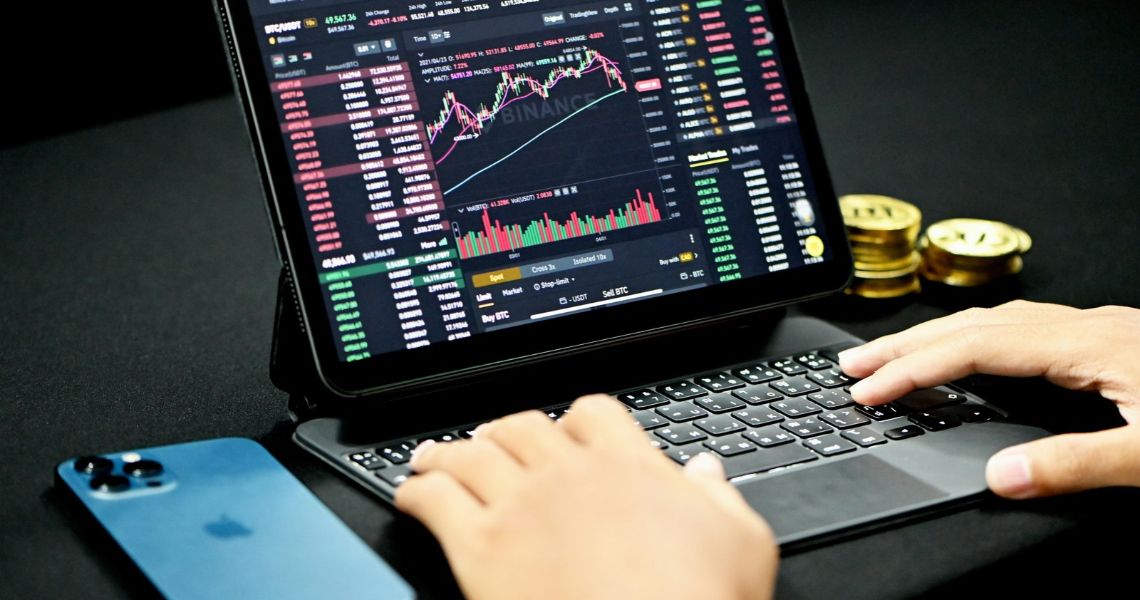
Today’s financial markets are developing at an extremely rapid pace, new opportunities and new technological tools appear, certain processes are simplified, and certain processes are automated. There is an urgent need to develop effective and reliable trading platforms.
Regardless of whether you are a large-scale financial institution, a well-known brokerage company, or a small fintech startup, the process of developing a reliable trading platform can provide you with a competitive advantage and provide many profitable opportunities for promoting your business.
By seeking qualified assistance from a trading platform development company, you will be able to delve into the intricacies of the development, understand the key development stages, and have all the necessary technological tools to quickly and seamlessly create your trading platform with the help of experienced professionals in their field.
Understanding the trading platform development process
The definition of a “trading platform” includes software that contains a range of different functions and solutions that in turn allow users to interact with other market participants: place their offers to buy and sell various assets, manage their assets, and view information about the activities of other trading participants.
The main functions of a trading platform determine the key needs of a trader or investor. A modern one should contain all the necessary basic functions: sending, changing, and cancelling various orders, viewing current trading results, buying assets, etc.
How to build a trading platform? A trading platform serves as a specific gateway between investors and financial markets, allowing users to carry out numerous transactions with various assets, such as stocks, commodities, or trading cryptocurrencies. For a platform to be successful and effective, it must offer flawless user interaction, accurate processing of confidential data in real-time, provide users with reliable security measures, and have all the technological capabilities to integrate with multiple market exchanges:
- The process of creating a trading platform is a complex, multi-stage phenomenon that requires a combination of technical expertise, excellent domain knowledge, and strategic planning skills;
- Choosing the right trading platform development company is crucial. A skilled development team can ensure that the platform is well-built, scalable, secure, and user-friendly;
- Whether you aim to serve retail traders, institutional clients, or anyone else, a comprehensive understanding of how to build a trading platform is key to ensuring its effectiveness.
Let’s look at the steps to building a trading platform.
The first step is to define your business model and market niche. This is an extremely important step, as a clear definition of your business model affects the effectiveness of your trading platform. Are you targeting retail investors or institutional clients? Do you plan to focus on a specific asset class, such as Forex, stocks, or cryptocurrencies? A detailed understanding of your target audience and market niche will shape the characteristics and functionality of your trading platform.
Choosing the right technology stack is crucial.
Choosing the right technology stack is crucial for the effectiveness of your trading platform. The choice of server technology, front-end development frameworks, databases, and communication protocols will directly affect the platform’s performance, scalability, and security:

- Trading platform development heavily relies on server-side technologies such as Java, C++, or Python. These programming languages are known for their reliability and efficiency in handling large amounts of data and executing trades in real-time;
- On the front-end side, technologies such as React, Angular, or Vue.js are used, which are essential for a responsive and interactive user interface;
- It is important to decide on a database and storage solution. Real-time data and low latency are essential in trading, so choosing high-performance databases such as NoSQL (e.g. MongoDB) or time series databases (e.g. InfluxDB) is often a practical solution.
Design a user-friendly interface.
The design of the user interface (UI) and user experience (UX) play a crucial role in the success of a trading platform. A well-designed platform should make it easy for users to navigate, place trades, and monitor their portfolios. The interface should be intuitive, visually appealing, and responsive across devices, including computers, tablets, and mobile phones.
Retail traders tend to prefer platforms with minimalist designs that don’t overwhelm them with too much data. Institutional clients may prefer platforms that give them access to detailed charts, news feeds, and complex order types.
Implement effective security and compliance solutions.
Security is paramount when designing any trading platform. Financial transactions are highly sensitive, and any breach can have serious consequences. Encryption protocols such as Secure Socket Layer (SSL) and two-factor authentication (2FA) are essential to ensure comprehensive protection of user accounts and data.
Another interesting fact. Trading platforms must strictly comply with various applicable regulatory requirements. Depending on the jurisdiction in which the trading platform operates, you may need to comply with applicable regulations such as the General Data Protection Regulation (GDPR) in the European Union or the guidelines of the Securities and Exchange Commission (SEC) in the United States. Working closely with companies that provide comprehensive trading platform development and have the necessary expertise in this area can significantly help in the development and ensure that your platform meets all legal and regulatory requirements.
Payment Processing
A critical aspect of developing any trading platform is payment processing. Traders must deposit and withdraw funds in a secure manner that keeps their confidential data. Integration with trusted payment gateways can make it easier to transfer funds and ensure fast and secure transaction processing. Popular payment processors such as Stripe, PayPal, and Skrill are commonly used in fintech applications. Cryptocurrency-based platforms may require the integration of blockchain payment solutions such as Bitcoin or Ethereum wallets.
Ability to provide real-time data

The effectiveness of a trading platform largely depends on its ability to provide real-time market data. Real-time stock quotes, foreign exchange rates, cryptocurrency prices, and news feeds must be seamlessly delivered to users. This requires integration with external market data providers or cryptocurrency exchanges such as Binance and Coinbase. The trading platform must be able to handle high-frequency trading and ensure that data latency is minimized, as delays can lead to significant financial losses.
Comprehensive testing of the developed trading platform
Before launching a trading platform to the market, comprehensive testing is required to ensure that all available solutions and features are working properly and that the platform is capable of handling large volumes of transactions. After successful completion of testing, the platform can be deployed in a production environment.
Support and maintenance
Launching a platform is just the beginning. Ongoing support and maintenance are essential to address issues such as software bugs, security vulnerabilities, and platform updates. Continuous monitoring is necessary to ensure that the platform remains stable and scalable as your user base grows. Regular maintenance and updates will ensure the platform is secure and efficient, and will also allow you to implement new technologies as they become available.
Images courtesy of unsplash.com and pexels.com