A driveway has an important role to play in a property’s appearance and everyday functionality. It provides essential access for vehicles while also forming one of the first features visitors see when approaching a home. Choosing the right surface and planning the project carefully can therefore make a significant difference to both kerb appeal and long term practicality.
A successful driveway project involves more than selecting an attractive material. Ground conditions, drainage, access, durability, maintenance and the architectural style of the property should all be considered before construction begins.
Start With the Site
The first stage of any driveway project should be a proper assessment of the existing area. The condition of the current surface, ground levels, access arrangements and surrounding landscaping can all affect the work required.
An existing driveway may need to be removed completely if the underlying base has deteriorated. In other situations, a suitable existing surface may provide a foundation for an overlay.
Ground levels are particularly important. Water should not be allowed to collect against the building or flow towards areas where it could cause damage. Establishing appropriate falls and drainage arrangements during the planning stage can help prevent problems later.
Choose a Surface That Suits the Property
There are several driveway materials available, including concrete, tarmac, block paving, gravel and resin bound surfaces. Each has different characteristics in terms of appearance, durability, installation requirements and maintenance.
The architectural style of the property should be considered alongside practical requirements. A traditional home may benefit from natural colours and textured finishes, while a contemporary property might suit a cleaner, more uniform appearance.
The surrounding garden, walls, gates and exterior finishes should also be considered. A driveway does not exist in isolation, so choosing materials that complement the wider property can create a more cohesive result.
Consider Resin Bound Surfacing
Resin bound surfaces have become a popular option for residential driveways because they combine a smooth finish with a wide range of aggregate colours and styles. The aggregate is mixed with resin before being laid over a properly prepared base, producing a relatively seamless surface.
One of the practical advantages of a correctly installed resin bound surface is permeability. Water can pass through the surface, helping to reduce standing water when the system and underlying construction have been designed appropriately. UK Construction Blog has previously highlighted permeability, durability and design flexibility among the key considerations when choosing this type of driveway.
However, the quality of the installation remains critical. A visually attractive surface will not perform well if the underlying preparation is inadequate.
Give Base Preparation Proper Attention
The foundation beneath a driveway is just as important as the visible surface. Poor preparation can contribute to cracking, movement, uneven areas and premature deterioration.
Before the surface is installed, the area should be properly excavated where necessary, cleared and levelled. The supporting layers need to be appropriate for the expected vehicle loads and site conditions.
For resin bound applications, the base needs to be stable, clean and suitable for the system being installed. Existing concrete, tarmac or other surfaces may sometimes be suitable, but their condition should be assessed before work begins.
Cutting corners at this stage can create problems that are considerably more expensive to correct later.
Plan Drainage Carefully
Effective water management should be a central part of driveway design. Heavy rainfall can expose weaknesses in poorly designed surfaces, particularly where water has nowhere suitable to go.
Driveway construction should therefore take account of the property’s existing drainage arrangements and natural water flow. Depending on the site, this may involve appropriate gradients, drainage channels, permeable surfaces or other measures.
Resin bound surfaces can support sustainable drainage approaches because of their permeable characteristics, but permeability alone does not solve every drainage issue. The entire driveway system, including its base and surrounding ground conditions, needs to be considered.
Think About Kerb Appeal
A driveway can have a substantial influence on the appearance of a property. Colour, aggregate size, edging and layout can all be used to create a finish that complements the building.
Neutral tones can provide a subtle appearance, while contrasting borders can help define the driveway and create a more structured look. The choice should also take account of existing brickwork, render, roofing and garden materials.
Rather than choosing a surface based purely on current trends, consider whether the design will continue to complement the property and add kerb appeal as other exterior features change.
Consider Professional Installation
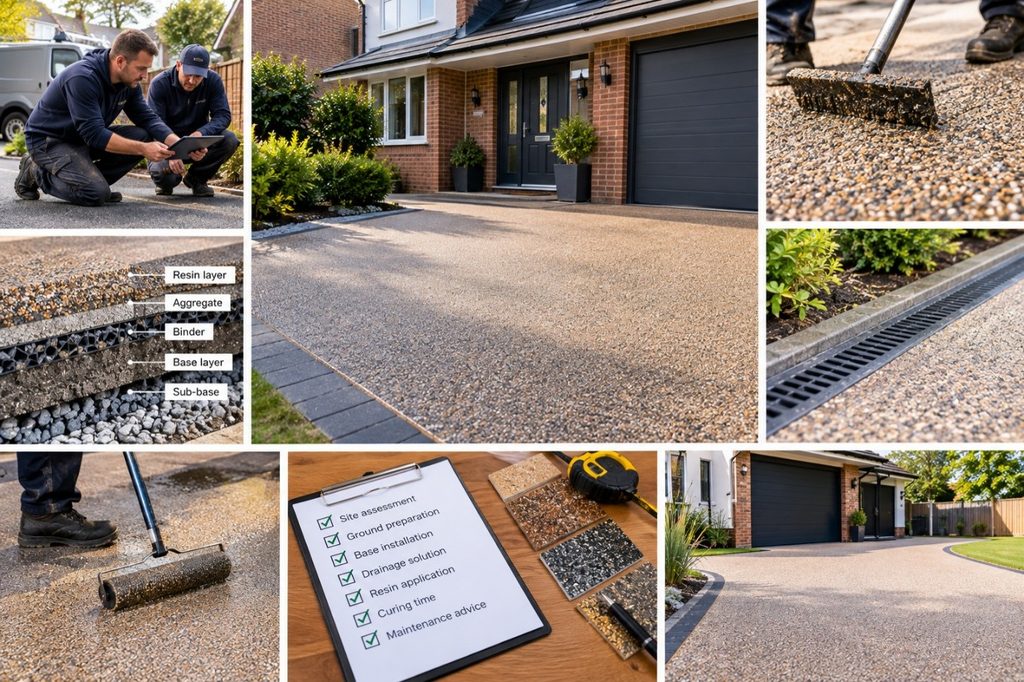
Driveway construction can look straightforward from the finished surface, but achieving a durable result requires careful preparation and application.
For homeowners considering resin driveway specialists in Ealing, it is worth looking at previous projects, the installation process and the materials being used rather than choosing a contractor based solely on price.
A professional installer should be able to explain how the existing ground will be prepared, what base is required, how drainage will be addressed and how the finished surface will be maintained.
This level of planning can help reduce the risk of problems associated with poor preparation or unsuitable installation techniques. Previous UK Construction Blog coverage has highlighted issues such as cracking, loose aggregate and drainage problems that can occur when resin surfacing is not installed correctly.
Plan for Long Term Maintenance
Even durable driveway surfaces require some maintenance. Regular cleaning can help prevent dirt, organic growth and staining from becoming established.
Leaves and other debris should be cleared periodically, while spills should be dealt with promptly. The appropriate cleaning method will depend on the surface material, so homeowners should follow the maintenance guidance provided by the installer.
It is also worth checking the edges, drainage points and surrounding areas periodically. Small defects can often be addressed more easily before they develop into larger problems.
Balance Cost With Long Term Value
Budget is naturally an important consideration when planning a driveway, but the cheapest initial quotation does not necessarily represent the best long term value.
Costs can be influenced by the size and shape of the driveway, the condition of the existing surface, excavation requirements, drainage work, material choices and installation complexity. UK Construction Blog’s previous coverage of resin bound driveway costs also identifies preparation and the condition of the existing base as important factors when budgeting.
A more durable surface that requires less frequent repair may provide better value over its useful life than an inexpensive option that needs substantial maintenance or replacement.
Make the Driveway Part of the Wider Property Design
The best driveway projects consider the entire frontage of the property. Paths, planting, gates, walls, lighting and exterior finishes can all contribute to the final appearance.
For example, a carefully chosen border can connect the driveway with nearby planting, while suitable lighting can improve visibility and security after dark. Coordinating these elements during the planning stage can produce a more unified result.
The driveway should also provide convenient access without compromising pedestrian routes or the usability of the garden.
Create a Driveway Built to Last
A successful driveway needs to combine appearance with sound construction. Selecting a suitable material is only one part of the process. Proper ground preparation, effective drainage, quality installation and ongoing maintenance are equally important.
By considering these factors before work begins, homeowners can create an entrance that complements their property while providing a practical and durable surface for everyday use.
Whether the priority is improving kerb appeal, creating better vehicle access or replacing a deteriorating surface, thoughtful planning can help ensure that the finished driveway performs as well as it looks.
Images supplied