Choosing between laminate vs vinyl flooring comes down to a key factor: vinyl is fully waterproof and more durable for moisture-prone areas, while laminate is more affordable and ideal for dry spaces. Understanding this core difference helps you choose the right flooring for your home.
In the rest of this article, we will take a closer look at the key differences, pros and cons, costs, and installation details of laminate vs vinyl to help you choose the best option for your home.
Laminate vs vinyl flooring: What’s the Core Difference?
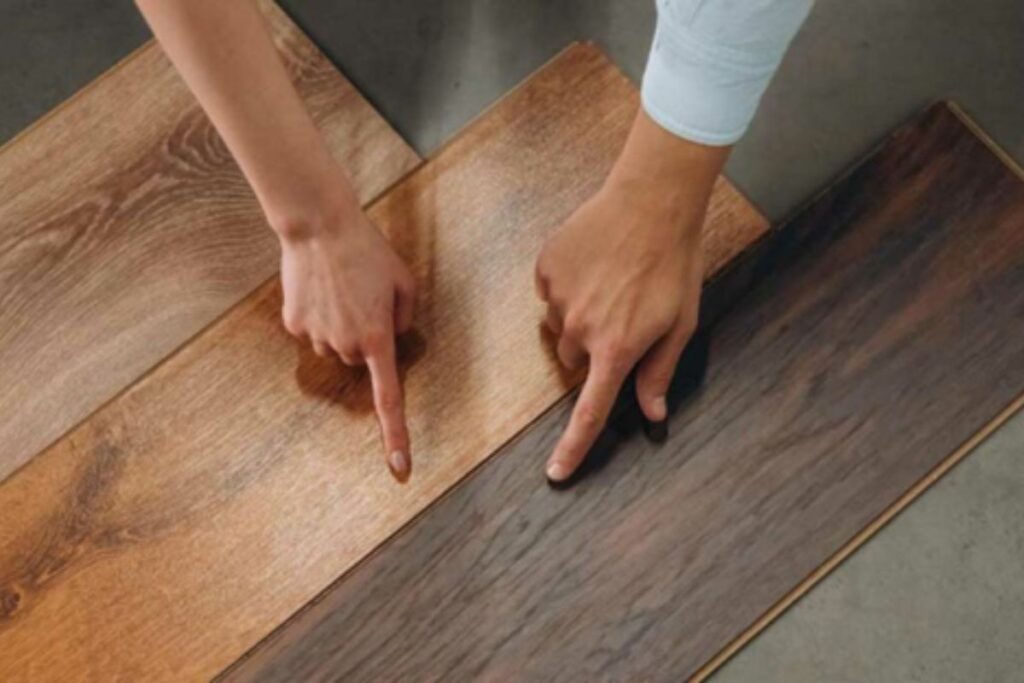
When comparing laminate to vinyl flooring, the main distinction lies in their core materials and structure.
- Laminate flooring is made from a high-density fiberboard core with a photographic wood layer on top.
- Vinyl flooring (especially luxury vinyl) is made from synthetic PVC layers designed to mimic wood or stone.
This fundamental difference between laminate and vinyl flooring affects durability, water resistance, comfort, installation, long-term performance in different environments, and suitability for various rooms in your home.
Laminate vs vinyl flooring pros and cons
Understanding the pros and cons of both laminate and vinyl flooring is essential before making a decision.
Laminate Flooring Pros
- Affordable and widely available
- Realistic wood appearance
- Scratch-resistant surface
- Easy installation (click-lock systems)
Laminate Flooring Cons
- Not waterproof
- Can swell if exposed to moisture
- Less comfortable underfoot
Vinyl Flooring Pros
- 100% waterproof (ideal for kitchens and bathrooms)
- Softer and warmer underfoot
- Highly durable and resistant to dents
- Excellent sound insulation
Vinyl Flooring Cons
- It can be more expensive than laminate.
- Lower-end options may look less natural.
- Difficult to repair if damaged
Additionally, when evaluating laminate vs vinyl flooring pros and cons, it’s important to consider long-term maintenance and environmental conditions. Vinyl generally requires less upkeep due to its resistance to moisture and stains, making it more suitable for high-traffic and spill-prone areas. Laminate, while cost-effective, may require more careful use and protection to maintain its appearance over time.
Laminate vs vinyl flooring cost in the UK

The cost of laminate vs vinyl flooring is one of the biggest deciding factors for UK homeowners.
Average Cost in the UK (per m²):
- Laminate flooring: £10 – £25 per m²
- Vinyl flooring: £15 – £40 per m²
- Luxury vinyl (LVT): £25 – £60+ per m²
When comparing laminate vs vinyl flooring cost, laminate is generally the more budget-friendly option. However, higher-end vinyl (like luxury vinyl) can significantly increase costs but offers superior performance.
If you’re looking for affordable options, you might explore cheap laminate flooring to stay within budget while still achieving a stylish finish.
Installing laminate vs vinyl flooring
The process of installing laminate vs vinyl flooring differs slightly depending on the type you choose.
Laminate Installation
- Floating floor system (click-lock)
- Requires an underlay for sound insulation
- Cannot be glued down in most cases
Vinyl Installation
- Available in click-lock, glue-down, or loose lay
- Easier to install in wet areas
- More flexible and adaptable to uneven subfloors
Professional installation is recommended for vinyl, especially for luxury vinyl flooring cost projects, where precision is crucial for long-term performance.
In practice, installation quality directly affects durability and appearance. Laminate requires proper expansion gaps to avoid buckling, especially in larger spaces or areas with temperature changes. It also performs best on a completely dry, level surface, as moisture can damage its core.
Vinyl flooring, on the other hand, is more forgiving during installation due to its flexibility, but it still demands a well-prepared subfloor. Any unevenness or debris can affect the final finish, particularly in glue-down systems. This makes surface preparation a key step in achieving a smooth, long-lasting result.
Overall, while installing laminate vs vinyl flooring may seem straightforward, attention to detail and proper preparation are essential for achieving durable results.
Laminate floor vs vinyl plank floor: A closer look
When comparing laminate floor vs vinyl plank floor, both are designed to replicate natural wood planks, but their performance differs.
- Laminate floor vs vinyl plank floor: Laminate offers a more realistic wood feel, while vinyl plank flooring provides better water resistance.
- Vinyl planks are ideal for areas like kitchens and bathrooms.
- Laminate performs best in dry areas such as bedrooms and living rooms.
Difference between laminate vs vinyl flooring: Performance & Durability
The difference between laminate and vinyl flooring becomes more noticeable when examining durability and resistance.
Water Resistance
- Laminate: Not waterproof
- Vinyl: Fully waterproof
Durability
- Laminate: Scratch-resistant but sensitive to moisture
- Vinyl: Highly resistant to water, dents, and wear
Comfort
- Laminate: Harder and cooler
- Vinyl: Softer and warmer underfoot
Lifespan
- Laminate: 10–20 years
- Vinyl: 15–25 years (depending on quality)
Beyond these factors, performance differences are clear in real use. Vinyl flooring performs better in high-humidity areas like kitchens and bathrooms because of its waterproof construction. It does not swell or warp with moisture, making it more reliable in the long term.
Laminate, while resistant to scratches, is vulnerable to water damage due to its wood-based core and is best suited for dry areas.
Vinyl also offers better comfort, sound insulation, and impact resistance, especially in luxury options, while laminate is more affordable but requires more careful maintenance and is best used in dry conditions.
Overall, the choice between laminate and vinyl flooring depends on where it will be installed and how much exposure it will have to moisture and daily wear.
Overall, when evaluating laminate vs vinyl flooring, the decision depends on installation location and exposure to moisture, traffic, and daily wear.
Comprehensive Table: laminate vs vinyl flooring
| Feature | Laminate Flooring | Vinyl Flooring |
| Material | Fiberboard core with decorative layer | PVC synthetic material |
| Water Resistance | Low | High (waterproof) |
| Durability | High scratch resistance | High impact & water resistance |
| Comfort | Hard surface | Softer & warmer |
| Installation | Click-lock floating | Click, glue, or loose lay |
| Cost (UK) | £10–£25 per m² | £15–£60+ per m² |
| Maintenance | Easy but moisture-sensitive | Very easy and waterproof |
| Appearance | Real wood look | Wide range of designs |
| Ideal Rooms | Bedrooms, living rooms | Kitchens, bathrooms, utility areas |
Final Thoughts on laminate vs vinyl flooring

When choosing between laminate vs vinyl flooring, your decision should depend on your lifestyle, budget, and the specific rooms in your home.
- Choose laminate if you want a cost-effective, stylish wood look for dry areas.
- Choose vinyl if you need waterproof durability and comfort, especially in high-moisture spaces.
For expert advice and premium installation services, many UK homeowners trust Flooring Surgeons for reliable flooring solutions tailored to their needs, ensuring professional guidance, high-quality materials, and long-lasting results for every type of property, with options suitable for both modern and traditional homes across the UK, delivered with attention to detail and customer satisfaction.
Some images courtesy of pexels.com and unsplash.com. Some images supplied