Open cell polyurethane foam is key in managing electromagnetic energy in RF testing environments.
This article explores how the physical structure of polyurethane foam aids in RF attenuation, its benefits in controlled settings, and where it’s most effectively applied.
What Is Open Cell Polyurethane Foam?
Open cell polyurethane (PU) foam is a soft, flexible material made up of interconnected pores that allow air and gases to pass freely through it. Unlike closed-cell foam, which is denser and less permeable, open cell foam has a spongy, porous texture. This structure is particularly useful in environments where energy dissipation and air movement are needed.


Originally valued for sound absorption and cushioning, open cell polyurethane foam has also found applications in RF testing environments. While it’s not as commonly used for RF absorption as specialized materials like ferrite tiles or conductive foam, under specific conditions and enhancements, this foam can contribute to reduced electromagnetic interference.
How RF Absorption Works in Polyurethane Foam
Porous Structure and Energy Interaction
The structure of open cell polyurethane foam makes it suitable for slowing down and partially absorbing RF energy. When radio frequency waves enter the foam, they encounter resistance due to the foam’s network of pores. These pores create a gradual transition in impedance from the surrounding air to the material itself, reducing reflection and allowing more RF energy to be absorbed.
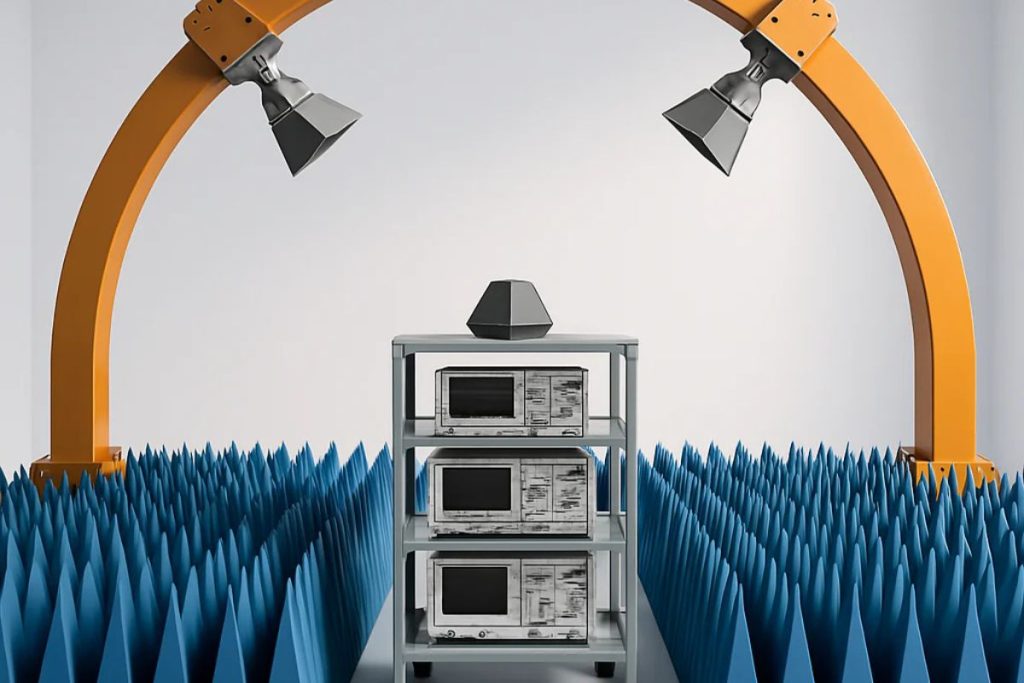
This impedance matching process is one of the reasons why polyurethane foam open cell designs can work in certain RF applications. Instead of bouncing RF waves back into the environment, the foam helps capture and weaken them as they pass through.
Dissipation of Heat
As RF waves are absorbed, they generate small amounts of heat. One advantage of open-cell PU foam is that its porous structure promotes airflow, which helps in dispersing this heat. The foam maintains consistent performance by preventing heat build-up and minimizing degradation over time.

This feature makes polyurethane open cell foam an effective companion to more active RF absorbing materials, especially in applications where overheating could affect measurement accuracy or material lifespan.
Common Enhancements for RF Absorption
Open cell polyurethane foam has moderate RF-absorbing properties on its own. However, its performance can be enhanced with additives.
Carbon Loading
One widely used enhancement involves adding carbon particles to the foam. Carbon increases the material’s conductivity and improves its ability to attenuate RF signals. When evenly distributed throughout the foam, carbon helps trap and convert more of the RF energy into heat, improving its effectiveness as an RF absorber.
Magnetic or Resistive Inclusions
PU foam open cell structures may also be combined with magnetic or resistive particles in certain applications. These inclusions further broaden the absorption range, particularly at higher frequencies where traditional foam would not perform well.
While such enhancements can make open-cell PU foam suitable for electromagnetic testing, they also increase the complexity and cost of production. For this reason, these versions are typically reserved for specialized testing environments.
Where Open Cell Polyurethane Foam Is Used
Anechoic Chambers
Anechoic chambers are specially constructed rooms used to measure electromagnetic emissions and susceptibility. Open-cell polyurethane foam is commonly found here—especially when treated with carbon or other absorbing materials.

The foam lines the chamber walls, creating a non-reflective environment. As RF energy hits the foam, it is gradually absorbed rather than reflected back toward the equipment being tested. This setup ensures that measurements reflect only the device’s performance, without external interference.
RF Absorber Panels
Open cell polyurethane foam is often shaped into pyramids or wedges in modular RF absorber systems. These shapes increase surface area, allowing for more gradual impedance changes. The result is enhanced attenuation across a broader frequency range.
These soundproofing panels are typically used in shielded rooms or around antennas to reduce reflections during RF testing.
General Testing Environments
Polyurethane open cell foam can also be found in general-purpose test labs, particularly when acoustic and RF absorption is required. For example, a facility that tests wireless audio devices may require suppression of electromagnetic and sound reflections. The foam serves a dual role in these hybrid environments.
Advantages of Open Cell Polyurethane Foam in RF Environments
Open-cell PU foam provides several benefits when applied correctly and, in many cases, when combined with absorbing materials:
- Gradual Impedance Matching: Reduces the amount of RF energy reflected by easing the transition between air and absorbing surfaces.
- Heat Dissipation: Porous structure allows for consistent performance by minimizing thermal build-up.
- Lightweight and Easy to Install: The foam can be easily cut and mounted, making it ideal for custom configurations.
- Versatility: Can serve both acoustic and RF purposes in environments requiring dual protection.
Considerations and Limitations

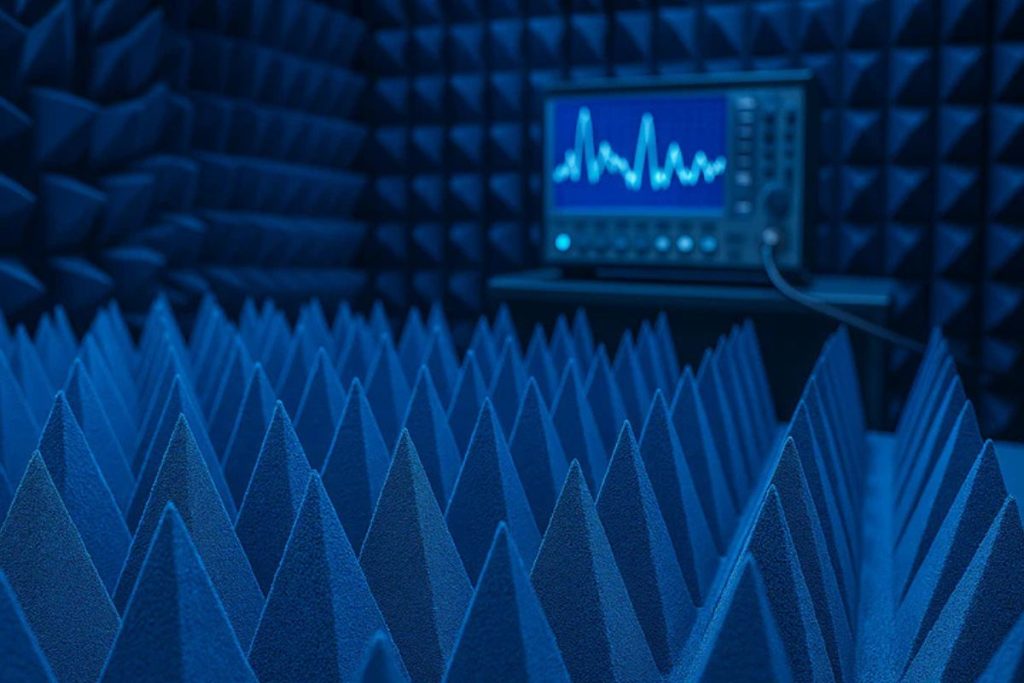
Despite its benefits, open-cell polyurethane foam has certain limitations when used in high-precision RF applications.
Limited Standalone Effectiveness
Untreated open-cell PU foam is not an ideal RF absorber across all frequency ranges. Unless treated with additional materials, its effectiveness is limited to lower frequency ranges.
Potential for Contamination
In high-purity testing environments, untreated foam may release particles, especially if carbon is added. Over time, these particles can contaminate sensitive equipment or alter chamber performance. For this reason, maintenance and material selection are important in long-term setups.
Not Suitable for All RF Applications
Polyurethane foam open cell materials are not ideal for devices that emit or are exposed to high-power RF signals. More robust materials like ferrite tiles or metalized foams are preferred in these cases.
Comparing with Other RF Materials
Compared to other materials used for RF attenuation, open cell polyurethane foam offers several advantages, such as low weight, easy installation, and flexibility. However, its standalone RF absorption capability is more limited. Ferrite tiles, for example, are more effective at blocking low-frequency signals and are often used in high-precision test environments. Conductive elastomers offer moderate absorption with flexible application in cable shielding or enclosures, but they don’t perform well in larger spaces. Carbon-loaded foams tend to strike a balance between performance and adaptability, but are more expensive and prone to particle shedding.
When selecting materials for RF testing, engineers must weigh cost, performance requirements, and environmental constraints. A combination of foam and other absorbing materials is often used to meet strict compliance needs.
Summing Up
Open cell polyurethane foam plays a useful role in RF testing environments—especially when enhanced with materials like carbon and used within proper design limits. Its porous structure supports impedance matching, heat dissipation, and low reflection, making it suitable for anechoic chambers, absorber panels, and hybrid testing labs.
Although it’s not the strongest standalone RF absorber, open-cell polyurethane foam contributes meaningfully to a well-controlled testing environment when properly treated and applied. This material remains a practical and reliable choice for labs seeking flexible, lightweight, and dual-purpose solutions.
Images supplied