In the quest for sustainability, the education sector is turning over a new leaf. Green design principles are now at the forefront of creating learning environments that are not only conducive to education but also kind to the planet. Modular schools, with their flexibility and efficiency, are leading this charge.
Of course, modern schools often come with modern safety standards and better levels of health and care for their students. This includes unique safety sensors that can detect and stop kids from vaping or using bad substances as well as detect bullying or loitering. Modern schools are simply known to be safer environments than older ones. This article explores how a green approach is shaping the future of sustainable modular schools, including school playground equipment.
Embracing Modular Schools
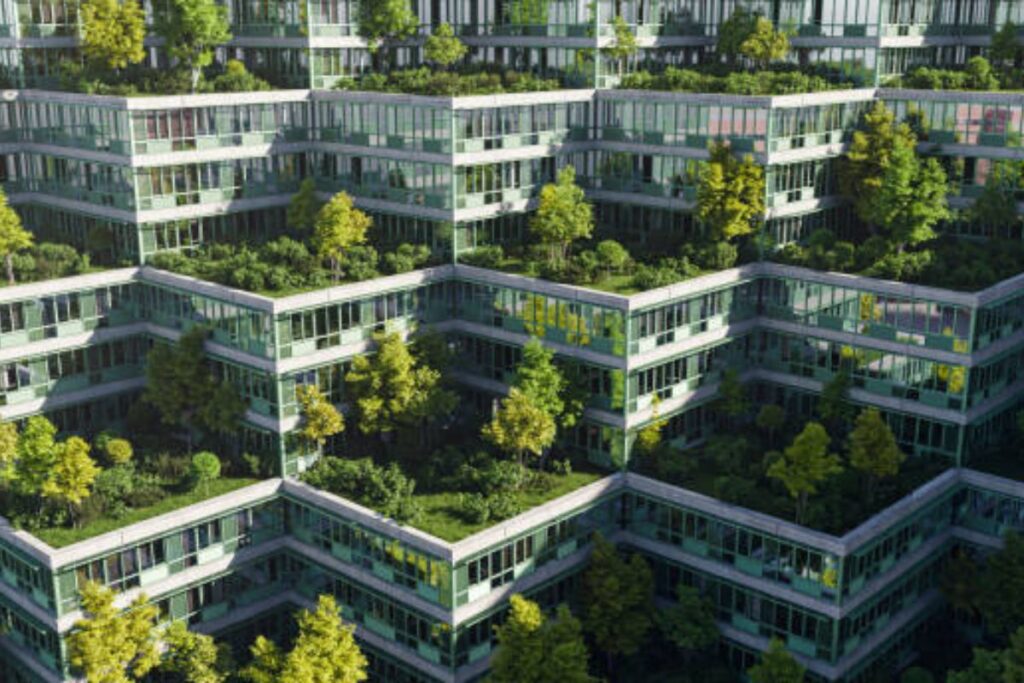

More and more educational bodies are turning to modular schools as a smart solution for their infrastructure needs. Picture this: neatly constructed units, known as ‘modules’, pieced together like a giant jigsaw puzzle at the school’s location. It’s a process that sidesteps much of the chaos of traditional building methods and often comes with a friendlier price tag. Yet, what really makes modular schools shine is their potential for eco-friendly operation.
Crafting Schools with the Earth in Mind
In the realm of modular school design, the environment takes centre stage. The goal for architects and construction teams is to tread lightly on the earth, making sure that every element—from the foundations to the rooftop—aligns with eco-friendly principles. It’s a meticulous process, where the blueprint is drawn with an eye for conserving energy and embracing the bounties of nature.
The Pillars of Energy Efficiency
The journey to an energy-efficient modular school begins with the basics: robust insulation, windows that trap heat yet let in light, and lighting systems that sip rather than gulp power. Then, we witness the transformative step: capturing sunlight with solar panels. This move transcends the mere reduction of energy expenses or the lowering of carbon footprints. It’s about educational institutions setting a precedent, demonstrating to students the impactful role of renewable energy in daily life.
Sustainable Materials
The choice of materials is crucial. Sustainable modular schools use recycled, renewable, or low-impact materials. These materials are often more durable and require less maintenance, which is better for the environment and the school’s budget.
Water Conservation
Water conservation is another important aspect. Rainwater harvesting systems can collect rain for use in the school. Low-flow toilets and faucets reduce water waste. Together, these systems ensure that the school uses water responsibly.
Indoor Environmental Quality
The health and well-being of students and staff are paramount. Sustainable modular schools prioritise indoor environmental quality. They use non-toxic materials and provide plenty of natural light and ventilation. This creates a healthier learning environment for everyone.
The Role of Expertise in Assembly
The assembly of modular classrooms requires precision and expertise. For instance, MPH Building Systems is highly skilled in the assembly of modular classrooms. They ensure that the modular units come together seamlessly, reducing waste and ensuring the integrity of the design.
The Benefits of Modular Schools

The benefits of sustainable modular schools are many. They are often quicker to build than traditional schools. This means less disruption and a faster return to normal for students and staff. The flexibility of modular design also allows for easy expansion or reconfiguration as the needs of the school change.
Cost-Effective
Modular schools can be more cost-effective over their lifespan. The initial costs may be similar to traditional construction, but the savings in energy and maintenance can be significant.
Environmentally Friendly
The environmental benefits are clear. Sustainable modular schools have a smaller carbon footprint. They use less energy and water and generate less waste. This is good for the planet and can also be a valuable teaching tool for students.
Community Impact
Sustainable modular schools can positively impact the community. They can provide a space for community events and serve as an example of sustainable development. This can inspire others to adopt green practices in their own buildings.
Conclusion
Sustainable modular schools represent a new era in educational facilities. They are a testament to what can be achieved when green design is a priority. The skilful hands of firms proficient in modular building turn these schools from a vision into a tangible reality. They craft learning spaces that enhance the experience of both educators and learners while also nurturing the planet that will be their legacy.
Looking ahead, it’s evident that the eco-conscious strategy in crafting modular schools is far from a fleeting fad—it’s a steadfast journey towards a more sustainable existence.
Images courtesy of unsplash.com and pexels.com