Even though air travel has made the world a smaller place, the Dolomites never fail to take your breath away. The sheer scale of the mountains, located on the eastern part of the Italian Alps, is staggering. They immediately remind you of the power of nature.
The Dolomites also have a second claim to fame: they’re considered Italy’s most beautiful mountain range, and that’s saying something. The country is home to spectacular views no matter where you go, but the Dolomites are something truly special. The attraction comes from their well-organised hiking trails, large wildflower populations, and misty mountain peaks that appear to travel all the way up to the sky itself.
Most people visit the range as part of a road trip, often during the spring or summer when the ice and snow recedes. Taking a motorcycle tour across Italy can introduce you to the Dolomites as well as the rest of the country.
Exploring the stunning beauty of the Dolomites, Italy’s most beautiful mountain range, is a dream for nature enthusiasts and adventure seekers. Our guide to ‘The Dolomites: Italy’s Most Beautiful Mountain Range’ provides a captivating glimpse into the allure of this unique natural wonder. As you plan your journey through these magnificent peaks, consider exploring the Top 10 online casino destinations. Whether you’re conquering mountain trails or taking a break to test your luck, these top-rated online casinos offer an exciting mix of entertainment and rewards. Experience the best of both worlds by immersing yourself in the splendour of the Dolomites and the thrilling world of online gaming.
The purpose of this post is to introduce you to everything that you need to know about this spectacular mountain range. We’ll cover the location of the Dolomites, how to get there, and the best time to travel.
What Are The Dolomites?
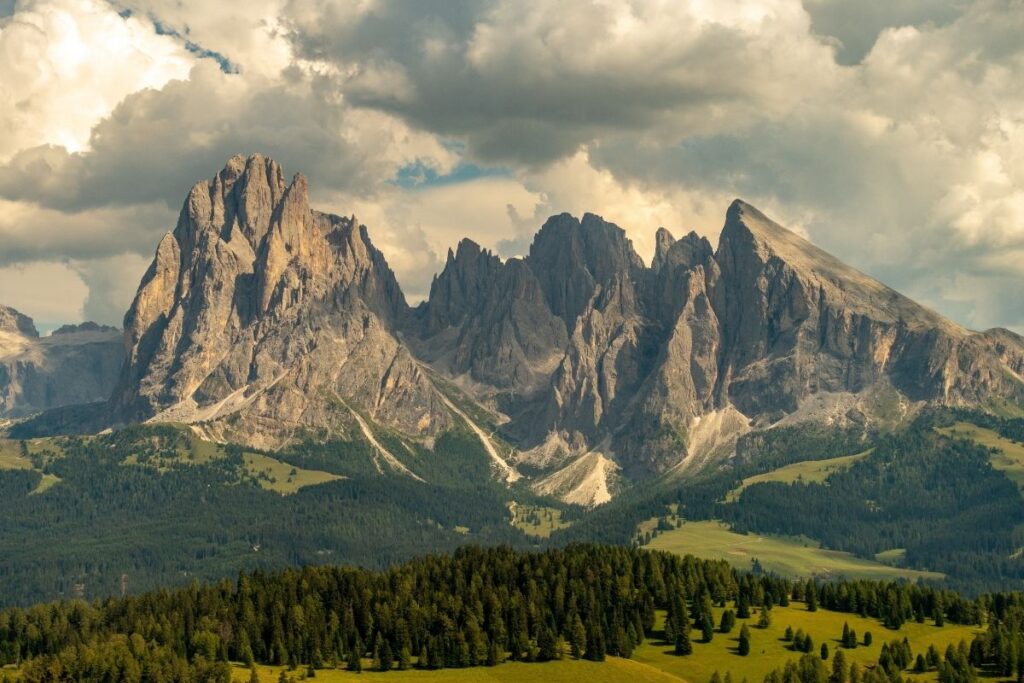
The Dolomites, as discussed in the introduction, are a mountain range on the eastern flank of the Italian Alps. The peaks have a pale grey limestone hue and feature impressive jagged rock spires that punch hundreds of feet into the air. Researchers believe that the range formed some 200 million years ago as the European and African tectonic plates collided.
The Dolomites cover an area of more than 140,000 hectares. In total, there are more than 18 peaks that are above 3,000 metres, making it among the highest areas of Europe.
But what makes the Dolomites special is that it’s not just about the views and conquering the mountains. Instead, it’s more about basking in pastures and meadows, exploring the stunning villages, and traversing the roads that snake through all the valleys.
Where To Go
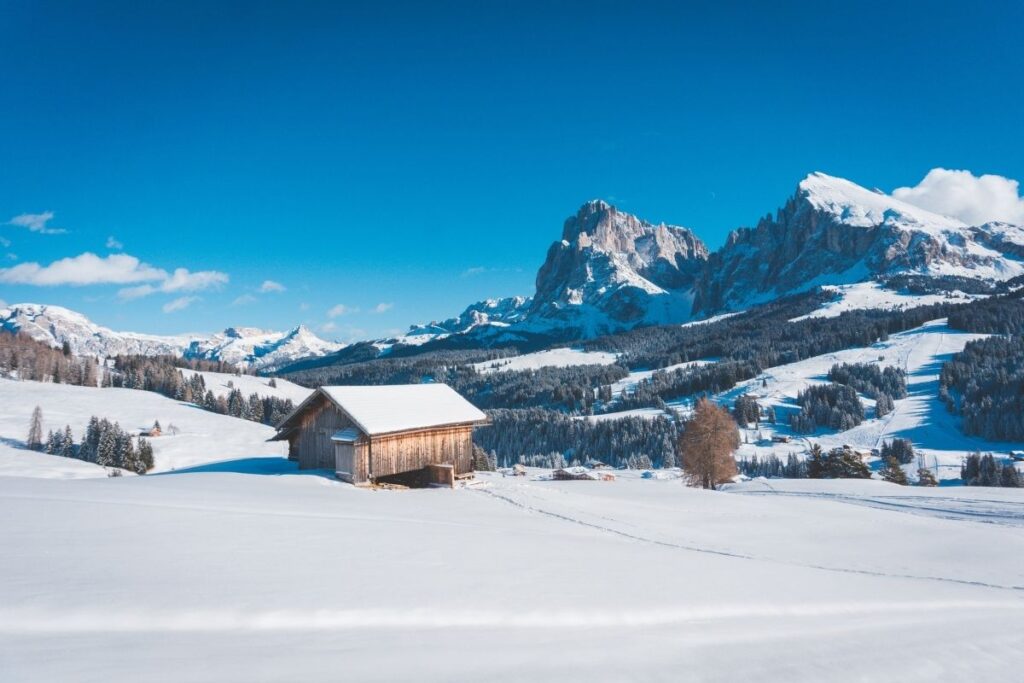
When it comes to travelling to the Dolomites, you actually have a lot of options. As you might imagine, there isn’t a single airport that serves the region. You can approach it from both the north and the south.
Most people start their adventures from Verona. It’s a two-hour drive from the foothills of the Dolomites, and about three hours from Cortina d’Ampezzo. You can also begin your adventure in Venice, which is only two hours from Cortina d’Ampezzo.
Interestingly, thanks to the quality of Austrian roads, you can also travel to the Dolomites from the city of Innsbruck which has a major airport of its own. It’s about a two-hour drive from the Dolomites, offering similar travel time to trips that start in Italy.
Other possible starting points include Milan, Bologna and Trieste.
When booking flights, look for the most flexible and affordable options. You actually have a lot of choice, so it’s recommended that you compare prices first before you settle on a deal.
Ultimately, the Dolomites are made for road trips. While most of Italy is well-served by public transport, you’re best off using a car or motorbike for exploring this area of the country. You can do it by train, but just be aware that travel time is usually higher via this method, giving you less time to enjoy yourself.
If you are going to Italy on a chartered flight, you might be able to land at the small airport in Bolzano. Please note, though, that getting approval to land here can be difficult, and the airport has never been a commercial success.
When To Go
Summer in the Dolomites is a little weird. It starts and ends later than you might think, meaning that you can be waiting a long time for businesses to open and for the season to really begin.
Even as late as June, there are often hiking trails and facilities shut because of snowfall. Thus, you’ll need to wait until at least July time to make the trip if you plan on going higher up.
The good news is that the summer extends all the way into October before the weather turns cold again and the mountains begin transitioning to winter. March to May seem like a great time to travel – and they are for the low-lying regions – but they’re not so great if you want to go higher up.
Once the summer does arrive, you can expect some pleasantly warm summer temperatures. Most days in the higher valleys average between 26 C and 30 C. However, as you go higher, things change, and temperatures plummet.
If you’re looking for cooler weather but still want to go above 3,000 metres, then we’d recommend going around September time. Temperatures average around 24 C in the valleys, which is balmy, and the mountains remain relatively free from ice.
It Doesn’t Feel Italian
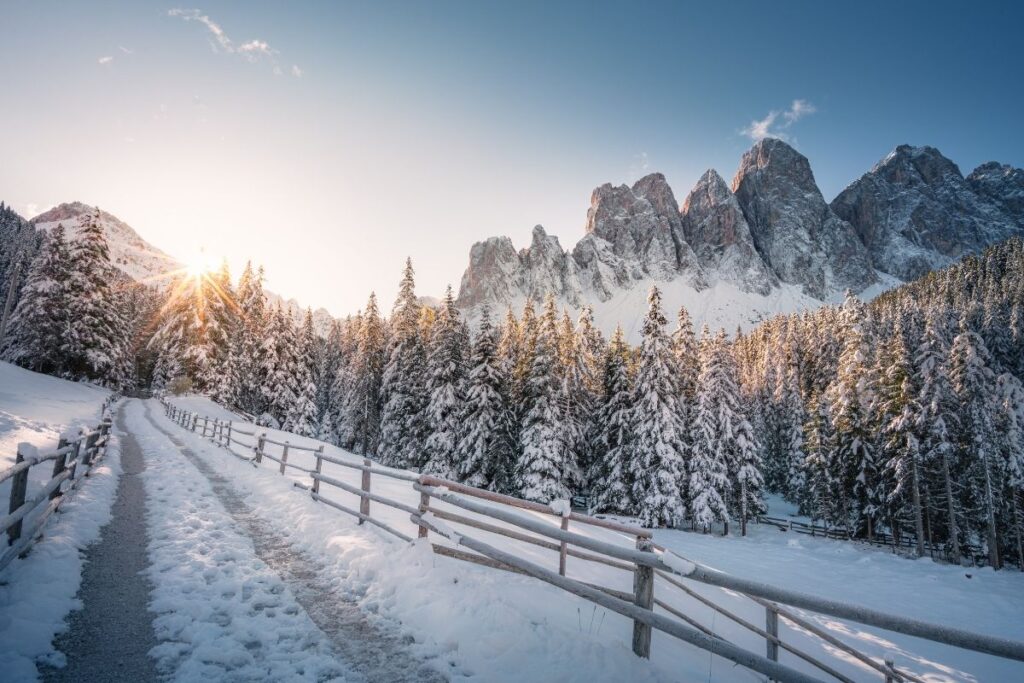
It’s worth pointing out that even though the Dolomites are part of Italy, they don’t feel particularly Italian. In fact, the experience is much more Austrian. As you go north, you leave behind some of the passion and romance that we associate with the rest of Italy and get a more Germanic feel. Everything is a little toned down from the rest of the country, almost like it is a transition region between southern and northern Europe. It even has cows with bells, which is about as Austrian or Swiss as you can get.
The Dolomites, therefore, are not what you’d expect. They’re not really like the rest of the Italian Alps. Cultural influence here seems to be more from northern Europe than the rest of Italy, despite the good transport connections from cities like Bologna, Venice and Milan.
Why this is the case isn’t entirely clear, but it certainly adds to the charm of the area. It’s still Italy, but not as you’ve seen it before.
The region actually has a tumultuous history. Inhabitants aren’t always quite sure which country they belong to, whether it’s Italy or Austria. It’s well worth reading about before you go.
Images courtesy of unsplash.com